


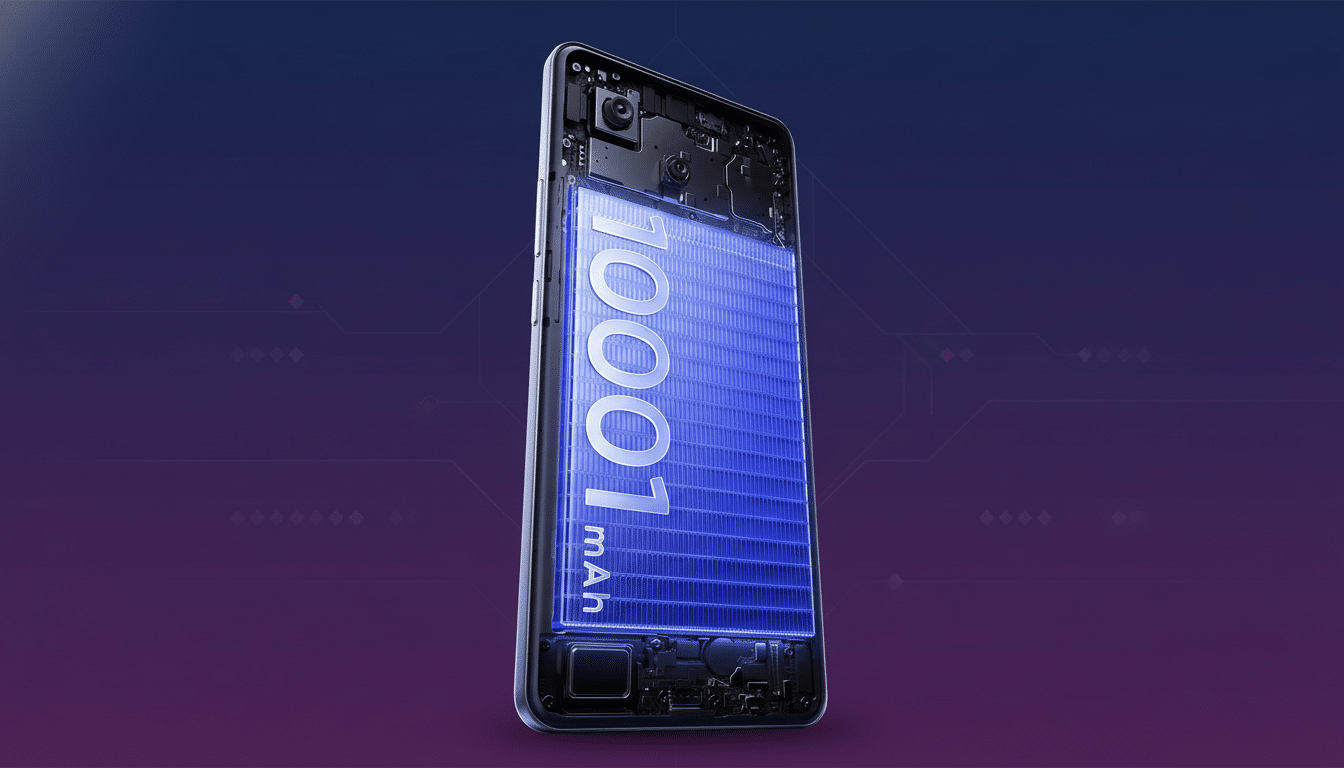
Realme is pushing the battery arms race into new territory with the P4 Power, a smartphone touting a 10,001mAh cell and multi-day endurance. The device is expected to debut first in India, and while availability may be limited, the message is loud and clear: extreme battery life is becoming a battleground again.
Endurance Claims Point To A Multi-Day Phone On Paper
According to Realme’s teaser materials, the P4 Power is rated for up to 23 hours of continuous navigation, 32 hours of nonstop YouTube streaming, and 72 hours of voice calls, with standby stretching beyond 38 days. Those are internal test figures, so real-world results will vary, but the scale is striking. For context, most mainstream phones ship with batteries around 4,500–5,000mAh and struggle to deliver more than a day and a half for heavy users without a top-up.
- Endurance Claims Point To A Multi-Day Phone On Paper
- How Silicon-Carbon Anode Technology Works And Why It Matters
- How It Compares To Today’s Big-Battery Smartphone Rivals
- Availability Plans And Why There Is Still A US Market Gap
- Charging Speed Details And The Big Safety Questions Ahead
- What It Means For The Next Wave Of Phones
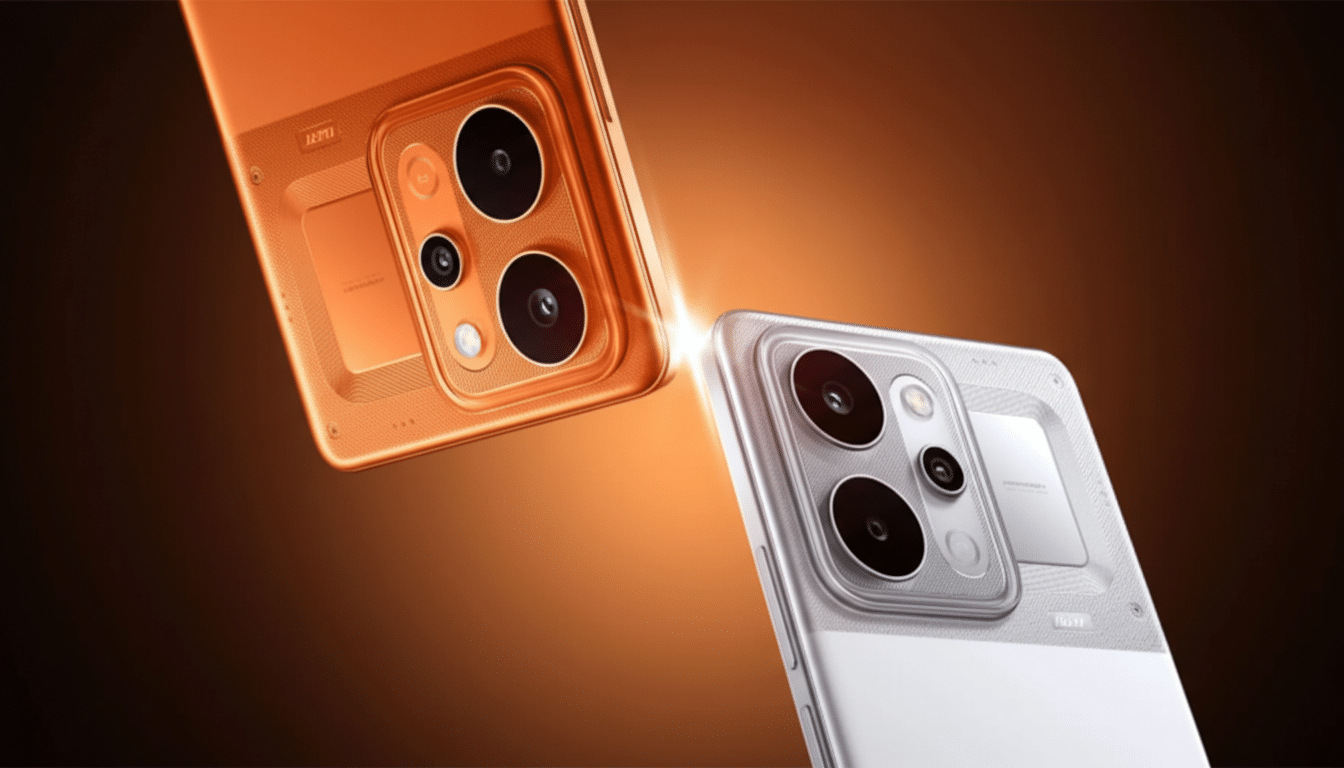
Equally notable is the claimed weight. At 219 grams, the P4 Power undercuts many large flagship competitors despite essentially doubling typical battery capacity. Realme credits “next-gen silicon-carbon anode tech” for keeping the pack dense without turning the phone into a brick.
How Silicon-Carbon Anode Technology Works And Why It Matters
Most smartphones still rely on graphite anodes in lithium-ion batteries. Silicon-carbon blends swap in silicon—an element capable of storing significantly more lithium per unit mass—alongside conductive carbon structures to mitigate expansion and degradation. Industry research groups, including academic labs and battery suppliers, have pointed to silicon-enhanced anodes as a path to higher energy density, faster charging at lower heat, and better low-temperature performance.
The trade-offs are complex. Silicon expands as it charges, which historically caused capacity fade. The newer approach uses engineered composites, binders, and protective coatings to tame expansion while preserving cycle life. If Realme’s pack design and thermal management are dialed in, the company can squeeze more watt-hours into a slimmer footprint than graphite alone would allow.
How It Compares To Today’s Big-Battery Smartphone Rivals
Realme isn’t alone in going supersized. In China, Honor launched the Honor Power 2 with a 10,080mAh battery and a listed weight of 216 grams, edging Realme on both capacity and mass. Big-battery phones have existed before—remember the 7,000mAh era headlined by devices like Samsung’s Galaxy M51—but pushing past 10,000mAh in mainstream-style designs marks a new ceiling.
What makes this generation different is the effort to keep the phones relatively light and familiar rather than leaning on bulky rugged frames. If Realme and Honor can prove meaningful gains without unwieldy hardware, expect others to follow.
Availability Plans And Why There Is Still A US Market Gap
There’s a catch: both the Realme P4 Power and Honor’s supercell counterpart appear limited to their home markets for now. That leaves the US largely on the sidelines, where battery capacities above 5,000mAh remain rare in premium models. Even “Ultra” flagships from major brands typically hover near that mark, prioritizing thin frames, camera modules, and advanced displays over raw capacity.
That tension is puzzling, given consumer priorities. Surveys from industry analysts such as Counterpoint Research routinely place battery life among the top purchase drivers, often challenging camera quality for the No. 1 spot. If multi-day endurance becomes a headline differentiator in India and China, pressure will build on global players to rethink their battery targets.
Charging Speed Details And The Big Safety Questions Ahead
Realme hasn’t detailed charging wattage for the P4 Power, but the company has a track record of aggressive fast charging—its earlier devices showcased triple-digit wattage and rapid top-ups. With a 10,001mAh pack, raw speed matters less than thermal efficiency and long-term health. Expect attention to battery management systems, cell balancing, and safeguards validated by bodies like TÜV Rheinland and national safety regulators. Larger packs can actually benefit longevity if managed at lower C-rates for everyday charging.
What It Means For The Next Wave Of Phones
If Realme’s claims hold up in independent testing, the P4 Power could reset consumer expectations: two or even three days away from an outlet, fewer battery-anxiety trade-offs with GPS or video, and less reliance on battery cases and power banks. For makers, the message is equally clear. Efficient chipsets and LTPO displays are table stakes; battery chemistry and pack engineering are where the next big gains may come.
The P4 Power may be hard to import, but its impact won’t be. Once a single vendor proves you can pack 10,000mAh into a phone that still feels like a phone, the big-battery race is officially on.