


Some of the early adopters of the Pixelsnap Ring Stand are alerting to a cosmetic danger for anyone running a caseless Pixel 10 or Pixel 10 Pro. At least one owner has reported a fine, ring-shaped mark in the rear glass within days of normal use — likely from tiny pieces of grit that get stuck between the stand’s metal ring and the phone’s back.
What owners are reporting about early glass marks
A user with the handle TumblingWalls posted, “Small scratch on the back within 72 hours of ownership that perfectly aligned to where it would contact when folded.” Scrubbing and drying to remove the mark were unsuccessful, which indicated that it was not a stain. The user also ruled out loose screws, which has been a separate, previous complaint about this accessory from some customers.
- What owners are reporting about early glass marks
- How a ring stand can scratch the rear glass of phones
- How common is purely cosmetic damage without a case?
- How to minimize your risk of ring-related scratches
- What the maker could fix to reduce scratching risks
- What this means for Pixel 10 users without a case
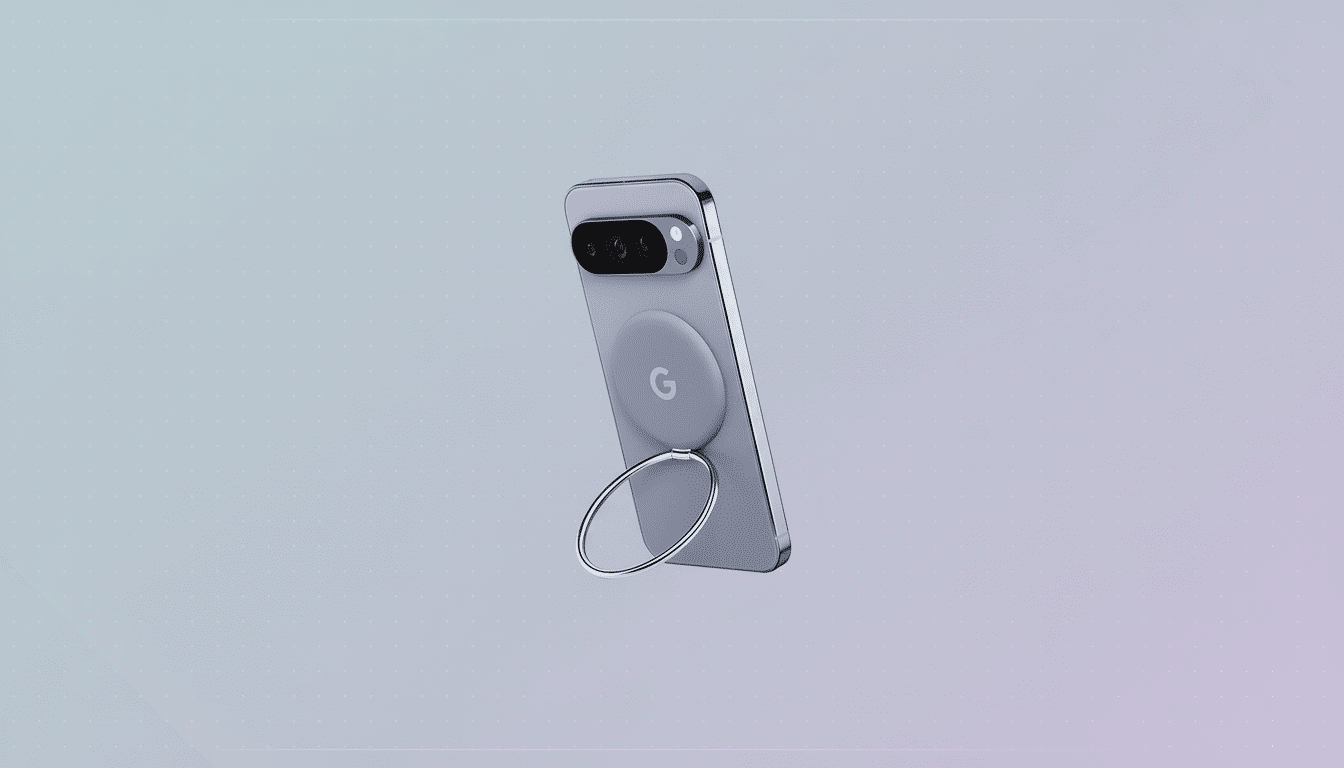
At this point, the problem doesn’t seem to be affecting many people. Still, if you ride caseless at all, the low-probability risk is worth noting because rear glass is costly and tricky to refinish after abrasion.
How a ring stand can scratch the rear glass of phones
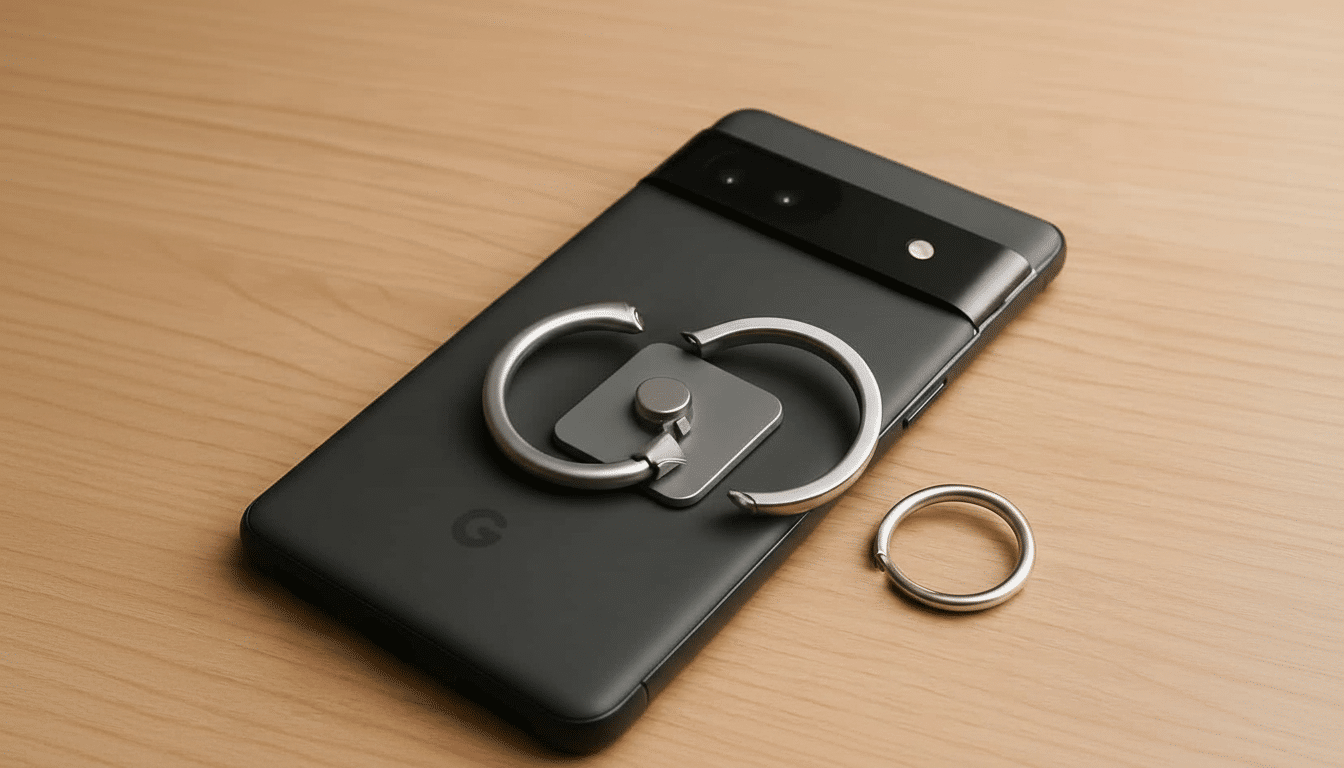
The likely perpetrator isn’t the ring’s metal, but dust. Dust and beach sand are part of that category, and they can contain quartz that ranks 7 on the Mohs scale. Even chemically strengthened aluminosilicate (the type of glass used on many flagship backs) scratches in the neighborhood of 6–7 under real-world conditions, which means that only a single grain of quartz between the ring and glass is enough to score it as the ring pivots or presses down.
It’s a textbook case of third-body abrasion: the accessory puts pressure, the hinge motion provides micro-movement, and the hard particle does the cutting. Corning and other materials tacticians have long observed that while toughened glass can resist shattering from scratches, softer minerals such as those lurking in pockets along with dust can inflict damage.
How common is purely cosmetic damage without a case?
Consumer damage data consistently shows that no-case or caseless phones pick up their scuffs sooner. Allstate Protection Plans has said over the years that most smartphone owners suffer damage at some point, with drops topping the list—but micro-scratches from your daily carry are a close, silent second for those who prefer a bare-glass feel. Throw in a metal component that regularly interacts with the back, and you have created another wear path.
How to minimize your risk of ring-related scratches
If you must continue to ring-stand your naked Pixel 10, some precautions can meaningfully reduce the likelihood of ring-borne wear:
- Wipe down and clean the contact point before each attachment and at least after a week of pocket carry. Instead of rubbing vigorously with pressure, use a blower or clean microfiber to get rid of grit.
- Add a sacrificial layer. A clear TPU case, an ultra-thin skin, or a precisely cut protective film covering the ring’s footprint can take that hit instead of your glass.
- Check hardware tightness. While the scratch in question was not loose-screw-related, any wobble equates to more micro-movement and therefore friction. Tighten within the manufacturer’s guidance.
- Do not wear the ring in sandy or dusty places. Just a few grains suffice to etch glass under pressure.
What the maker could fix to reduce scratching risks
Accessory companies often counteract wear from contact with a soft, bonded interface—think polymer pad, felt ring, or ultra-thin PTFE (yes)—directly at the point of contact. A slightly larger, replaceable pad might be able to both spread force and catch grit before it makes contact with the glass. It should also have added a clear protective film that could be cut to the stand’s contour for caseless users in the package.
Quality control on fasteners matters, too. If any of these have screws that are backing out, they can alter the alignment of the ring and increase abrasive motion at the point of contact, even if it’s not what caused your reported scratch.
What this means for Pixel 10 users without a case
The Pixelsnap Ring Stand does indeed grip easily, but it puts metal against glass, and when dust is involved, glass loses. Until there’s a design tweak or an official protective interface, treat the back just like you would the display: keep it clean, possibly get a thin shield, and plan for even cautious use to leave some subtle marks over time.