


In 2026, the digital world is experiencing what many call the “Great Decoupling.” AI-generated content is everywhere, but search engines and readers are more selective than ever. Low-effort, mass-produced content is no longer simply overlooked — it is actively filtered out.
To maintain visibility and protect your authority, you need a three-layer quality control system. Here’s how a Plagiarism Checker, Grammar Checker, and free AI Content Detector can help safeguard and strengthen your content strategy.
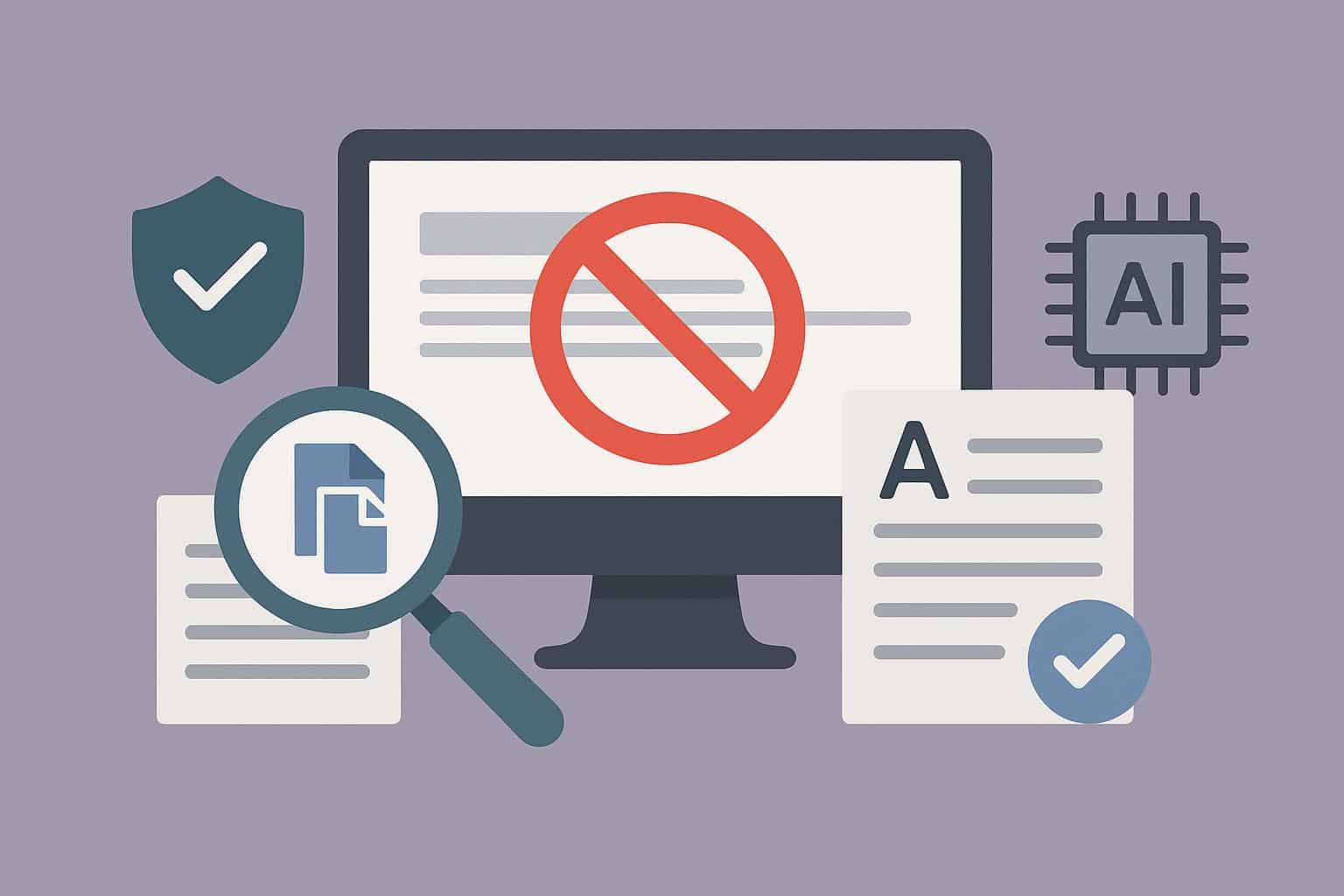
1. Plagiarism Checker: Safeguarding Originality
With generative AI tools widely used, unintentional plagiarism has become a real concern. AI systems learn from existing material and may unintentionally replicate similar phrasing or structure.
Why it matters:
Recent Google core updates have significantly reduced the visibility of repetitive or unoriginal content. Even without direct copying, structural similarities can trigger duplicate content signals.
The 2026 approach:
Use reliable tools such as Scribbr or Copyleaks. Don’t rely solely on the similarity percentage — carefully review the matched source URLs.
Pro Tip:
If your content shows a match, avoid simple word substitutions. Instead, introduce unique insights, fresh data, or personal analysis. This transforms similarity into originality.
2. Grammar Checker: Strengthening E-E-A-T
Grammar is not just about fixing punctuation — it directly impacts credibility. Google’s E-E-A-T framework (Experience, Expertise, Authoritativeness, and Trustworthiness) favors content that appears polished and professional.
Why it matters:
Poor readability increases bounce rates, signaling to search engines that users don’t find value in the content.
Go beyond basic corrections:
Tools like Grammarly or QuillBot help improve tone, clarity, and structure. In 2026, concise and well-organized content performs better, especially in AI-generated search summaries.
Best practice:
Match your readability level to your audience. For most blogs, a Grade 8–9 reading level strikes the right balance between clarity and engagement.
3. Free AI Content Detector: Adding the Human Touch
Google does not penalize AI-written content simply for being AI-generated. However, it does penalize automated, low-value content.
The human factor:
Human writing naturally varies in sentence length and vocabulary. AI-generated content often feels uniform and predictable.
Top free tools in 2026:
- Trinka AI – Trinka’s AI Content Detector quickly identifies text generated by AI tools like.
- GPTZero – Effective for academic-style writing and perplexity analysis.
- QuillBot AI Detector – Useful for identifying lightly edited or spun text.
- ZeroGPT – Quick checks for short-form or social media content.
The objective:
You don’t necessarily need a “0% AI” score. Instead, aim for a “Likely Human” result to ensure your writing feels authentic and engaging.