


Pornhub and its sister sites under the parent company Aylo have gone dark for users in 23 states across the U.S. and all of France, a dramatic escalation in an already high-stakes battle over age-verification laws. The blackout is Aylo’s leverage play: It contends that the existing patchwork of mandates undermines user privacy and nudges viewers into unregulated corners of the internet. Lawmakers argue they need stringent checks to keep minors away.
Why Pornhub Shut Down Access in 23 States and France
Laws on the state books since 2023 require adult sites to use means, often through government-issued IDs or similar checks, to verify visitors’ ages. Aylo says it is pro–age verification in principle, though it told us it would like to see the device-level checks carried out by the OS guardians—Apple, Google, and Microsoft. The company said that site-by-site checks create new risks for data and are almost impossible to enforce at scale.
- Why Pornhub Shut Down Access in 23 States and France
- Where the Pornhub Blackout Applies in the U.S. and France
- Europe Tightens Pressure with Stricter Age Verification
- The Trade-Off Between Safety and Privacy
- How People Are Trying to Watch, and the Legal Risks
- What to Watch Next in the Age-Verification Showdown
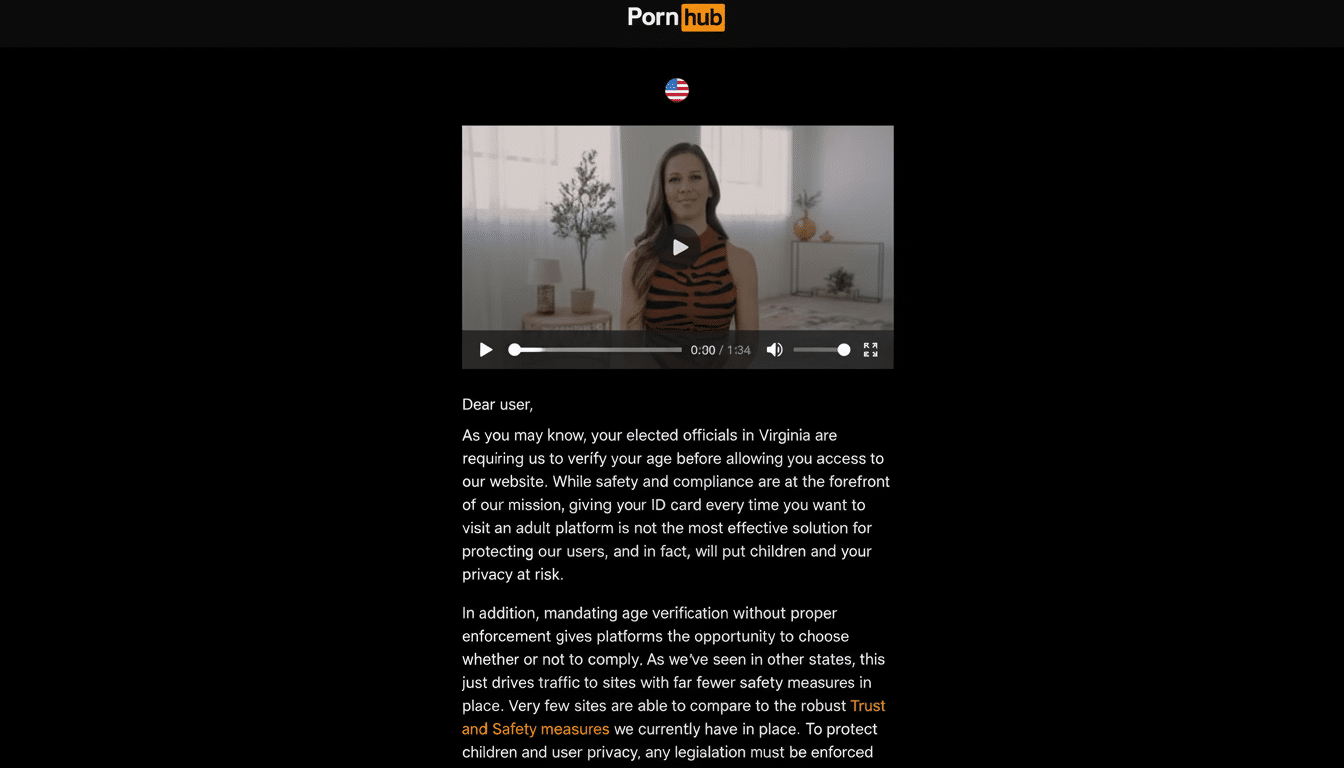
Litigation has shaped the standoff. Industry organizations led by the Free Speech Coalition have filed lawsuits in a handful of states, and a recent United States Supreme Court ruling has empowered, perhaps emboldened, other states. Aylo has responded by choosing to voluntarily block access where new rules apply, instead of performing what it considers risky ID checks.
Where the Pornhub Blackout Applies in the U.S. and France
At the moment, Aylo sites are not available in the following U.S. states:
- Alabama
- Arizona
- Arkansas
- Florida
- Georgia
- Idaho
- Indiana
- Kansas
- Kentucky
- Mississippi
- Missouri
- Montana
- Nebraska
- North Carolina
- North Dakota
- Oklahoma
- South Carolina
- South Dakota
- Tennessee
- Texas
- Utah
- Virginia
- Wyoming
A number of other states are moving on similar bills, according to the Free Speech Coalition, and Washington, D.C., is weighing action too. Access is also blocked across France.
The strategy is not theoretical. When Louisiana passed one of the first laws, Pornhub followed it and within a week saw an 80 percent decline in traffic from that state. The company argues that viewing did not just stop; people went to websites with less safety and moderation instead—a conclusion lawmakers dispute.
Europe Tightens Pressure with Stricter Age Verification
France offers a wilder mechanism under similar pressure. The country’s media regulator, ARCOM, has called for independent age-verification systems on adult sites and fought platforms in the courts when they pushed back. In a related move, the European Commission launched Digital Services Act formal investigations into a number of leading adult platforms for suspected non-compliance over age assurance and risk reduction.
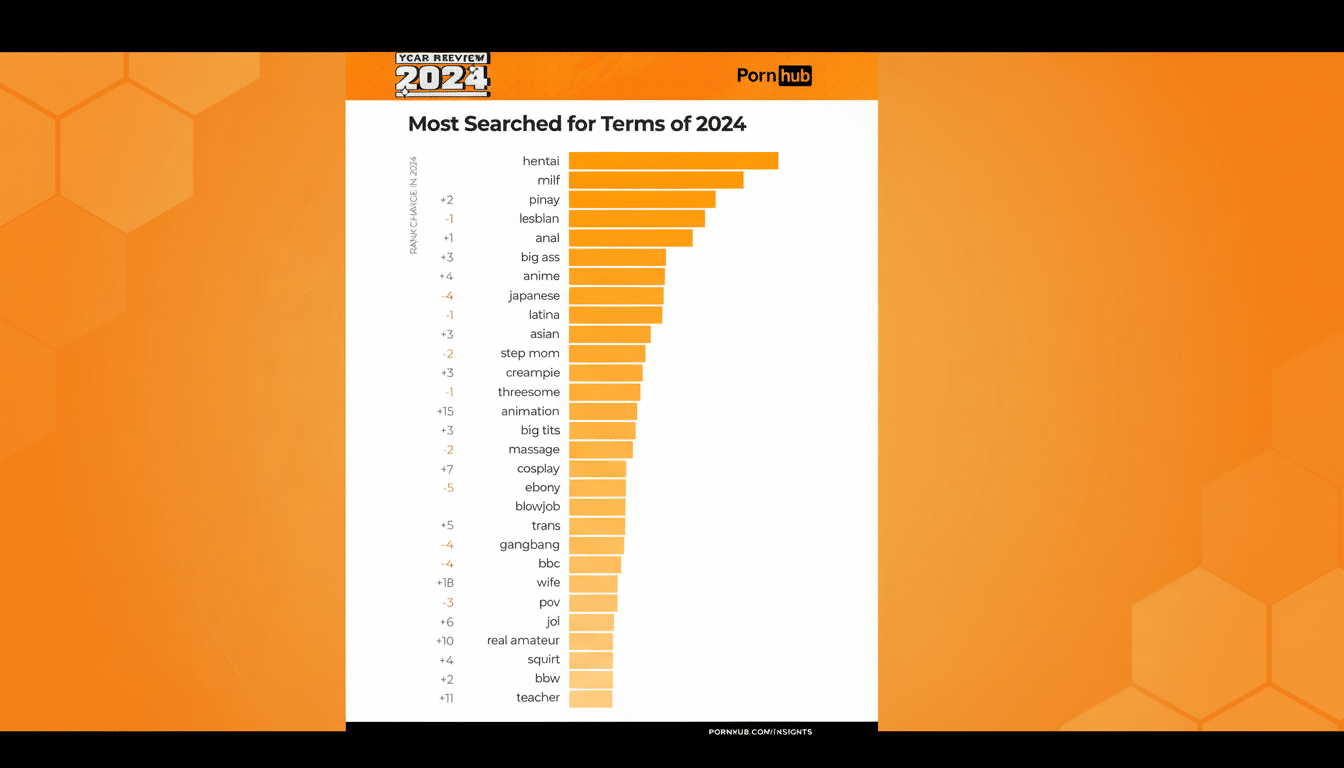
The impact has been measurable. Even Pornhub’s own annual review had consistently listed France as one of its top-traffic markets; the blockade lowered its ranking. Market intelligence firm Semrush estimated Pornhub attracted about 4 billion worldwide visits during a recent month, emphasizing that the audience in even one major country can significantly skew numbers.
The Trade-Off Between Safety and Privacy
Lawmakers present the laws as common-sense child protection. Many of the bills come with stiff penalties for failure to comply and, in some states, would provide parents the right to sue. Critics, including civil liberties groups like the Electronic Frontier Foundation, argue that centralizing identity checks introduces new surveillance and security risks—and could chill legal adult expression.
Aylo says its sites enforce content moderation, consent verification, and other trust-and-safety measures. It contends that redirecting traffic to smaller or offshore websites that do not hold themselves to such standards could make the internet as a whole less safe. That assertion is hard to quantify on its own, but regulators and courts are increasingly being called upon to balance these competing harms.
How People Are Trying to Watch, and the Legal Risks
When geoblocks strike, privacy tools that tunnel through intermediaries (like VPNs, smart DNS, or anonymizing networks) are a frequent go-to. These technologies have legitimate purposes—encryption, protection on public Wi-Fi, blocking ad tracking—but if you use them to bypass a state block, that might conflict with local law or terms of service. Adults must consider the legal landscape in their community and not attempt to circumvent protective measures for minors.
If you are using privacy tools for legitimate security reasons, experts suggest looking for providers publishing independent audits, providing clear data-retention policies, and not engaging in invasive analytics. Note that private browsing only restricts local history, not connection anonymity. Device-level parental controls, network filters, and frank conversations about digital literacy are still essential in households with kids.
What to Watch Next in the Age-Verification Showdown
Look for more states to weigh age checks, and more legal challenges testing the limits. In the U.K. and EU, for example, regulators are exploring privacy-preserving “age tokens” and other tools that verify adulthood, but not an individual’s identity. Whether platforms, device makers, and governments can unite on a solution that is effective and privacy-respecting will decide how long the present era of blackout lasts—and where traffic travels next.