


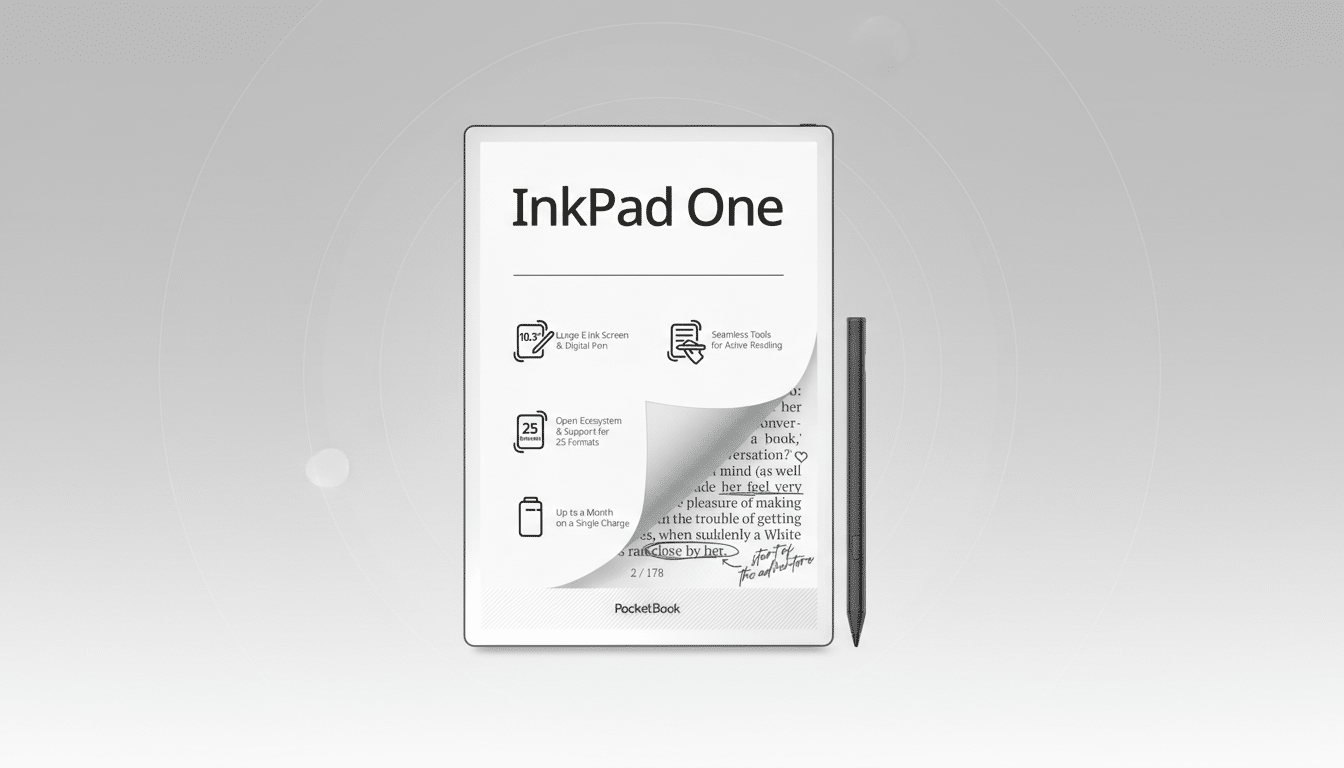
PocketBook is stepping squarely into large-screen e-readers with the InkPad One, a 10.3-inch device that aims to deliver Kindle Scribe-level reading and annotation without the strings of a locked ecosystem. It brings a durable E Ink Mobius display, native support for dozens of formats, and built-in Libby, positioning itself as a reader-first slate for people who want flexibility as much as features.
Priced at $360 and expected to land around £270 in the UK, the InkPad One arrives with a bundled stylus, Bluetooth audio, text-to-speech, and a battery rated for up to two months. It’s a clear signal that the “e-note” category is maturing beyond walled gardens and into devices that let you choose where to buy, borrow, and store your books.
Why It Matters for Kindle Scribe Shoppers
Amazon’s Kindle Scribe set a high bar with a crisp 300 ppi screen and tight software polish, but it leans heavily on Amazon’s store and formats. PocketBook’s approach counters that with openness: the InkPad One supports 25 file types out of the box—EPUB, PDF, FB2, AZW, CBR, and CBZ among them—and handles both Adobe DRM and LCP DRM. That means you can read retail purchases from multiple stores, sideload personal docs, and tap public libraries without the usual format gymnastics.
The built-in Libby experience is especially timely. OverDrive, the company behind Libby, reported more than 662 million digital checkouts across libraries and schools in 2023, underscoring how central library borrowing has become to digital reading. Having Libby on-device reduces friction for borrowing and syncing holds, a convenience many Kindle users still manage via workarounds.
Hardware and Display Overview of the 10.3-Inch InkPad One
The InkPad One uses a 10.3-inch grayscale E Ink Mobius panel at 1404 × 1872 with a 226 ppi density. While that’s lower than the Kindle Scribe’s 300 ppi, Mobius is built on a plastic substrate that E Ink has long described as more impact-resistant than glass-based alternatives—an advantage for commuters and backpack living. The front light offers adjustable brightness and color temperature for comfortable night reading.
An aluminum chassis keeps the device slim at 5.15mm, with non-slip rear pads and a slightly thicker lower bezel for an easy grip. At 400g, it’s a touch lighter than Kindle Scribe and in the same ballpark as other 10.3-inch e-notes. Inside, a quad-core Rockchip RK3566 with 2GB of RAM and 32GB of storage handles reading, annotation, and library tasks without trying to be a general-purpose tablet.
PocketBook claims up to two months of battery life from a 3700mAh cell, an important differentiator versus LCD or OLED tablets that need nightly charging. Bluetooth 5.0 supports audiobooks and wireless headphones, and onboard text-to-speech turns any compatible ebook into an instant listen.
Open Formats and Library Access for Flexible Reading
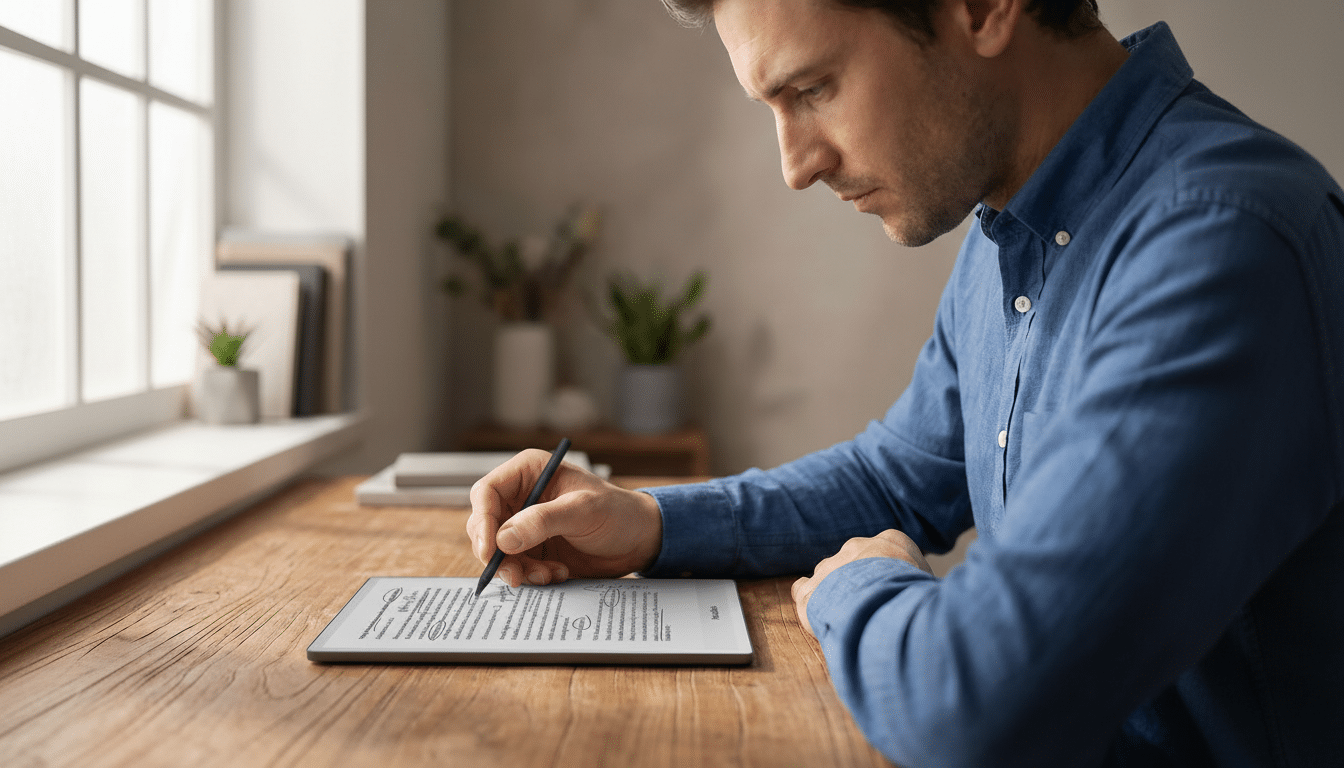
Format freedom is the InkPad One’s headline feature. With native support for 25 formats, including comics standards CBR and CBZ and wide ebook staples like EPUB and PDF, you’re not forced into a single storefront or conversion pipeline. Support for both Adobe DRM and LCP DRM broadens compatibility with independent bookstores, academic publishers, and institutional libraries.
Libby baked into the device means you can browse, borrow, and read library titles on the same screen you use for your purchased books and PDFs. For students and professionals, that flexibility also simplifies handling mixed libraries of research papers, EPUB monographs, and scanned PDFs without juggling multiple devices or apps.
Competitors and Trade-Offs Across E-Note Alternatives
On price, PocketBook threads a careful needle.
- Kindle Scribe starts at around $339.99 with the Basic Pen and climbs with accessories.
- Kobo’s Elipsa 2E typically runs $399.99 with stylus.
- reMarkable 2 undercuts on device cost at $279, but a marker adds roughly $99, and advanced features live behind a subscription.
- Onyx Boox’s Note Air lineup commonly sits between $399 and $449, leaning more toward Android tablet versatility.
PocketBook’s trade-offs are deliberate. The 226 ppi screen won’t match Scribe’s sharpness for tiny typography, but it should be more than comfortable at normal font sizes and excels for document markup. The included PocketBook Stylus 2 supports handwriting, annotations, and highlighting with competent latency for a reading-first workflow, though it isn’t chasing the ultra-low-latency pen feel of devices pitched primarily as digital notebooks.
Early Takeaway: A Pragmatic, Reader-First Alternative
The InkPad One is a pragmatic alternative for readers who value openness over lock-in. It hits the essentials—large screen, robust format support, library integration, audio features, and long battery life—without bloating into a full-blown tablet or fencing you into a single store. If your priority is reading and light annotation with the freedom to choose where your books come from, PocketBook’s latest makes the Kindle Scribe decision genuinely competitive.