


Episode 6 is the point at which that queasy suspicion in Pluribus becomes hard truth, and the reveal lands like a gut punch. Carol deciding that she’d privately sift through a refrigerated building isn’t just an indication of what the Others are using for refreshment; it indicates what they’re eating. The bags are not produce. They’re people.
Inside the Chilling Warehouse Discovery of Episode 6
Following a trail of the Others’ white brew to a tower for cold storage, Carol rips through a plastic-wrapped package and leaps back from the very recognizable form inside. A glance past the shelves, at industrial grinders and steaming vats, confirms their worst fears — a diseased society with a functioning system for transforming human flesh into food.
- Inside the Chilling Warehouse Discovery of Episode 6
- The Human-Derived Protein Explanation and Ethics
- The Scale Problem: Can Human Protein Feed a Planet?
- Character Stakes and the Moral Aftermath of HDP
- Why This Chilling Twist Works in Pluribus Episode 6
- What Carol’s Discovery Stirs Up for the Immune and Others
The tone is carefully clinical, not lurid. Stainless steel, shrink-wrap, neat pallets — the aesthetics of logistics, in short, but not horror. That juxtaposition heightens the creepiness of the revelation. The Others haven’t gone wrong and ended up in savagery; they’ve created infrastructure.
The Human-Derived Protein Explanation and Ethics
Episode 6, “HDP,” quickly lays out the reasoning. The Others are starving here on a planet that is still filled with life even though they, too, adhere to the dictum of not harming any living creature — plant or animal. Their answer is Human-Derived Protein, a processed additive that they add to their amber drink at about 8–12%.
They say they are not killing to obtain it. Instead, they requisition bodies from individuals who die of natural causes and in the aftermath of the Joining — the worldwide event that killed hundreds of millions. In their reckoning, utilizing the dead keeps them from breaking their code even as it spares mass famine throughout their 7,348,292,411-mind hive.
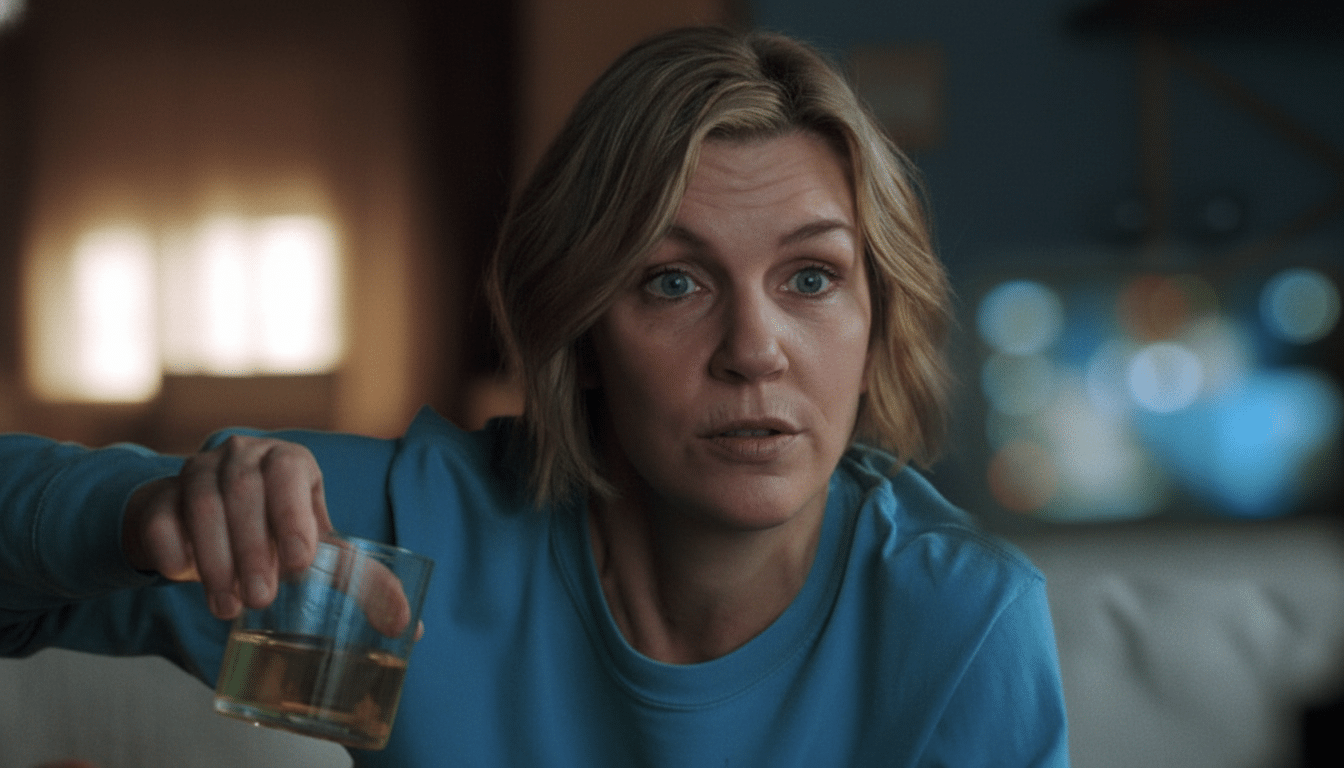
Back in Las Vegas, Mr. Diabaté is unfazed by the cannibalism revelation. The Others even produce a slick explainer video for Carol — surprise guest appearance included — to cast HDP as an essential, victimless addendum. Carol knows Kool-Aid when she tastes it — and so will plenty of viewers.
The Scale Problem: Can Human Protein Feed a Planet?
The numbers are the tell. Simple humanitarian planning will often rely on a daily baseline of around 2,100 kilocalories per adult, a number quoted by agencies like the World Food Programme. Multiply that by 7.35 billion individuals and you’re looking at about 15 trillion kilocalories every day. Even assuming stockpiles do exist, the math doesn’t change.
Episode 6 introduces a starker wrinkle: Even with HDP, most Others will starve to death within a decade. Mr. Diabaté is positing cooperation as triage — help them live and we don’t have a catastrophe on our hands. Carol raises the obvious counterargument: If the Others can’t do harm to life, why not just live off fruit, grains, and the already extant agriculture? The series suggests that scale, logistics, and moral considerations make that solution far less straightforward than it may seem.
Real-world food systems highlight the difficulty. The U.N.’s Food and Agriculture Organization has long acknowledged that supply chains were designed to serve living consumers and seasonal harvests, not to feed an interconnected, planet-spanning hive without planting, culling, or clearing fields. The Others can’t plow up a field if it’s going to kill some plant life; they can merely eat what is already produced or found — and that puts them on a timer.
Character Stakes and the Moral Aftermath of HDP
Carol’s disgust isn’t only moral but also strategic. If HDP is instrumental in the Others’ existence, destroying their system may be the only way to get them off Earth. But why poison a food supply when the eaters, however otherworldly, say they’re not killing? That’s the question that the episode, in its specificity, sharpens.
Mr. Diabaté casts himself as a realist among the immune. He regards collaboration as leverage and a means by which to reduce human suffering. Carol, pummeled by what the Others have already done, aspires higher: shatter the Joining and win back humanity’s agency. That debate, the human engine of the episode and of this relentless show, is anchored by performances that can make both disgust and grim practicality seem like salient virtues.
Why This Chilling Twist Works in Pluribus Episode 6
Science fiction has long played with no-kill codes, from Asimov’s robotics to Star Trek’s exhilarating prime directives.
Pluribus flips the trope: a pledge to do no harm to life becomes consuming the dead. It is a chillingly convenient loophole, and it turns the Others into bureaucrats who must be jerks rather than sadists — which is maybe even scarier.
What Carol’s Discovery Stirs Up for the Immune and Others
By giving HDP a name and blowing the pipeline open, episode 6 hands the immune a target and us an architecture for its clashes with everyone else. Any reversal of the Joining will now slam into existential Other hunger. Supply depots, transport nodes, and procurement policies will matter as much as secret labs and resistance cells.
For now, the answer to the central question of this particular episode is bleak: Carol found bodies, and a system built around turning them into sustenance. What the show does ask, however, is more difficult — what precisely humans are willing to do to end it, and what the Others are willing to turn into in order to survive.