


I spent a full week living with a $560 Pixel Fold to answer a simple question: is this the best tech deal you can buy right now? Short answer: for anyone curious about foldables, yes. It delivers roughly 80–90% of the modern book-style foldable experience for about a quarter of the launch price of the latest flagships.
Why This Price Changes The Foldable Math
Book-style foldables still commonly list between $1,699 and $1,999 from major brands. Against that backdrop, snagging a Pixel Fold for $560 (and even lower if you consider renewed units around $420 from big-box retailers) fundamentally alters the value equation. You get a large inner display, a capable camera system, and Google’s foldable software tricks without the four-figure anxiety. Market trackers like IDC have noted that high prices remain a primary barrier to adoption; a sub-$600 tag directly addresses that.
- Why This Price Changes The Foldable Math
- Design That Still Feels Different In Daily Use
- Software Maturity Is The Secret Sauce For Value
- Performance And Battery Reality Check In Daily Use
- Durability And Repair Risks You Should Consider
- Who Should Buy This And Who Should Skip It
- Verdict: A Foldable Bargain With Real-World Trade-offs
Design That Still Feels Different In Daily Use
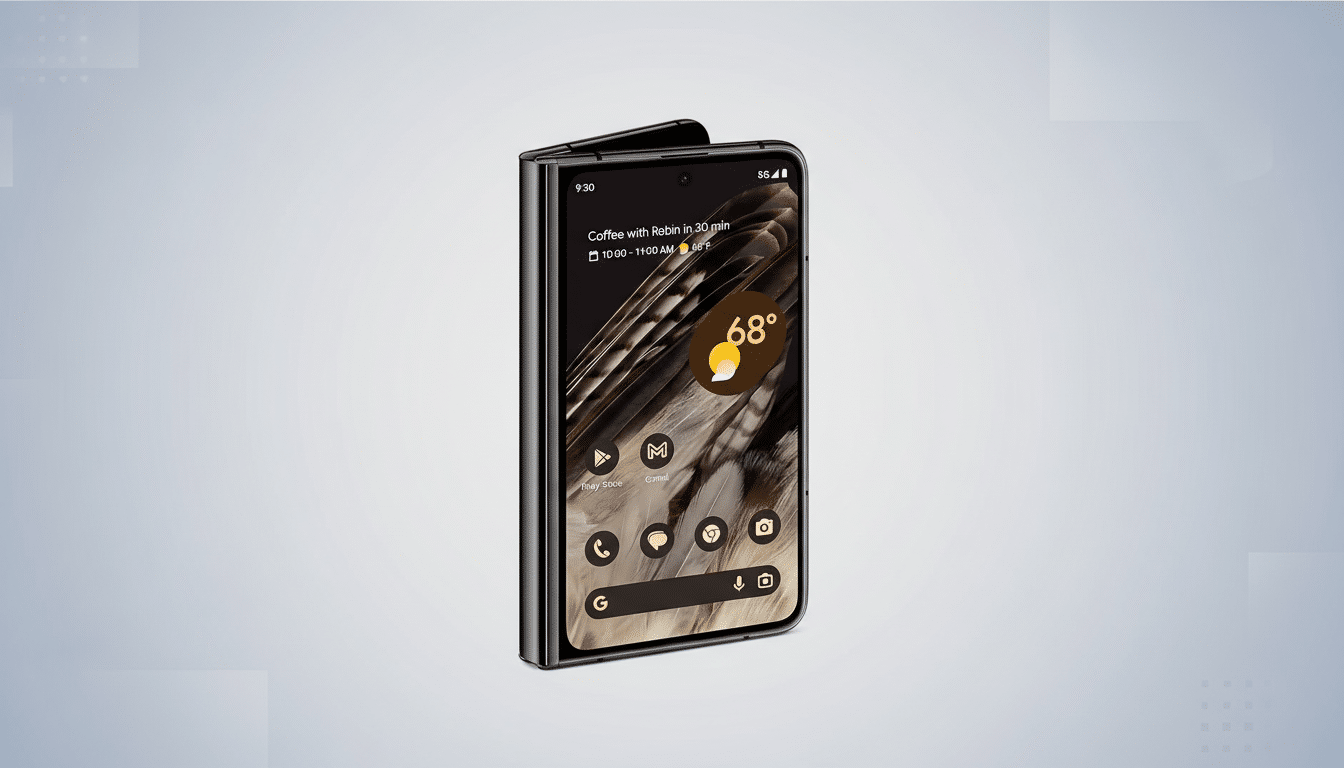
The Pixel Fold’s short-and-wide, passport-like footprint remains distinctive. In daily carry, that width makes it genuinely pocketable; it sits flat in jeans where taller foldables tend to peek out and jab your thigh when you sit. The trade-off is one-handed reach. With average-sized hands, I had to shimmy the phone to touch top corners, but typing on the outer screen felt as comfortable as a big slab phone.
At 283g, it’s heavier than many newer foldables. The glossy rim can also feel slick, so a grippy case is smart insurance. One ergonomic gripe: the hinge doesn’t open fully flat to 180°, which made on-tray typing on a train a wobbly affair. The bezels are chunky and the crease is visible; neither broke the experience for me, but they’re not invisible.
Software Maturity Is The Secret Sauce For Value
What truly rescues the value is how much the software has grown. Running the latest Pixel build, the Fold benefits from Google’s steady stream of platform updates and feature drops. Per-app aspect ratio controls let you force full screen on the inner panel, while app pairs turn the device into a pocket productivity slate.
The standout is a 90:10 split view that lets one app dominate while a second sits in a slim column you can swap in instantly. In practice, I kept Chrome sprawling across most of the display with Spotify docked for quick controls, or paired Maps with Chrome while planning a trip. Many Google apps now present tablet-style layouts—Gmail’s dual-pane inbox, Calendar’s side-by-side agenda and details, and Photos’ expanded navigation—reducing taps and context switches. Third-party standouts like Spotify, 1Password, Plex, and popular to-do apps have kept pace, and forced full screen mitigates stragglers.
Performance And Battery Reality Check In Daily Use
Tensor G2 is no speed champ in 2026 terms, but in a week of email, Slack, streaming soccer on a commute, Maps, and constant multitasking, I never hit stutters that derailed the day. Photos are solid, with a surprisingly useful telephoto that still beats many midrange slabs.
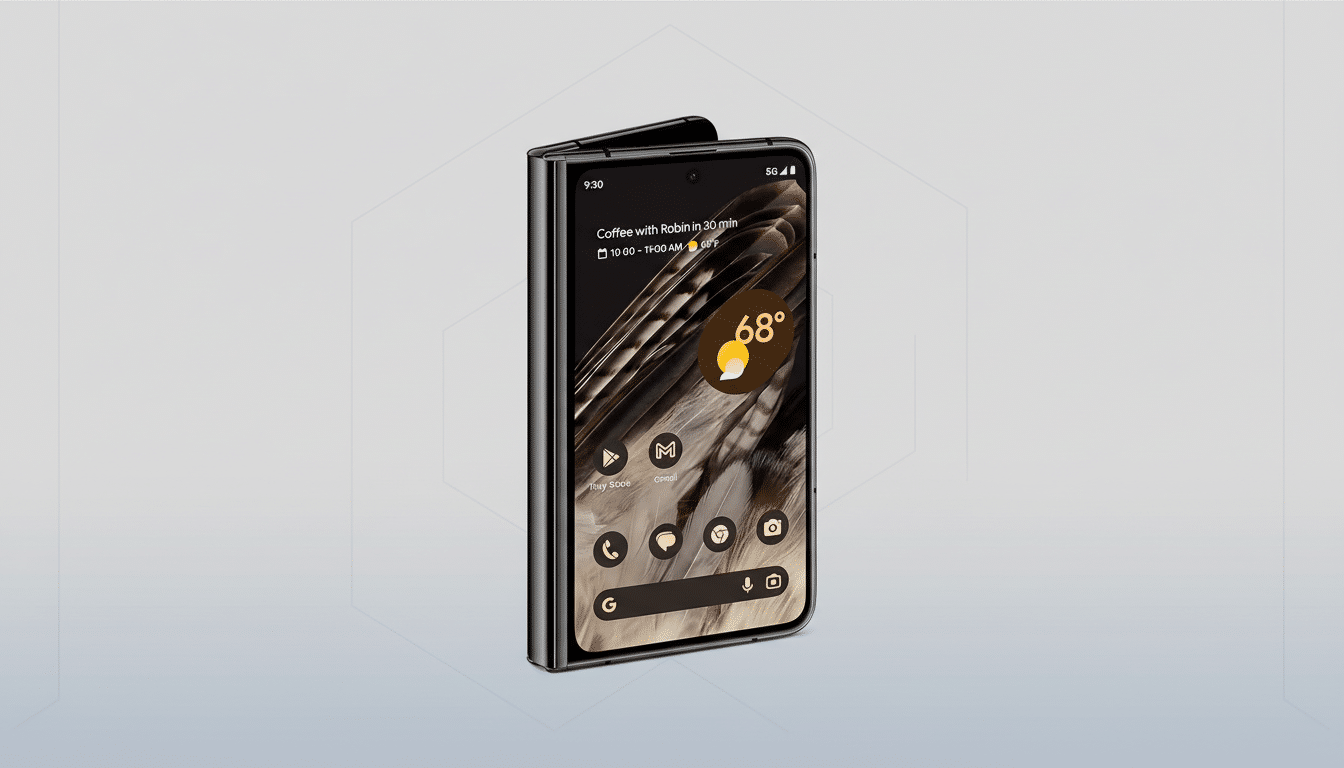
Thermals are the caveat. The phone warms up when charging while navigating, when hammering the camera, or during system updates. I didn’t see shutdowns, but if your routine involves long gaming sessions or high-load video capture, expect heat and consider the impact on longevity. Google’s battery health features can help temper charging stress, but as we learned from support programs on earlier Tensor devices, avoiding chronic overheating is wise.
Durability And Repair Risks You Should Consider
The Pixel Fold carries an IPX8 rating, which means water resistance without certified dust ingress protection. Dust can creep near the hinge over time, a known pain point for early foldable designs. If something goes wrong, the inner screen is the expensive bit: iFixit lists inner display repairs around €760, a startling figure given the current device price. Handle with care, and budget for a case.
Who Should Buy This And Who Should Skip It
Buy it if you’re foldable-curious and want to see how the form factor meshes with your routines without spending $2,000. As a travel companion or couch tablet replacement, it’s brilliant—tent mode for video, desk mode for notes, and that big inner canvas for multitasking. It also makes an excellent secondary device if your primary phone handles gaming or camera-first demands.
Skip it if you need cutting-edge camera hardware, the lightest possible chassis, or marathon gaming performance. The heft, visible crease, and non-flat hinge will bother design purists. And if you work in dusty environments, a dust-resistant foldable or a non-folding phone is a safer bet.
Verdict: A Foldable Bargain With Real-World Trade-offs
At $560, the Pixel Fold is the rare bargain that meaningfully expands what a phone can do. It isn’t the newest or the fastest, and it has clear compromises. But measured by capability per dollar, it’s an outlier: a flexible big-screen computer that slips into a pocket and delivers 80–90% of what the latest four-figure foldables offer. For most people who want to try the future without paying a premium for the present, this is the foldable to buy.