


I docked my Pixel 10 Pro on a shelf and used the plain-vanilla Pixel 10 for an entire week. Simple idea: If you spend the extra cash for a Pro, are you actually feeling it every day? So, after a full week of meetings, photos, flights, and late-night scrolling consuming that battery — the answer is far more nuanced than what the spec sheet would lead you to believe.
For $200, the two phones sit inches apart, offering the same Google-first approach to Android excellence, seven years of software support, and shiny new Tensor silicon. With premium phones grabbing a bigger piece of the market — Counterpoint Research says the $600-plus tier accounted for about a quarter of global sales last year — base versus Pro has never meant more.
- Design and ergonomics: size, materials, and bezels
- Display reality check: resolution, refresh, and brightness
- Performance and battery life in daily real-world use
- Cameras where the Pro pulls ahead in quality and features
- Software experience and long-term support commitments
- Who should buy which Pixel 10 model based on your needs

Design and ergonomics: size, materials, and bezels
Same footprint: Pixel 10 and Pixel 10 Pro are almost exactly the same sizes, meaning cases and most accessories swap without a problem. That alone made the standard model feel nothing short of budget. I also came to like the Pixel 10’s matte rails, which are grippier and far better at hiding fingerprints than the Pro’s polished sheen.
That aesthetic nod is bezels. The Pro’s bezels are just a little bit smaller as well, more even all the way around. You won’t miss it unless you’ve been staring at the Pro all month, and then suddenly even the rectangle just feels more refined. Practical? Not really. Perceptible? Sometimes.
Display reality check: resolution, refresh, and brightness
On paper, the Pro’s display takes the victory: higher resolution, LTPO for more fine-grained refresh scaling, a peak brightness that shines even brighter. In day-to-day use, I actually run my Pro at 1080p for the sake of conserving battery, so jumping to the 10’s native 1080p resolution doesn’t result in better clarity. Scrolling smoothness seemed the same at 120Hz, and outdoors the main model was readable directly in sunlight during a beach-side lunch run.
Laboratory numbers will demonstrate margin in the Pro for HDR punch and peak brightness — the kind of DisplayMate-style testing often does — but unless you live your life in an HDR video app, the daily delta is tiny. This is one of those “nice to have on a spec sheet, irrelevant in hand” scenarios.
Performance and battery life in daily real-world use
Both phones are powered by Google’s newest Tensor G-series chip, and I found that real-world performance is basically a wash: email, scrolling socials, Maps-ing my way around town, casting to my TV, quick photo edits — everything felt the same.
The memory split — 12GB of RAM on the Pixel 10 compared to 16GB in the Pro — only became noticeable when I was multitasking with demanding games, a 4K video export, and tons of Chrome tabs. Power users will appreciate that extra buffer; most people won’t tap it.
Battery life was similarly close. The standard model actually lasted on me a little longer — probably because of its 1080p panel and slightly larger cell. Both survived a challenging day with ease, and both support the same wired and wireless charging speeds, including Google’s magnetic accessory ecosystem.
Cameras where the Pro pulls ahead in quality and features
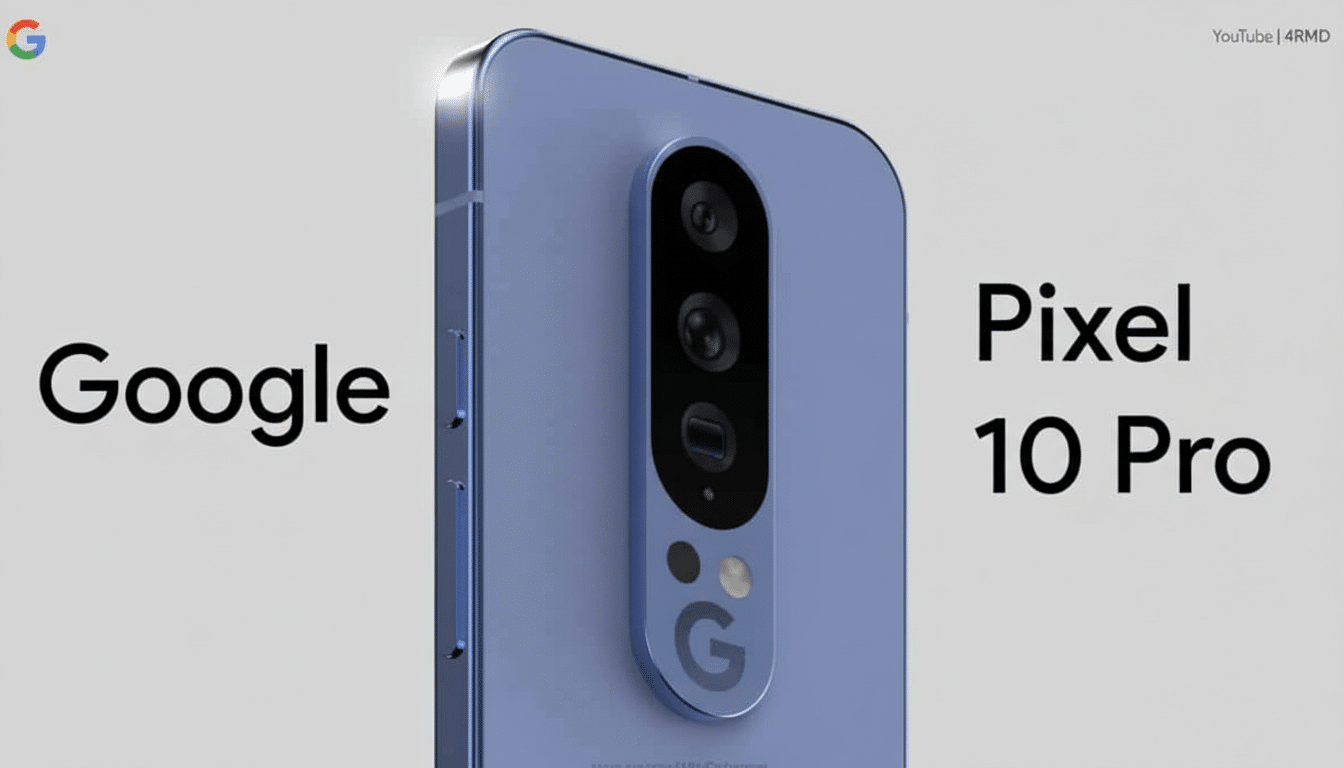
The actual dividing line is this. The Pixel 10 brings a telephoto to the party at the base level — which is excellent news — but the Pro stacks the deck with larger, higher-resolution sensors and deeper software features. With side-by-side shot comparisons, the Pro rendered finer textures in foliage and fabric details, cleaner shadow detail, and better white balance in mixed light.
Zoom is the clincher. The Pro’s periscope module does retain detail at higher magnifications in a way the main telephoto can’t quite match. If you can get the lens all the way out to about 100mm, things should be good — and that’s what camera labs like DxOMark have always said was true of periscope optics: more reach generally means more real-world detail as long as your sensor and/or processing can keep up.
The feature gap is worth at least as much. On the Pro, every lens can shoot in 4K at 60fps; the Pixel 10’s ultrawide maxes out at 4K30. Pro controls for manual tuning, macro focus for close-ups to within an inch of your subject, 50MP portrait capture, Night Sight on video, and cloud-assisted Video Boost are all hidden behind the Pro wall. The selfie camera is also wider on the Pro, which means you can take group shots more easily without having to contort yourself into all kinds of shapes.
Software experience and long-term support commitments
Beyond imaging, parity is excellent. Both devices use the same, unadulterated version of Android that includes Google’s AI tools — live transcription in Recorder, the on-device Summarize function, and Assistant features including Call Screen and Circle to Search. Google’s promise of seven years’ worth of OS and security updates applies to both, which is a big deal from the longevity and resale value standpoint. The Pro merely piles more camera-specific software on.
Who should buy which Pixel 10 model based on your needs
If you’re an occasional shooter — pets, kids, meals, city nights — the Pixel 10 gets the basics down and then some. It feels and looks premium, lasts the day on a charge, and keeps up with the Pro in speed and software for less money. For many people, it’s the smarter spend.
More to the point, if you really care about photography or video, the Pro is worth its price. Better sensors, more consistent 4K60 across lenses, macro capabilities, and enhanced controls mean fewer missed shots and cleaner footage. Heavy multitaskers who live in large apps will also appreciate the extra RAM headroom.
My own switch? I could get by on the Pixel 10 without having to give up much of anything in day-to-day use. But as a power user who depends on the phone camera for work, I’m returning to the Pro. The upside is that the baseline model serves up something like 90% of the experience for less — and that last 10% only matters if you’re precisely all about imaging.