


A rare price drop has turned Google’s value calculus on its head. With the Pixel 10 selling for $599 at major retailers, the expected Pixel 10a suddenly looks redundant before it even arrives. The gap between the two phones, long defined by price, has narrowed to the point where the 10a’s case for existence is shaky at best.
Rumors point to a $499 launch price for the Pixel 10a. That leaves just $100 between it and the discounted Pixel 10. In a market where small deltas often separate midrange phones from flagships, that $100 buys meaningful upgrades that change how the device performs, what features it can run, and how long it stays satisfying.
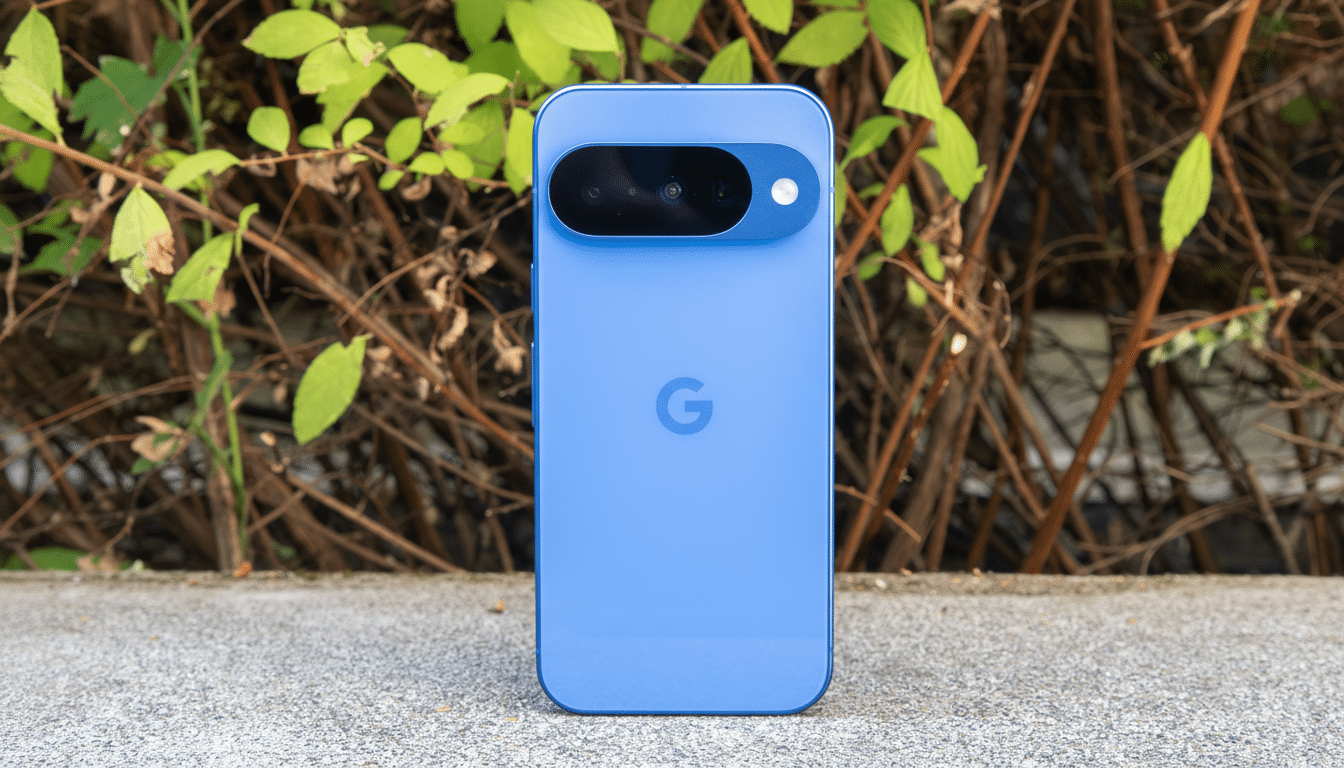
Why a $599 Pixel 10 Price Changes the Buying Math
The Pixel 10 debuted at $799, so a $200 cut is a material shift. Historically, when premium models slide into midrange pricing, buyers move up. Counterpoint Research has noted for multiple cycles that promotions drive a majority of US smartphone purchases, compressing price bands and cannibalizing lower tiers. This is one of those moments.
Buying decisions often hinge on total ownership value, not just sticker price. A temporary $599 window brings the Pixel 10’s build quality, performance headroom, and feature set into contention for budget-conscious shoppers who’d otherwise default to the a-series. That instantly weakens the 10a’s primary advantage.
How the performance gap decides Pixel features
Multiple reports and leak trackers indicate the Pixel 10a will run Google’s Tensor G4 with 8GB of RAM, mirroring last year’s a-series approach. The Pixel 10, by contrast, pairs Tensor G5 silicon with 12GB of RAM. Beyond raw speed, that headroom matters for on-device AI, multitasking stability, and how long new features keep arriving without compromise.
We’ve already seen how this plays out. In prior generations, Google’s own feature matrices and reviewer testing showed that lower-tier hardware missed out on tools like Pixel Screenshots, Call Notes, and Notification Summaries when on-device models exceeded memory or NPU limits. As Google leans harder into AI-first experiences, the performance floor rises. Paying $100 more for the Pixel 10 today is, in effect, buying access to features tomorrow.
Cameras And Hardware Perks You Actually Notice
Imaging is another decisive differentiator. Leaked specs suggest the Pixel 10a will ship without a dedicated telephoto lens, while the Pixel 10 includes one. On paper that’s a single sensor; in practice it reshapes what you can shoot. Reliable 3x–5x optical reach elevates travel photos, candid portraits, and low-light scenes where digital zoom falls apart.

Then there are the quality-of-life touches that add up. Teardowns and accessory partners point to native magnetic Qi2 alignment on the Pixel 10, enabling faster, more secure snap-on charging and a growing ecosystem of magnetic mounts. The base model also brings a brighter, tougher display with smoother adaptive refresh, a faster ultrasonic fingerprint reader, a newer Bluetooth stack for better accessory stability, and quicker wired and wireless charging. Each item alone might be minor; together they reshape day-to-day experience.
If you care about longevity, the Pixel 10’s premium materials and thermals help sustain peak performance under load. That matters for sustained 4K video capture, gaming, or running complex AI tasks on-device. It’s the difference between a phone that feels snappy in month one and one that still feels fresh in year three.
The value equation and timing for buying Pixel 10
Support timelines are effectively a wash: Google’s recent flagships promise lengthy OS and security coverage, and the a-series typically follows suit. But the Pixel 10’s faster platform should translate to fuller feature delivery across those years. Resale value also leans higher for the flagship line, offsetting some upfront cost when you upgrade later.
Analysts at IDC have documented rising global ASPs as buyers gravitate toward better devices that last longer. A $599 Pixel 10 fits that trend perfectly: spend a bit more now, avoid earlier performance ceilings, and push the next upgrade further out. With carrier and retailer promos frequently stacking with trade-ins, many buyers will see the effective price dip even lower.
Who should still consider the Pixel 10a, and why
If your budget cap is firm at $499 and you prefer simpler hardware, the 10a could still make sense—especially if launch promos bring it closer to $449 or less. The a-series often favors lighter builds and lower replacement costs, which some buyers value over premium extras.
For everyone else, the calculus is straightforward. With the Pixel 10 sitting at $599, the modest savings of the 10a are overshadowed by meaningful advantages in speed, camera versatility, charging, biometrics, and accessory support. This discount doesn’t just sweeten the flagship—it effectively sidelines the midranger before it hits shelves.