


If you’ve been hoping for a true return to compact phones, brace yourself. A well-known tipster on Weibo, Digital Chat Station, claims several manufacturers are prototyping slab-style smartphones with roughly 7-inch displays and wider-than-usual aspect ratios—an unmistakable signal that the industry’s next swing might be toward even larger, shorter-and-wider handsets rather than back to pocket-friendly minis.
Industry Signals a Shift Back Toward Wider Phone Screens
Wide screens aren’t new, but they’re resurfacing in a fresh way. The HUAWEI Pura X already experimented with a 16:10 main display on a Flip-style foldable, and the rumored Pura X2 is said to stretch that idea to around 7.5 inches. The current buzz suggests that multiple brands want to deliver that same “tablet-lite” feel without a hinge—essentially bringing the wide foldable experience to a non-folding phone.
- Industry Signals a Shift Back Toward Wider Phone Screens
- What a 7-Inch Slab Smartphone Form Factor Really Means
- Which Phone Makers Will Jump First to Extra-Wide Slabs
- Why Small Phones Keep Losing Ground Despite Vocal Demand
- Design Trade-offs and Use Cases for Wider 7-Inch Phones
- What to Watch Next as Wide 7-Inch Phone Prototypes Emerge
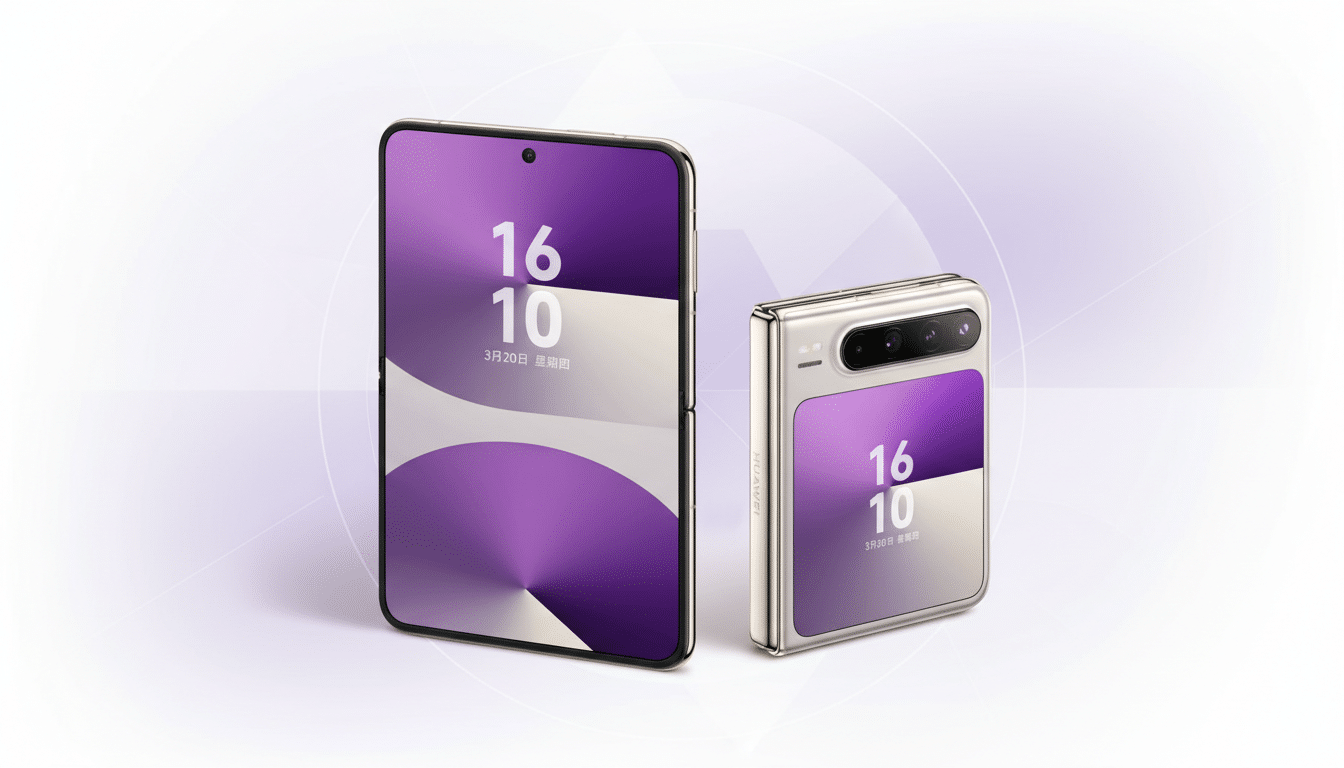
What counts as “wide” today? Most modern flagships sit near 19.5:9 or 20:9, which look tall in portrait. A 16:10 or even 18:10 screen at 7 inches changes the ergonomics dramatically, offering more horizontal room for typing, gaming controls, and video timelines. It’s a meaningful pivot away from the extra-tall, one-hand-stretch reality of recent years.
What a 7-Inch Slab Smartphone Form Factor Really Means
Size alone doesn’t tell the full story—width does. Consider the Honor X10 Max (7.09 inches): at roughly 85 mm wide, it felt closer to a small tablet than a phone. Xiaomi’s Mi Max 3, at 6.9 inches, pushed width to about 87.4 mm. By contrast, today’s biggest mainstream flagships usually hover between 75 and 79 mm wide. If the next wave lands near those 85 mm marks, one-handed use won’t just be challenging; it’ll be a design afterthought.
There are upsides. Reading, split-screen multitasking, desktop-style web layouts, and on-screen keyboards all benefit from added width. So do media and gaming: wider canvases reduce black bars with certain video formats and make virtual controls less cramped. For creators, timelines in video or audio apps become more usable on the go.
Which Phone Makers Will Jump First to Extra-Wide Slabs
Digital Chat Station’s post did not name a specific brand publicly, but community chatter on Weibo hints that Motorola may be among those testing the concept. That wouldn’t be shocking. Motorola has quietly become more experimental again—think Razr foldables and large-screen Edge devices—and Lenovo’s ecosystem play blurs lines between phones, tablets, and PCs. If panels from suppliers like BOE or Samsung Display begin appearing in certification databases, we’ll have a clearer read on timelines.
It’s also worth remembering that 7-inch slabs aren’t without precedent. Beyond Honor and Xiaomi’s “Max” lines, Samsung once fielded a 7-inch Galaxy W in Korea. Those devices were outliers then; the difference now is momentum. Average phone sizes have crept steadily upward, and supply chains are optimized for larger OLED panels. Research firms like IDC and Counterpoint have documented that most mainstream shipments now cluster between roughly 6.5 and 6.8 inches—making a jump to 7 inches less radical than it sounds on paper.
Why Small Phones Keep Losing Ground Despite Vocal Demand
Enthusiasts routinely ask for a 5.8-inch or smaller flagship, but the economics punish tiny. Large displays are cheaper per square inch at scale, and buyers increasingly prioritize battery life, camera size, and thermal headroom—each easier to deliver with a bigger chassis. Even Apple’s attempt with the iPhone mini line reportedly yielded a low single-digit share of sales, according to CIRP analyses, which helps explain why most brands stick to big.
The irony is that new battery chemistry could make compact viable again. Silicon-carbon anodes, which brands like Honor have touted in recent flagships, improve energy density and performance in cold conditions. In theory, that lets a sub-6-inch phone avoid the usual battery compromises. In practice, however, marketing gravity still favors “bigger screen, bigger battery, bigger camera”—the easy sell on a store shelf.
Design Trade-offs and Use Cases for Wider 7-Inch Phones
Go wide enough and pockets become the battleground. Expect any 7-inch slab to rely on aggressive curvature, tapered frames, and sub-8.5 mm thickness targets to stay hand-friendly. Weight will matter, too; crossing 230 grams can quickly feel unwieldy. On the software side, manufacturers will need smarter one-handed modes, split keyboards, and UI scaling that treats width as a feature, not a quirk.
For work and play, though, the pitch is compelling. A wider canvas enables better document editing, richer dashboards, and less cramped spreadsheets. Gamers get more room for controls, while streamers see more of the video with certain aspect ratios. If accessory makers lean in with compact grips, stands, and magnetic wallets sized for wide phones, the ecosystem could normalize the extra girth surprisingly fast.
What to Watch Next as Wide 7-Inch Phone Prototypes Emerge
Keep an eye on certification listings from bodies like TENAA and the FCC, which often reveal screen sizes and dimensions ahead of launches. Supply chain signals—panel orders at 16:10, talk of 7-inch LTPO OLED production, or new wide-friendly UI features in Android builds—will add credibility to the leak cycle.
If these prototypes make it to retail, 2024’s supersized flagships may suddenly look conservative. For those clinging to small phones, the best hope might be a niche “mini” revival or a premium compact from a brand willing to chase loyalty over volume. For everyone else, prepare for pockets—and user interfaces—to stretch wider than ever.