


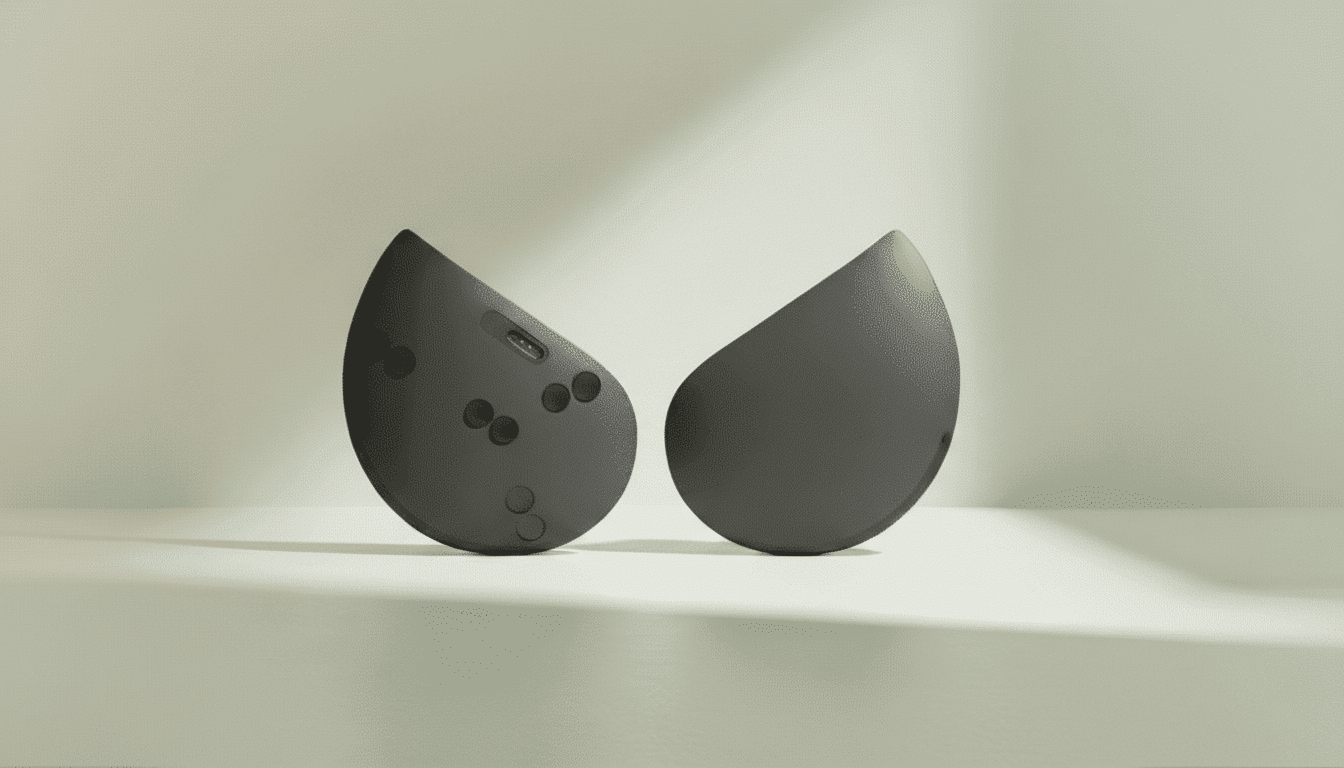
It might be the most unconventional wearable to hit the market, yet its logic is hard to ignore. Petal has introduced a health tracker that slips inside a bra, positioning sensors close to the heart to monitor cardiovascular signals, menstrual cycle patterns, and body composition while staying virtually invisible during daily wear.
The insert uses bio-impedance and electrical measurements to read changes in blood flow at the chest—signal territory that wrist-based devices struggle to access reliably. Preorders are open at an introductory $149, with the company touting up to 18 days on a single charge and options in black or blush.
Why a Bra Insert Makes Sense for Health Tracking
Chest-adjacent sensors enjoy a physiological advantage. Measuring closer to the heart improves signal quality for metrics such as heart rate variability (HRV) and respiration, and it reduces motion artifacts that often plague optical sensors on the wrist. A Stanford University evaluation of consumer trackers found heart rate accuracy can degrade with movement, skin tone, and fit—issues that a stable, chest-level placement can mitigate.
Bio-impedance, the same technology used in clinical and consumer body-composition analyzers, can infer changes in fluid shifts and tissue properties by sending a harmless current through the body. On the chest, those signals can help characterize blood flow dynamics more directly than wrist-based photoplethysmography, offering a richer picture of cardiovascular status during rest and daily routines.
What It Actually Tracks Inside the Petal Bra Insert
Petal organizes insights into four pillars—heart, mind, body, and cycle—learning an individual baseline and flagging deviations. On the heart front, expect continuous heart rate, HRV trends, and breathing proxies derived from subtle variations in chest signals. These are the same inputs many athletes and clinicians watch to assess recovery and stress.
The cycle component leans on breast-adjacent placement to monitor changes in breast tissue and water content across phases, complementing common menstrual biomarkers like temperature and HRV. The American College of Obstetricians and Gynecologists has called the menstrual cycle a vital sign for adolescents and adults alike, and granular, passive data could make those patterns easier to interpret over time.
For body metrics, Petal says the insert can estimate midsection and visceral fat percentages using bio-impedance. That approach mirrors smart scales and some advanced watches: it can be informative for trends, though readings can shift with hydration, placement, and time of day. As with any consumer wearable, it is a wellness device, not a diagnostic tool.

Design Details and Battery Life Standouts Explained
The insert is a single size designed to sit snugly against each breast, made from biocompatible materials that include a soft European fabric exterior and a polyurethane-coated interior. By choosing an insert rather than a strap or clasp, Petal avoids the comfort trade-offs of chest bands while keeping the sensor locked in the same position each day.
Battery life is the spec that turns heads. Up to 18 days on one charge dramatically exceeds most touchscreen smartwatches—which often land between one and three days—and eclipses typical smart rings, which commonly range from four to seven days. Longer gaps between charges mean more complete longitudinal datasets and fewer nightly interruptions.
Who It’s For and What to Watch Before Buying
The discreet form factor will appeal to anyone who dislikes wrist wearables, works in settings where watches are discouraged, or wants health signals without broadcasting that they are tracking. Because it is an insert, real-world fit will depend on bra style and support; a one-size design may not feel identical across band and cup sizes.
Data stewardship also matters. Buyers should look for clear policies on encryption, data retention, and sharing, and how the company handles sensitive reproductive health information. Regulatory lines between wellness devices and medical devices continue to evolve, and prospective users should treat any flagged trends as prompts for conversation with a clinician rather than definitive diagnoses.
The Shift Toward Invisible, Everyday Wearables
Petal’s insert arrives as the market pivots to smaller, subtler devices that blend into daily life. Smart rings like Oura and Evie tuck sensors into jewelry; last year, Lumia showcased earrings that analyze blood flow at the ear stem. Industry trackers such as IDC have noted sustained demand for wearables, but the next leg of growth is increasingly tied to comfort, longer battery life, and signals hard to capture on the wrist.
Unusual as it looks, a bra-based tracker is a practical expression of a simple idea: put the right sensor in the right place, and you get cleaner data with fewer compromises. If Petal delivers on accuracy and comfort, it could carve out a new category for chest-level health tracking that most people will never see—but many may end up relying on.