


Peacock is turning up the brightness and the volume—literally. In a joint announcement at CES, Dolby Laboratories and NBCUniversal said the service will adopt Dolby Vision 2, Dolby Atmos, and the Dolby AC-4 audio codec across live and on-demand programming at no extra cost for subscribers. It’s the first major streamer to implement Dolby’s end-to-end picture and sound stack for live sports and entertainment, and it’s a meaningful quality leap viewers will notice immediately.
What Dolby Vision 2 And Dolby Atmos Bring
Dolby Vision 2 refines HDR with smarter dynamic metadata, giving TVs more precise scene-by-scene instructions for tone mapping. The result is brighter highlights, deeper blacks, and more consistent color from one display to the next. Motion handling also gets attention, which matters for fast pans and quick cuts common in live broadcasts. In practice, jerseys pop, stadium lights retain detail, and shadows keep texture instead of collapsing into gray.
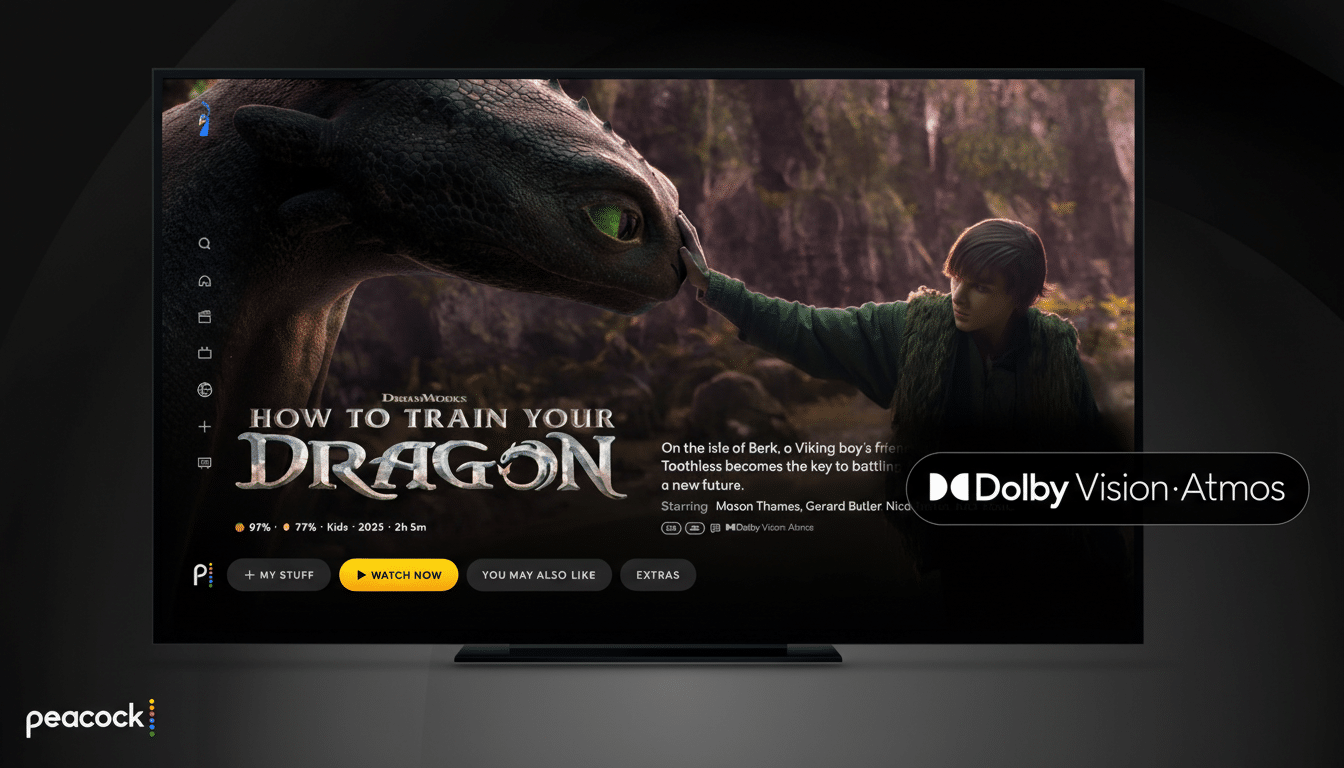
On the audio side, Dolby Atmos uses object-based mixing to place sounds around and above you. Crowd swells, arena acoustics, and on-field effects gain a sense of space that traditional 5.1 can’t match. Combined with Dolby’s AC-4 codec—engineered to deliver immersive audio with less bandwidth—Peacock’s streams should sound fuller and remain stable even on congested connections.
Live Sports in HDR and Immersive Audio on Peacock
Peacock will expand Atmos and Vision to marquee live sports, including NBA and MLB coverage, building on its earlier milestone as the first platform to offer Sunday Night Football in Atmos. Live HDR is notoriously hard—exposure shifts, mixed lighting, and rapid motion test every link in the chain—but Dolby’s real-time metadata and mastering tools are designed to keep color and contrast locked in while preserving motion clarity.
The companies say the upgrade targets two of the most common viewer complaints: pictures that look too dark and dialogue that’s hard to hear. AC-4 supports dialogue enhancement and personalized mixes, allowing compatible devices to emphasize voices without cranking overall volume. That’s timely; industry surveys consistently show many viewers resort to subtitles for clarity, even when they have capable TVs and soundbars.
Who Gets It and What You Need for Vision and Atmos
The rollout is included for Peacock subscribers with eligible plans—no add-on required—provided your hardware can decode the formats. You’ll need a TV or projector that supports Dolby Vision (many recent models from LG, Sony, TCL, and Hisense do) and a soundbar or AV receiver capable of Dolby Atmos. Popular streaming devices such as Apple TV 4K, Roku Ultra, Amazon Fire TV Stick 4K Max, and Xbox Series X|S already support Vision and Atmos for many apps.
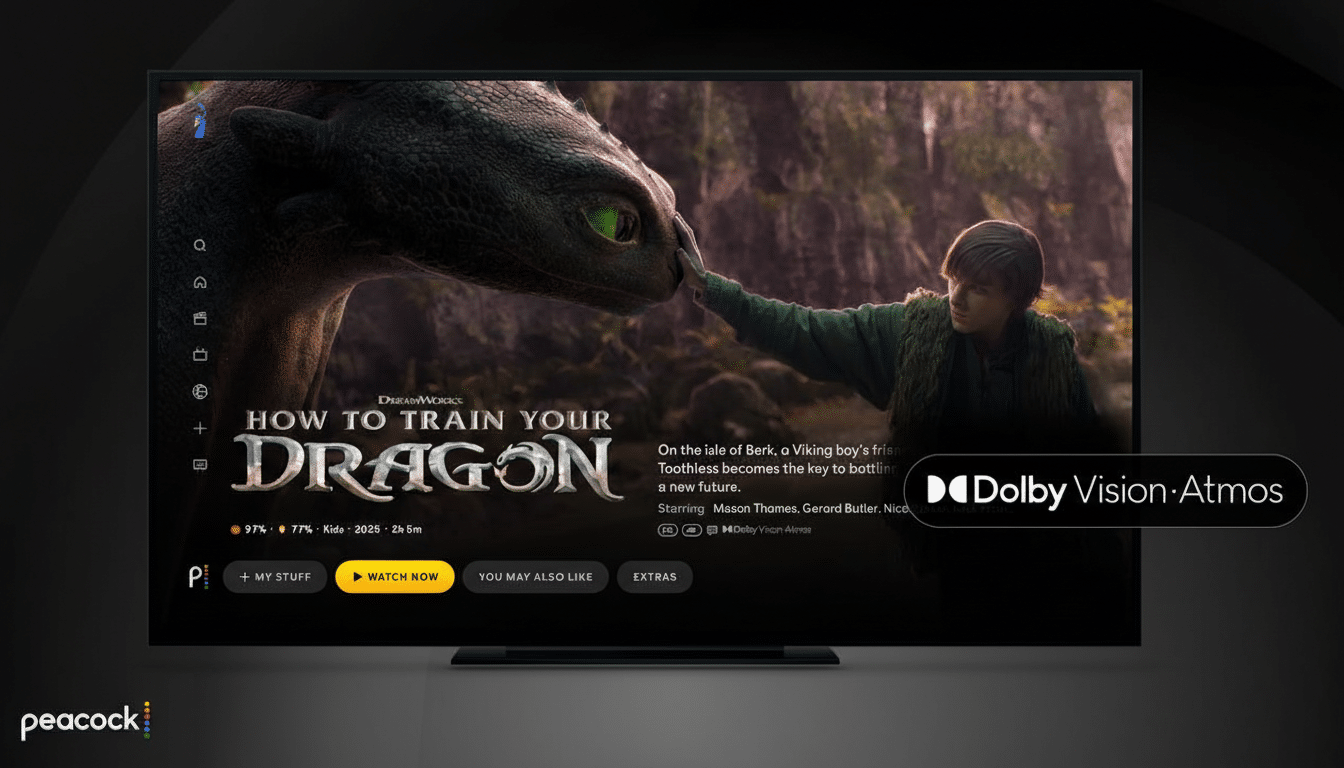
Check that your device is set to output 4K and HDR, and ensure sufficient bandwidth for the highest-quality streams. If your gear doesn’t support AC-4, Peacock can still deliver Atmos over Dolby Digital Plus on many devices, while AC-4-capable setups unlock features like dialogue control. Even without Atmos speakers, the improved encoding can yield cleaner, more intelligible audio on TVs.
Why the Free Peacock Upgrade to Dolby Matters
Streaming now commands roughly 40% of total TV viewing in the United States, according to Nielsen’s Gauge reports, and quality has become a key differentiator. Peacock, which Comcast says has surpassed 30 million paying subscribers, leans heavily on live sports to drive growth. By bundling Dolby Vision 2 and Atmos at no extra charge, it challenges rivals that reserve premium formats for higher-priced tiers while aligning with platforms, like Apple TV+, that make high-end A/V table stakes.
For Dolby, securing an end-to-end implementation across a mass-market service validates technologies like AC-4, already embraced in NextGen TV broadcasts via ATSC 3.0. A streaming footprint at this scale can accelerate device makers’ support for features such as dialogue enhancement and personalized audio, closing the loop from content production to living room playback.
Rollout Timeline and What Peacock Viewers Can Expect
Peacock and Dolby say the upgrade will arrive in phases, starting with high-profile live events and expanding to films and series as new masters come online. Look for Dolby Vision and Dolby Atmos badges on title pages; availability can vary by device, region, and subscription. As the catalog grows and more live feeds switch to HDR and AC-4, expect brighter, punchier pictures and sound that brings the venue home—without paying a cent more.