


A yard can look manageable until several maintenance jobs arrive at once. Grass needs mowing, shrubs need trimming, leaves collect along the driveway, and a fallen branch may need to be removed before the next storm. The challenge is knowing which outdoor equipment actually makes each task easier without buying tools that spend most of the year sitting in a shed.
Choosing the right equipment starts with understanding what each tool is designed to do, how often it will be used, and how well it matches the size and layout of the property. A compact suburban yard has different needs from a large lot with mature trees, sloped ground, and extensive landscaping.
- What Are Outdoor Equipment Types?
- Start With the Yard Task, Not the Tool
- Mowers: The Main Tool for Lawn Care
- String Trimmers and Edgers
- Leaf Blowers and Rakes
- Hedge Trimmers and Pruning Tools
- Chainsaws: Specialized Equipment for Wood
- Garden and Soil-Preparation Tools
- Seasonal Equipment Matters
- Comparing Common Outdoor Equipment
- Match Equipment to Yard Size
- Best Practices & Pro Tips
- Build the Equipment Collection Gradually
What Are Outdoor Equipment Types?
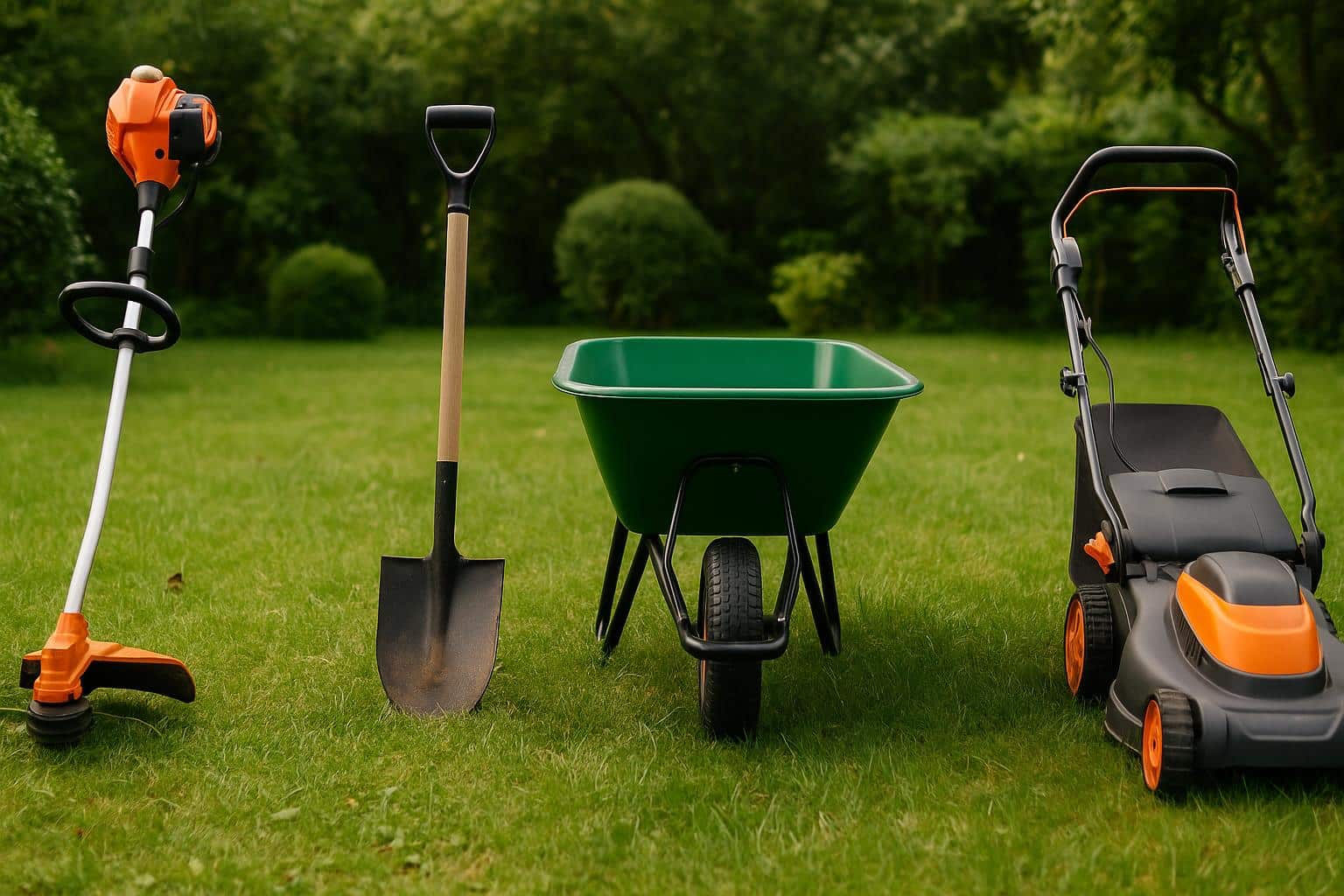
Outdoor equipment types are categories of powered and manual tools designed for specific property-maintenance tasks, including mowing, trimming, pruning, blowing, cultivating, watering, and seasonal cleanup. The most practical equipment setup combines a few frequently used lawn care tools with specialized equipment added only when the property requires it.
Rather than choosing equipment based solely on power or features, homeowners should consider the job first and then select the tool that handles it efficiently.
Start With the Yard Task, Not the Tool
One of the easiest ways to avoid unnecessary purchases is to make a list of recurring maintenance tasks before shopping.
For most homeowners, the list includes:
- Cutting grass
- Trimming around obstacles
- Edging sidewalks and driveways
- Pruning shrubs and small branches
- Removing leaves and grass clippings
- Maintaining garden beds
- Clearing debris
- Managing snow or ice in colder regions
Each task has equipment suited to it. A mower is designed for maintaining lawn height, while a string trimmer handles grass that a mower cannot reach. A blower is useful for moving loose debris, but it is not a substitute for a rake when working carefully around garden beds.
Mowers: The Main Tool for Lawn Care
For properties with significant turf, the mower is usually the most frequently used piece of outdoor equipment.
Walk-Behind Mowers
Walk-behind mowers work well for small and medium residential lawns. Push models are relatively simple, while self-propelled versions can reduce the effort required on larger lawns or sloped terrain.
Battery-powered models can be convenient for homeowners who prefer cordless equipment. When evaluating one, look at battery capacity, deck width, cutting-height adjustment, charging time, and expected runtime rather than focusing on a single specification.
Riding and Zero-Turn Mowers
Larger properties can make a riding mower more practical. The main advantage is reduced mowing time and physical effort.
However, riding equipment requires more storage space and generally involves greater maintenance. For a half-acre suburban property with many landscaping obstacles, a walk-behind mower may still be more maneuverable than a larger machine.
String Trimmers and Edgers
Even a well-maintained lawn usually has areas that a mower cannot reach.
String trimmers are useful around:
- Fence lines
- Trees
- Garden borders
- Foundations
- Mailboxes
- Uneven areas
An edger performs a different job by creating a defined boundary between turf and hard surfaces such as sidewalks or driveways.
For a small property, one versatile trimmer may be sufficient. Larger landscapes with extensive borders may justify using dedicated edging equipment.
Leaf Blowers and Rakes
Blowers are particularly useful for moving dry leaves, grass clippings, and lightweight debris across driveways, patios, sidewalks, and open lawn areas.
They are not always the best choice for delicate garden beds, wet leaves, or small cleanup jobs. A rake remains inexpensive, quiet, and useful for gathering material precisely.
Battery-powered blowers can be convenient for short residential cleanup sessions. Before choosing one, consider whether the battery can complete the expected job without an additional charge.
For homeowners comparing available cordless equipment and tool categories, greenworks products provide one example of the types of battery-powered outdoor equipment available through a major retail channel. The useful comparison points are compatibility, runtime, charging requirements, and the range of tools that can share a battery system.
Hedge Trimmers and Pruning Tools
Shrubs and hedges require a different type of cutting equipment from grass.
A hedge trimmer is intended for maintaining relatively uniform hedge growth, while hand pruners and loppers are better suited to selective cuts on individual stems and branches.
For occasional shrub maintenance, manual pruners may be all that is necessary. A homeowner with long hedges or several large shrubs may save considerable time with a powered hedge trimmer.
Tree branches require additional caution. Small branches may be manageable with appropriate hand tools, while larger branches may require a pole saw or professional assistance depending on their size, height, and location.
Chainsaws: Specialized Equipment for Wood
Chainsaws are useful for cutting larger branches, processing fallen limbs, and handling firewood. However, they should not be treated as general-purpose yard tools.
The appropriate saw depends on the type and size of work. Smaller battery-powered saws can handle some light residential tasks, while larger jobs require equipment with greater cutting capacity.
Homeowners should follow the manufacturer’s instructions and use appropriate protective equipment. OSHA’s landscaping safety guidance covers hazards associated with machinery, cuts, eye injuries, noise, and other outdoor work risks. Reviewing its landscaping safety guidance can help homeowners understand common hazards before using powered cutting equipment. (OSHA)
Garden and Soil-Preparation Tools
Not every outdoor maintenance job requires an engine or battery.
Garden beds commonly require:
- Hand trowels
- Cultivators
- Hoes
- Garden forks
- Shovels
- Rakes
- Wheelbarrows or garden carts
A cultivator can help loosen soil in established beds, while a shovel is better suited to digging, moving soil, and planting larger specimens.
For homeowners managing vegetable gardens or ornamental beds, hand tools can often provide greater control than powered equipment.
Seasonal Equipment Matters
The right equipment can change throughout the year.
Spring usually brings mowing, edging, pruning, planting, and cleanup after winter. Equipment should be inspected before the busy season begins.
Summer often requires frequent mowing, trimming, watering, and weed management. Battery charging becomes more important when equipment is used several times a week.
Fall shifts attention toward leaves, branches, pruning, and winter preparation. A blower, rake, pruning tools, and appropriate cleanup equipment become particularly useful.
Winter needs depend heavily on climate. Homeowners in snowy regions may need snow shovels, snow blowers, ice-management tools, or other equipment, while warmer regions may continue routine landscape maintenance.
For lawn decisions involving watering, soil management, and conservation, homeowners can also consult USDA conservation resources for residential landscapes, which provide information on practices related to soil, water, and plant management. (USDA Natural Resources Conservation Service)
Comparing Common Outdoor Equipment
| Equipment | Best suited for | Small yard | Large yard | Main consideration |
|---|---|---|---|---|
| Walk-behind mower | Routine lawn cutting | Excellent | Good | Deck width and runtime |
| Riding mower | Large lawn areas | Usually unnecessary | Excellent | Storage and maintenance |
| String trimmer | Grass around obstacles | Excellent | Excellent | Line capacity and battery runtime |
| Blower | Leaves and loose debris | Good | Excellent | Runtime and debris volume |
| Hedge trimmer | Shrubs and hedges | Good | Excellent | Hedge length and branch size |
| Pruners/loppers | Selective pruning | Excellent | Good | Branch diameter |
| Chainsaw | Larger branches and wood | Occasional | Useful | Safety and cutting capacity |
| Garden hand tools | Beds and planting | Excellent | Excellent | Durability and ergonomics |
Match Equipment to Yard Size
A small urban yard may require little more than a compact mower, string trimmer, hand pruner, rake, shovel, and possibly a small blower.
A typical suburban property may benefit from a mower, trimmer, blower, hedge trimmer, pruning tools, and a collection of basic garden equipment.
A large residential lot may require longer battery runtime, additional batteries, larger-capacity equipment, and specialized tools for trees or rougher areas.
For acreage with extensive wooded areas, homeowners should consider whether certain infrequent jobs are better handled by renting specialized equipment or hiring a professional rather than purchasing a machine that receives little use.
Best Practices & Pro Tips
- Choose equipment around recurring tasks, not occasional possibilities.
- Check the manufacturer’s recommended battery runtime and charging conditions before purchasing cordless tools.
- Keep batteries, chargers, and equipment protected from excessive heat and moisture.
- Clean grass, dirt, and plant residue from equipment after use.
- Sharpen or replace cutting components when they become dull or damaged.
- Use hand tools for small jobs rather than automatically reaching for powered equipment.
- Keep safety glasses, gloves, hearing protection, and sturdy footwear accessible.
- Inspect guards, handles, blades, cables, and battery connections before operation.
- Consider a shared battery platform when several cordless tools are needed.
- Store seasonal equipment properly and inspect it before its next period of regular use.
Build the Equipment Collection Gradually
The most efficient outdoor equipment collection is not necessarily the largest. It is the one that handles the property’s regular work without unnecessary duplication.
Start with the equipment needed every week or every season. After several months of use, pay attention to tasks that consistently take too long or require borrowed or rented equipment. Those patterns provide a much better basis for the next purchase than a long list of features.
Over time, homeowners can create a balanced collection of lawn care tools, yard tools, hand equipment, and cordless machines that fits their property, storage space, budget, and maintenance routine. Choosing equipment by task, maintaining it properly, and replacing it only when necessary can make outdoor maintenance more manageable for years.