


The Oupes Guardian 6000 portable power station just dropped to its lowest price, landing at $1,698.99 after a 23% cut from its $2,199 list. That $500.01 savings puts a flagship-grade backup system within reach for households and RVers who want serious, appliance-level power without a gas generator.
Interest in home backup has surged as grid interruptions climb. The U.S. Energy Information Administration reports that the average American customer has faced multiple hours of outages annually in recent years, while NOAA tracks a rising number of billion-dollar weather events. Against that backdrop, a high-capacity, low-maintenance power station at a record price is notable.
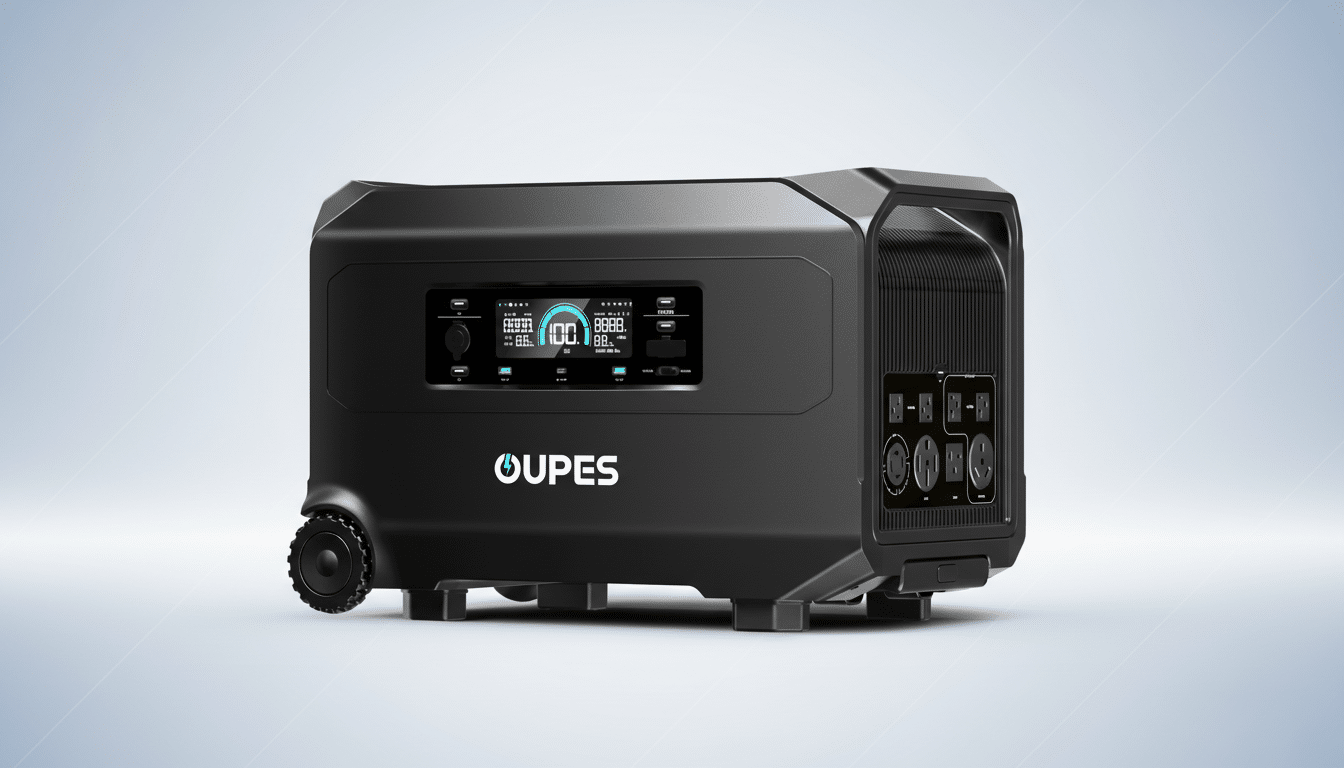
Why This Guardian 6000 Price Cut Truly Stands Out
At 4,608Wh of capacity, the Guardian 6000’s sale price works out to roughly $0.37 per watt-hour—aggressively low for a LiFePO4 system with 120V/240V output. Lithium iron phosphate chemistry is prized by engineers for thermal stability and long cycle life compared with many NMC-based packs, a point echoed by testing from organizations like the National Renewable Energy Laboratory. Add in a 6,000W inverter that can boost to 7,200W, and you’re looking at whole-appliance capability rather than just phone-and-laptop charging.
Crucially, native 240V support lets this unit handle select split‑phase loads that smaller stations can’t touch—think certain well pumps, dryers, or shop tools within the inverter’s limits. That dual-voltage flexibility is rare at this price tier and usually requires pairing or special accessories with competing systems.
Real-World Power You Can Actually Use Every Day
Numbers mean little without context. With 4.6kWh onboard, a typical full-size refrigerator averaging ~150W could run for a day or more, depending on compressor cycling and efficiency losses. A CPAP machine drawing ~40W might get around a dozen overnight sessions on a single charge. Keep a Wi‑Fi router (~10W) and LED lighting (~10–50W) online alongside phone and laptop charging without breaking a sweat.
Where the Guardian 6000 separates itself is surge handling and simultaneous loads. A 6,000W continuous inverter gives headroom to start motors, run a microwave and a freezer together, or power a table saw on a jobsite. The 7,200W boost helps cover short spikes that trip lesser inverters.
Oupes also rates the system as expandable up to 41kWh with additional batteries. At that size, you’re covering multiple days of critical loads in a typical home—especially if you ration high-draw appliances. For perspective, many households consume 20–30kWh per day according to EIA data; stretching 41kWh across essentials can carry you through extended outages.
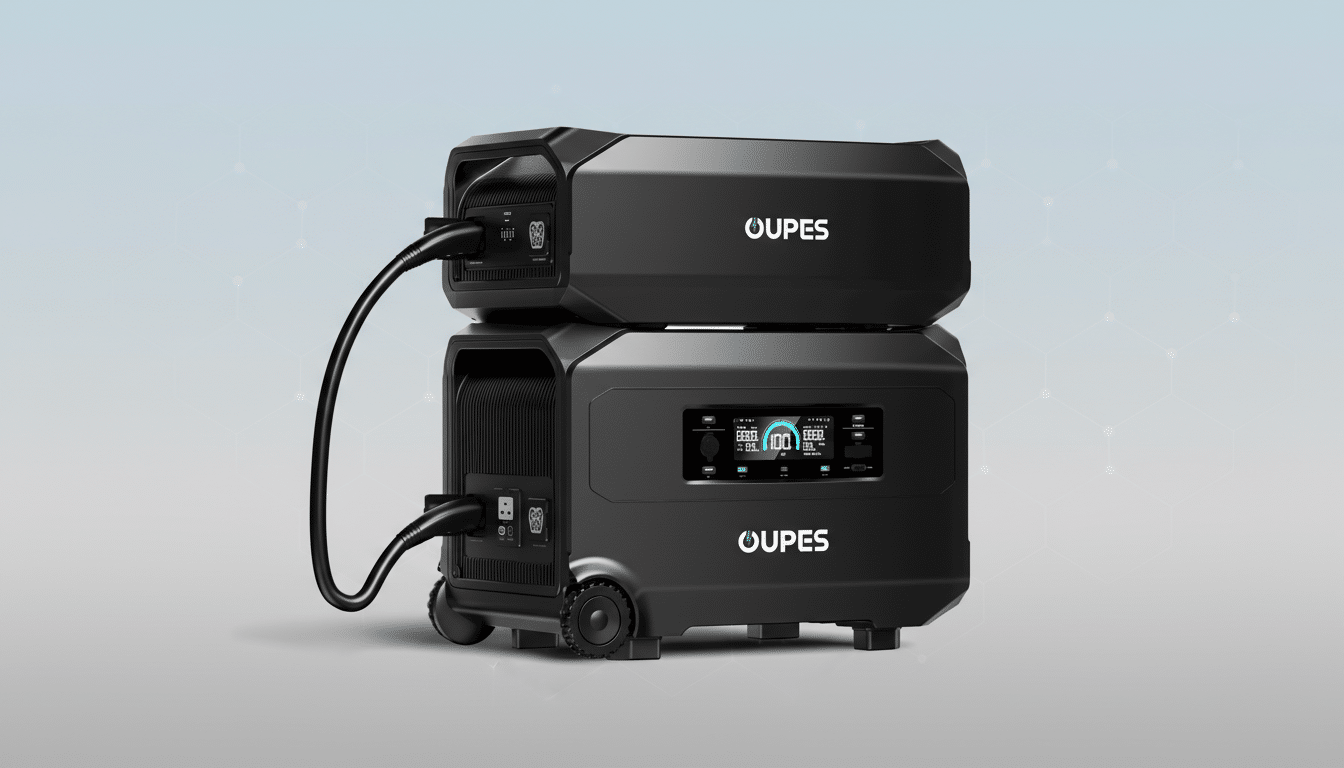
Fast Recharge Times and Plenty of Ports and Outputs
The company cites a roughly 90‑minute full recharge via high‑speed AC charging when the pack is depleted, a key convenience during rolling outages or short generator runs. Faster turnaround means less time managing charge cycles and more time focusing on essentials.
Connectivity is straightforward: five AC outlets anchor a total of 11 outputs, covering household plugs plus typical DC and USB needs. That’s enough to run a refrigerator, charge phones and laptops, and keep a modem, router, and a few lights going—all at once—without a tangle of adapters.
How the Guardian 6000 Compares to Rival Power Stations
Competitors in this performance class include heavy hitters like EcoFlow Delta Pro and Bluetti’s modular systems. Those platforms are excellent, but matching 240V output, 6kW of continuous power, and 4.6kWh capacity at roughly $0.37/Wh is uncommon. Many comparable setups either cost more per watt-hour or require add‑ons to reach split‑phase output.
Beyond sticker price, the trade-offs come down to ecosystem and features: app control, UPS switchover behavior, solar input limits, and accessory compatibility. If native 240V and high inverter wattage at a sharp price are your priorities, the Guardian 6000 earns a spot on the shortlist.
Who Should Grab This Guardian 6000 Deal Right Now
Homeowners in outage‑prone regions, RV and van travelers with 240V appliances, and contractors needing quiet, emissions‑free power will see the most value here. With no fuel storage, fumes, or routine engine maintenance to manage, a large LiFePO4 station can be easier to live with than a gas generator—especially indoors where combustion engines can’t safely operate.
Prices change, but right now this record low makes the Oupes Guardian 6000 one of the strongest price‑to‑performance plays for serious backup power. If you’ve been waiting for the moment to build resilience into your setup, this is the kind of drop that justifies acting quickly.