


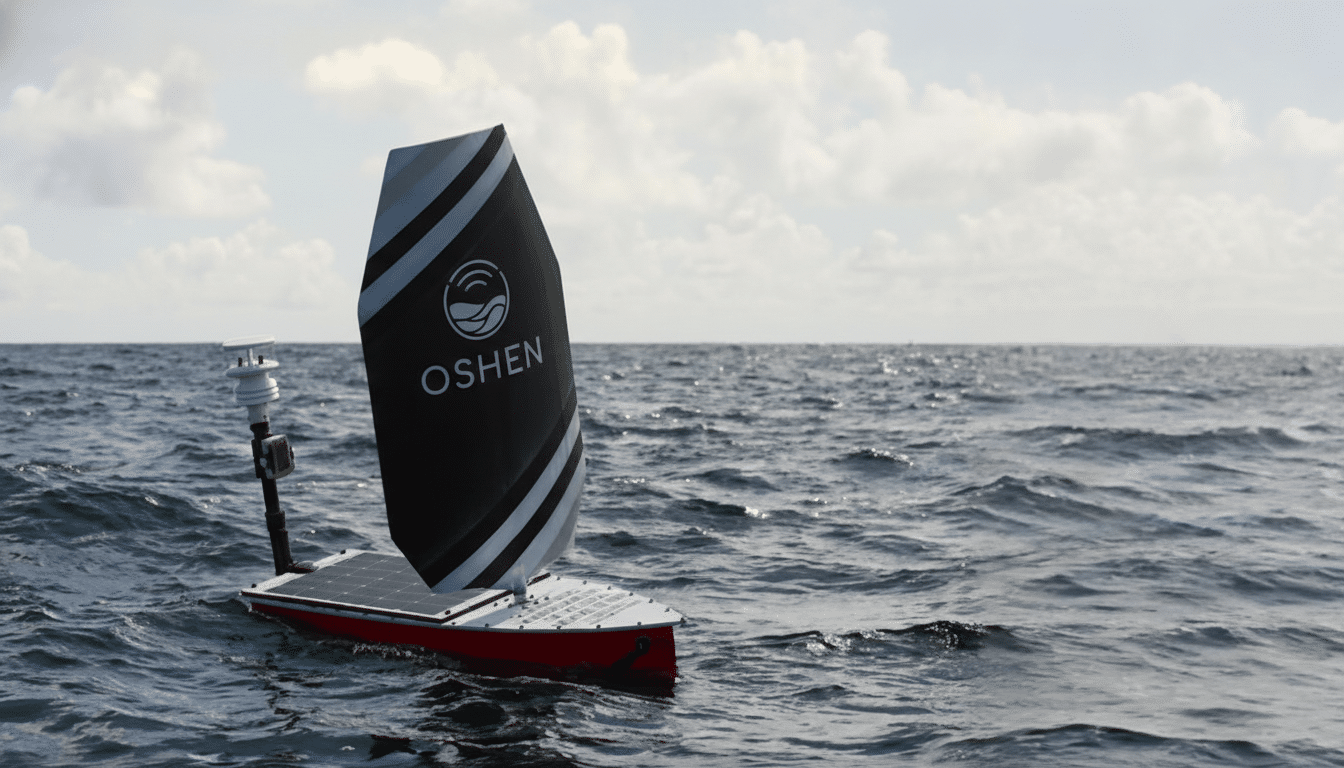
In a milestone for marine robotics and weather science, startup Oshen says its autonomous C-Star micro-robots became the first ocean robots to collect continuous, in situ measurements inside a Category 5 hurricane. Working with the National Oceanic and Atmospheric Administration, the company staged a swarm of robots ahead of Hurricane Humberto’s approach to the U.S. Virgin Islands; three units rode out the core of the storm and transmitted data throughout, despite suffering cosmetic damage.
The achievement marks a leap in how forecasters can sample the most hostile part of a cyclone — the eyewall — where traditional moorings are sparse and crewed ships cannot safely operate. Oshen’s platform is designed for scale, enabling dozens of low-cost, long-endurance robots to blanket a storm’s path and feed models with the kind of high-frequency observations that satellites and aircraft can’t always capture at the ocean surface.
Why This Breakthrough Matters for Hurricane Forecasting
Category 5 hurricanes feature sustained winds above 157 mph and extreme wave fields, conditions that typically destroy surface instruments or render them blind to the most intense dynamics. Yet those very dynamics — heat flux between ocean and atmosphere, rapid pressure falls, and changes in mixed-layer depth — often govern rapid intensification. Multiple studies and assessments have documented an uptick in rapid intensification events in recent decades, while the IPCC reports that over 90% of excess global heat is stored in the oceans, energizing storms when conditions align.
Forecasters have long sought more real-time ocean data in the hours before and during landfall to sharpen track and intensity guidance. NOAA’s Hurricane Analysis and Forecast System, along with ensemble models used by operational centers, gains skill when assimilating targeted observations like sea surface temperature, barometric pressure, and wave energy from within the storm environment. Prior efforts by groups including Saildrone captured dramatic imagery and data in Category 4 conditions; Oshen’s claim of surviving and sampling a Category 5 extends that frontier.
Inside the C-Star Swarm and Its Mission Capabilities
Oshen’s C-Stars are compact, uncrewed surface robots engineered to operate for up to 100 days at sea. The design prioritizes three traits that rarely coexist: survivability in heavy weather, low unit cost for mass deployment, and autonomy robust enough to handle long missions without human intervention. The robots carry a core sensor suite for pressure, temperature, wind, and wave metrics, and transmit data via satellite in near real time.
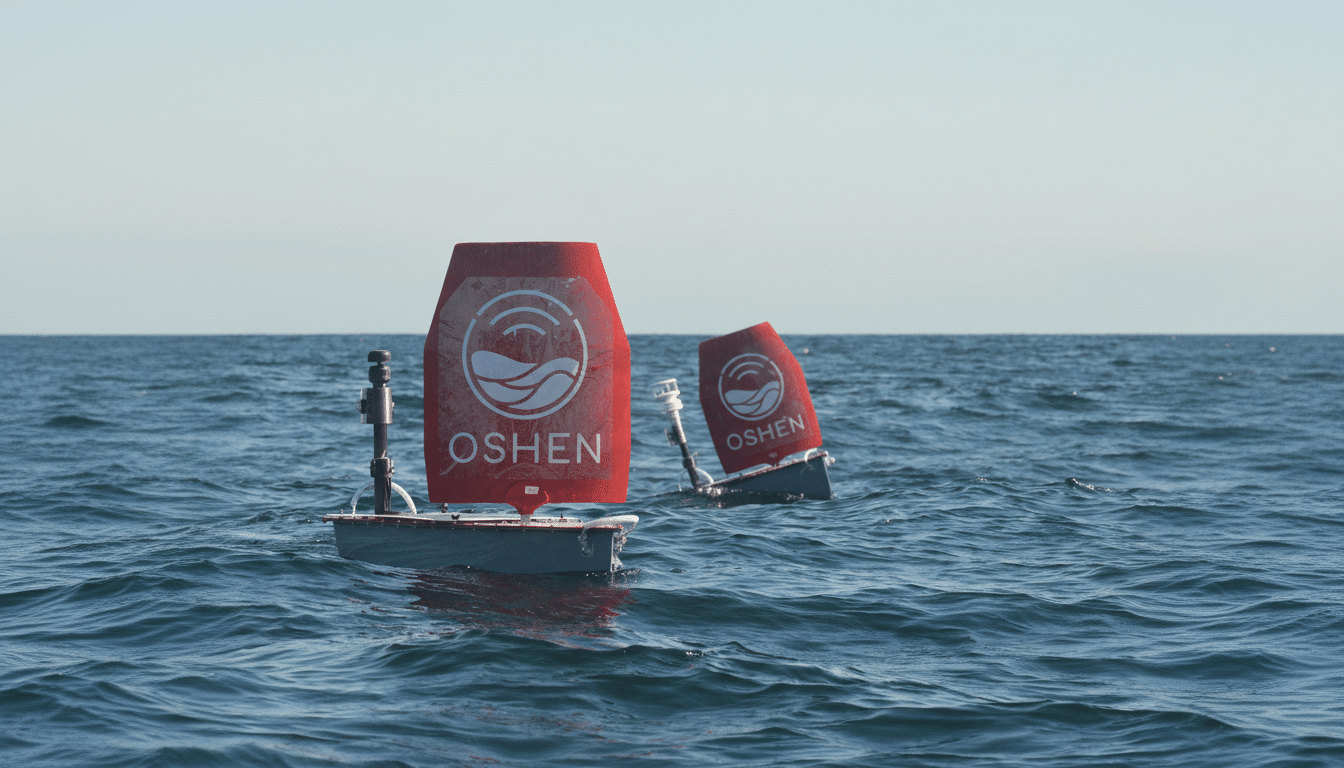
Crucially, the system is meant to be deployed in swarms. Rather than relying on a single, expensive platform to thread a hurricane’s needle, dozens of C-Stars can spread across likely tracks and maneuver into the highest-value sampling zones as forecasts update. That redundancy increases the odds of collecting continuous time series through the storm, even if individual robots lose components or go offline.
The NOAA Trial in Hurricane Humberto’s Eyewall
After proving winter-storm survivability off the U.K., Oshen delivered 15 C-Stars to support NOAA’s hurricane fieldwork. Five units were staged near the U.S. Virgin Islands based on guidance from NOAA forecasters tracking Humberto. The expectation was to capture pre-storm conditions and the early outer bands; instead, three robots maintained transmissions throughout the eyewall passage and exit, reportedly continuing to log pressure drops, sea surface temperature changes, and wave energy during peak intensity.
Those streams complement data from airborne reconnaissance, satellites, drifting buoys, and underwater gliders already used in NOAA operations. By filling the last-mile gap at the air–sea interface, the C-Stars may help reduce intensity forecast error during high-impact periods when emergency managers need confident guidance for surge, rainfall, and wind risk.
From Marina Experiments to Operational Use at Scale
Oshen’s unlikely path started when founder and veteran sailor Anahita Laverack, joined by electrical engineer Ciaran Dowds, iterated prototypes from a 25-foot sailboat moored at a bargain marina. The team stress-tested early robots year-round in rough coastal conditions, refining designs until they could withstand repeated storm cycles without constant human babysitting.
Now based at a marine technology hub in Plymouth, England, Oshen is adding contracts across government and defense customers, including work with the U.K. government. The company plans to raise venture funding to scale manufacturing and extend sensor options for missions ranging from hurricane response to maritime domain awareness and environmental monitoring.
The Larger Trend in Extreme-Weather Robotics
Uncrewed platforms are rapidly becoming core infrastructure for hazardous-environment data. NOAA and partner institutions employ a layered toolkit — P-3 “Hurricane Hunter” aircraft, GPS dropsondes, ocean gliders, moored buoys, and now surface robots — to capture the coupled physics of storms. Each layer improves models in different ways; surface robots uniquely resolve fluxes and wave fields at the ocean skin where storms draw fuel.
For coastal cities, insurers, offshore energy operators, and grid managers, better storm diagnostics can translate into tighter evacuation zones, smarter port closures, and reduced downtime. If Oshen’s Category 5 result scales — not just surviving, but consistently delivering useful, assimilated data — it could become a template for how we observe the planet’s most violent weather without risking human life.
Oshen’s claim will invite scrutiny and replication, as it should for any first-of-its-kind feat. But if validated by partners and incorporated into operational workflows, the C-Star swarm marks a practical step toward closing the observation gap where hurricanes are most dangerous and least understood.