


OpenAI has now released Sora 2, the organization’s next-in-line video and audio model, along with a new iPhone app which transforms state-of-the-art generative media into a highly social and collaborative experience. The company is touting Sora 2 as a watershed in realism, fidelity of physics and control — and, for the first time, it creates sound to match the video. It will roll out in the United States and Canada by invitation only, with a wider release to come.
A Bigger Jump in Realism and Control for Sora 2
OpenAI says Sora 2 addresses some of the oddities that made previous AI videos “off.” Scenes simply have more cause and effect, light changes are more cohesive, objects don’t defy the laws of physics so obviously. So, for one example that the company showed me: where older generations of simulations might feature a basketball shot gone wrong that goes in anyway, Sora 2 will give you the miss and the rebound as you would expect in real life.
The samples can also be real-world clips. With Sora 2, users can input short runs of footage and control transformations — changing environments, inserting subjects, or re-staging the action — with even greater granularity of prompt control than ever before. It’s not quite perfect; composites made from user video can still look uncanny at edges. But the trajectory is clear: Sora 2 is pushing away from pure text-to-video and toward an editor that “understands” scenes and can keep them consistent through time.
Most significantly, Sora 2 creates audio that natively follows the video — ambient sound and effects as well as human dialogue that corresponds to what viewers see on screen. Synchronization is a difficult challenge as it requires the model to “understand” timing and acoustics in terms of frames. Rival labs, including Google as well as indie players such as Luma AI and Runway, have been dabbling in similar capabilities, but integrated, promptable audio is a practical step toward creating scenes end to end in one go.
A Social App Based On Consensuses And Custom Feeds
OpenAI also released Sora for iOS (a social creative app that runs Sora 2). You can create clips, remix others’ work and even “drop in” to people’s rooms via a Cameo feature that re-creates your avatar from a single short, one-time video and audio recording. The company says yours is a world of consent and control: you decide who can use your cameo, you can revoke access for anyone at any time, and you can see where your cameo appears — even in someone else’s drafts.
The feed forgoes the traditional black-box recommender. OpenAI says individuals will be able to teach the ranking algorithm in plain language, shaping what they see instead of being optimized for time spent. The default is geared toward people you follow and source material that might inspire projects. There are also check-ins on well-being, and the app will even let you avoid feed personalization altogether, which is an unusual design choice for a social service.
For teens, OpenAI specifies tighter guardrails: restrictions on the number of generations shown in feed per day, more restrictive cameo permissions and increased human moderation to reduce harassment. As a parent, you can set limitations for ChatGPT by turning off personalization and editing messaging settings. This reflects a broader trend that has been encouraged by regulators — towards clearer recommender controls and actual parental tools — as well as guidance from bodies like the OECD and UK’s ICO.
Copyright, Safety AND The Training Debate
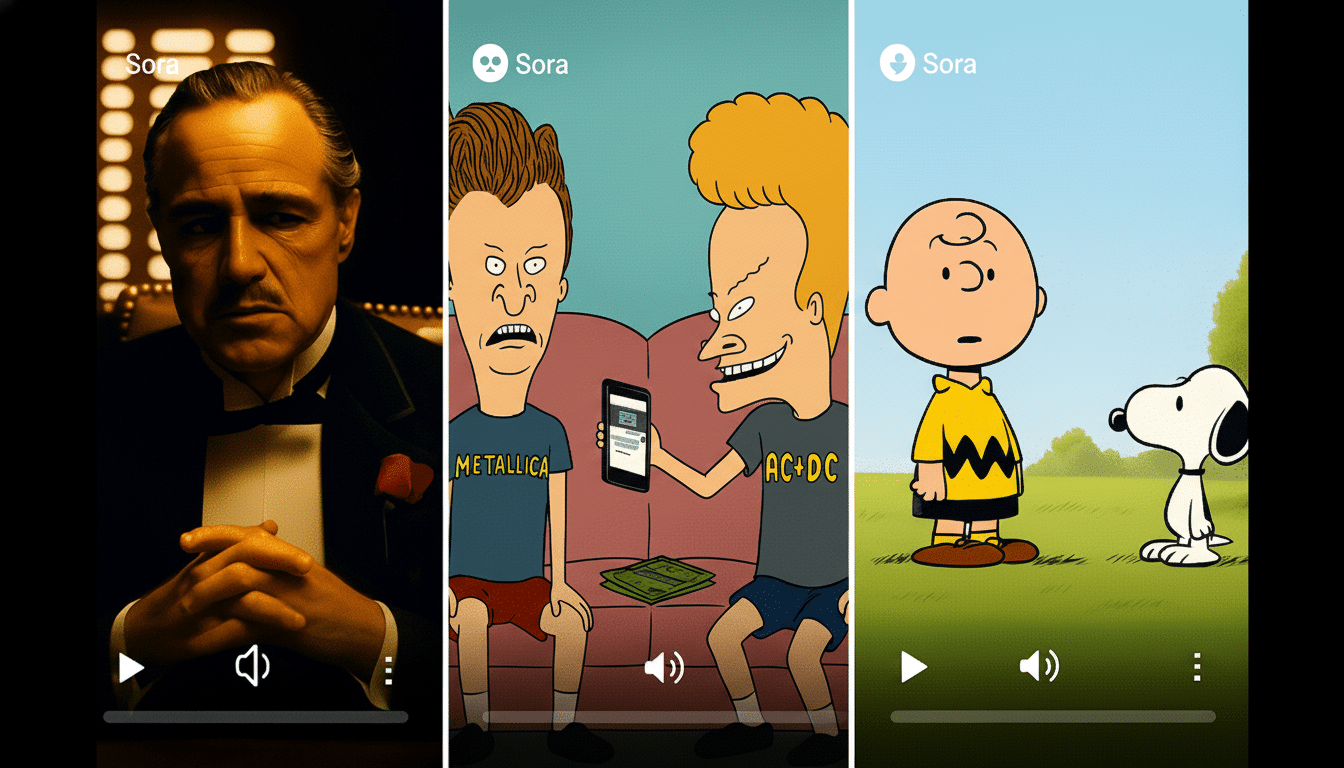
The launch comes amid mounting disputes about training data. OpenAI will let copyrighted material appear in Sora 2 outputs, unless rights holders specifically ask not to be included, and OpenAI leaves it to studios and publishers to request this means of exclusion. That attitude reflects larger industry tensions as AI companies blend licensed datasets with content scraped off the public web — and lawsuits wind their way through courts in the United States.
OpenAI highlights a Sora 2 safety framework here that involves content policies, disclosures about the provenance of any cameos used and a layered moderation system. The open questions will be nothing new for generative video: how tiptop the platforms are at detecting and labeling manipulated footage en masse, and whether consent-based tools like cameo controls can significantly lower misuse when assets can be exported and re-shared elsewhere?
Access, Pricing and the Compute Reality Today
The Sora app is free to start, with the company suggesting it might need to charge when demand overwhelms available compute — a pragmatic admission that video is expensive to render where GPUs are concerned. For web users, Sora 2 access will start with an invite; ChatGPT Pro subscribers can expect a higher-quality experimental tier named Sora 2 Pro on the site and coming soon to the app.
Generative video is one of the most compute-intensive AI workloads, and capacity limitations can influence product strategy as much as features. And short high-fidelity clips can need orders of magnitude more processing than text or image generation, industry analysts have said. The staged rollout and usage-based pricing says to me that OpenAI is attempting to balance a viral demand against predictable quality.
What It Means For Creators And Platforms
The realism of Sora 2, and the built-in audio push it past clever demo and into “useful tool” territory. Short-form creators can storyboard, shoot and sound-design within a single model. Concepts can be tested in hours and iterated based on client feedback with editable inputs. Indie filmmakers get a way to previz and effects without a complete post-production pipeline. Meanwhile, studios and newsrooms will have a harder time identifying made-up outputs that successfully cross the uncanny valley.
It could be just as much about the social layer. If users are able to tune their feeds by intent rather than engagement, and if cameo consent norms prevail, it represents a counter-model to the attention-maximizing algorithms of the last decade. Whether that healthier model survives encounters with incentives to grow is the true question. For now, Sora 2 is the most high-profile attempt to render frontier AI video both useful and shareable — and to do it without mimicking the worst habits of legacy social media.