


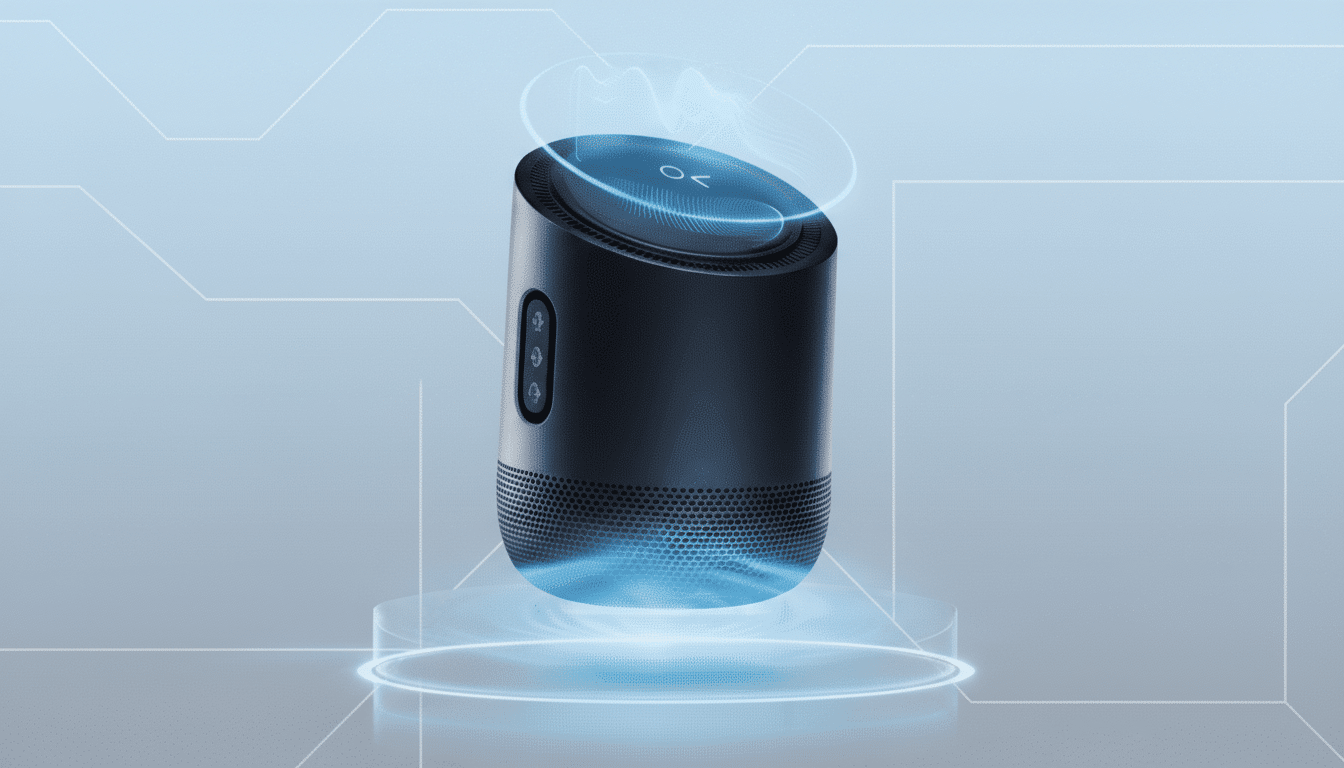
OpenAI is reportedly preparing its first consumer hardware device, a smart speaker equipped with a facial recognition camera, according to people familiar with the effort cited by The Information. The device, said to sit in the $200 to $300 range, would mark a significant pivot from pure software toward a tightly integrated AI experience designed for the home.
What The Report Suggests About OpenAI’s Smart Speaker
Sources describe a tabletop assistant with a camera that can identify users much like Apple’s Face ID, enabling secure log-ins and even purchases by confirming who is present. Internally, the concept goes beyond voice queries: the speaker would capture video context to proactively offer help, such as nudging you toward healthier routines or reminding you of commitments.
The project is linked to OpenAI’s collaboration with renowned designer Jony Ive and his studio LoveFrom, an initiative previously reported by the Financial Times as part of an “iPhone of AI” vision. The speaker is said to be the first in a broader device roadmap that also explores wearables and ambient computing form factors, though those products are considered further out.
Why A Camera In A Speaker Changes The Equation
Adding a camera—and particularly facial recognition—to a smart speaker raises both opportunities and red flags. On the upside, facial authentication could solve one of the category’s long-standing frictions: multi-user confusion. Personalized responses, tailored recommendations, and parental controls become more reliable when the device knows exactly who is in front of it.
On the downside, cameras in living spaces have struggled to win trust. Meta’s Portal line bowed out despite strong video calling features, and Google’s Nest Hub Max leaned heavily on on‑device processing, visible indicator lights, and robust permissions to assuage concerns. Expect any OpenAI device to face questions on privacy architecture: What runs locally vs. in the cloud? Will there be a physical camera shutter? How long is biometric data retained, and can it be deleted easily?
Those questions are not just academic. The Pew Research Center has found that majorities of Americans remain concerned about how companies handle personal data. In the U.S., Illinois’ Biometric Information Privacy Act has triggered costly lawsuits over improper collection of face data, while federal regulators have warned companies to avoid opaque biometric practices. In Europe, forthcoming AI rules tighten controls on biometric identification. Any consumer launch will need meticulous compliance and opt‑in consent flows from day one.
The Market Context And Competitive Set For Smart Speakers
Smart speakers are a mature, slower‑growth category after a pandemic‑era boom, with research firms such as Canalys and IDC noting cooling shipment trends. Displays with cameras have carved out a distinct niche, but the mainstream remains wary of always‑watching devices. A premium AI‑first speaker would enter a field anchored by Amazon’s Echo Show 8 and 10, Google’s Nest Hub Max, and camera‑free audio‑centric models like Apple’s HomePod and Sonos speakers.
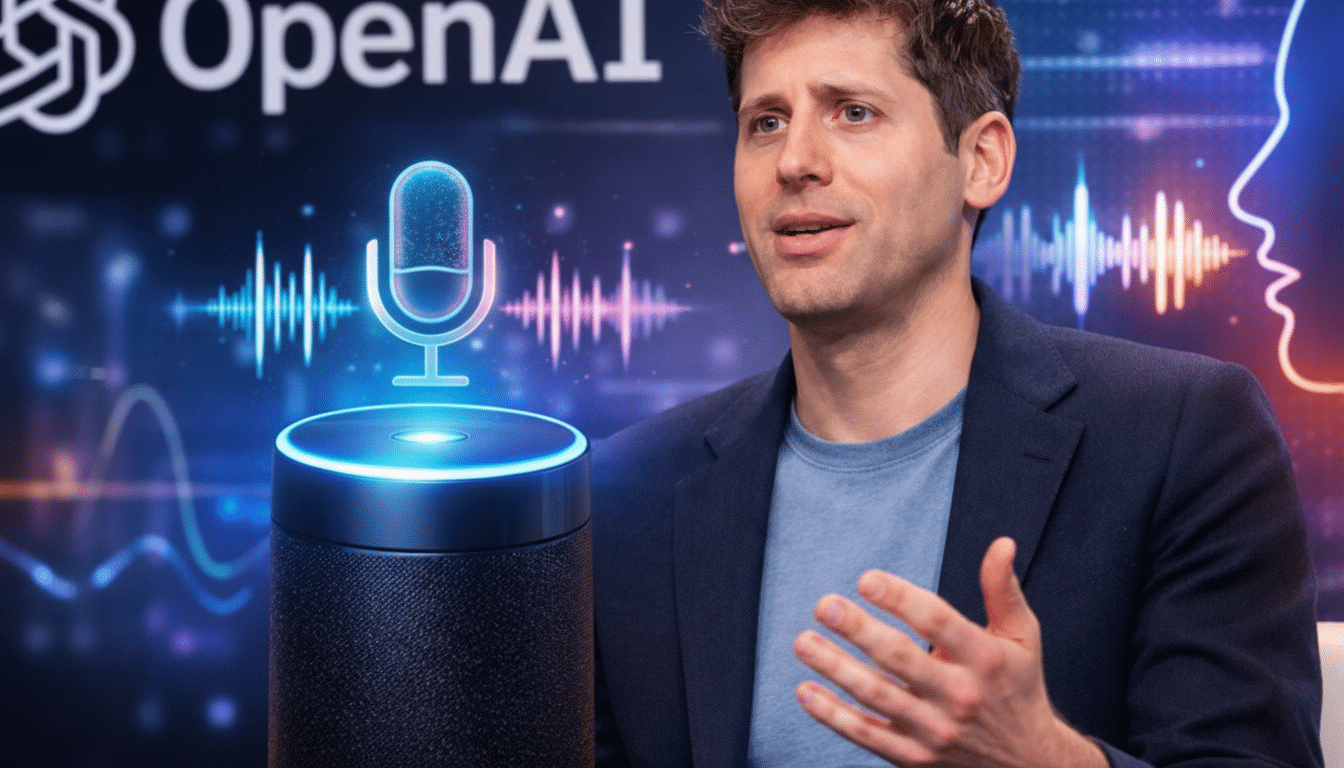
Price positioning around $200 to $300 pits OpenAI directly against the better Echo Show and Nest Hub models while inviting comparison to higher‑fidelity audio brands. To stand out, the company will need truly differentiated AI behavior: a multimodal assistant that sees, hears, and remembers context in ways rivals cannot easily replicate, while demonstrating ironclad privacy safeguards.
Why Hardware Could Matter For OpenAI’s Consumer Strategy
For OpenAI, a first‑party device is not just a gadget—it is a distribution strategy for everyday, ambient AI. A speaker that recognizes who is present, what is happening, and how to help could showcase the company’s most advanced multimodal models, tighten feedback loops, and reduce friction around subscriptions and payments.
The revenue math is also compelling. Even a modest initial run could move the needle: as a rough illustration, selling one million units at an average price of $250 would generate $250 million in device revenue. If a fraction of those owners added a $20 monthly AI subscription, recurring revenue would scale quickly. The real prize, however, is behavior change—becoming the default assistant for households and, eventually, the operating layer for other devices.
There are technical hurdles. Video processing is compute‑intensive; to keep latency low and costs predictable, OpenAI will need a thoughtful split between on‑device processing—potentially via NPUs—and cloud inference. Battery is not a concern for a plugged‑in speaker, but heat, acoustics, and microphone arrays must coexist with a camera module and any privacy hardware (shutter, mute controls) in a compact, home‑friendly design.
What To Watch Next As OpenAI Develops A Smart Speaker
Key signals will include whether OpenAI commits to on‑device facial recognition by default, which manufacturing partner it taps, and how deeply the product integrates with third‑party services for shopping, messaging, and home control. Another indicator: whether the company previews the software experience ahead of hardware, as Google has often done with Pixel‑exclusive features before broader rollouts.
If executed well, an AI‑forward speaker with visual context could reset consumer expectations for assistants that have stagnated. If mishandled, it risks repeating the pitfalls of earlier camera‑equipped devices. Either way, the stakes are high: this is not just another speaker, but a test of whether ambient, multimodal AI can earn its place in the most sensitive room of the house.