


OpenAI has dissolved its Mission Alignment group, the internal team tasked with keeping its frontier models safe, trustworthy, and aligned with human values. The team’s leader, researcher Josh Achiam, is shifting into a newly created role as chief futurist, while the remaining half-dozen members have been reassigned across the company to continue related work, according to a company spokesperson.
What the Disbanded Mission Alignment Team Did
Formed in late 2024, Mission Alignment was designed to build methods ensuring models reliably follow human intent in complex, high-stakes, and adversarial settings. OpenAI’s Alignment Research blog has framed this mandate in practical terms: reduce catastrophic failure modes, keep systems controllable and auditable, and maintain value alignment as capabilities scale. In practice, that spans adversarial training, robust instruction following, red-teaming, model evaluations, and interpretability research.
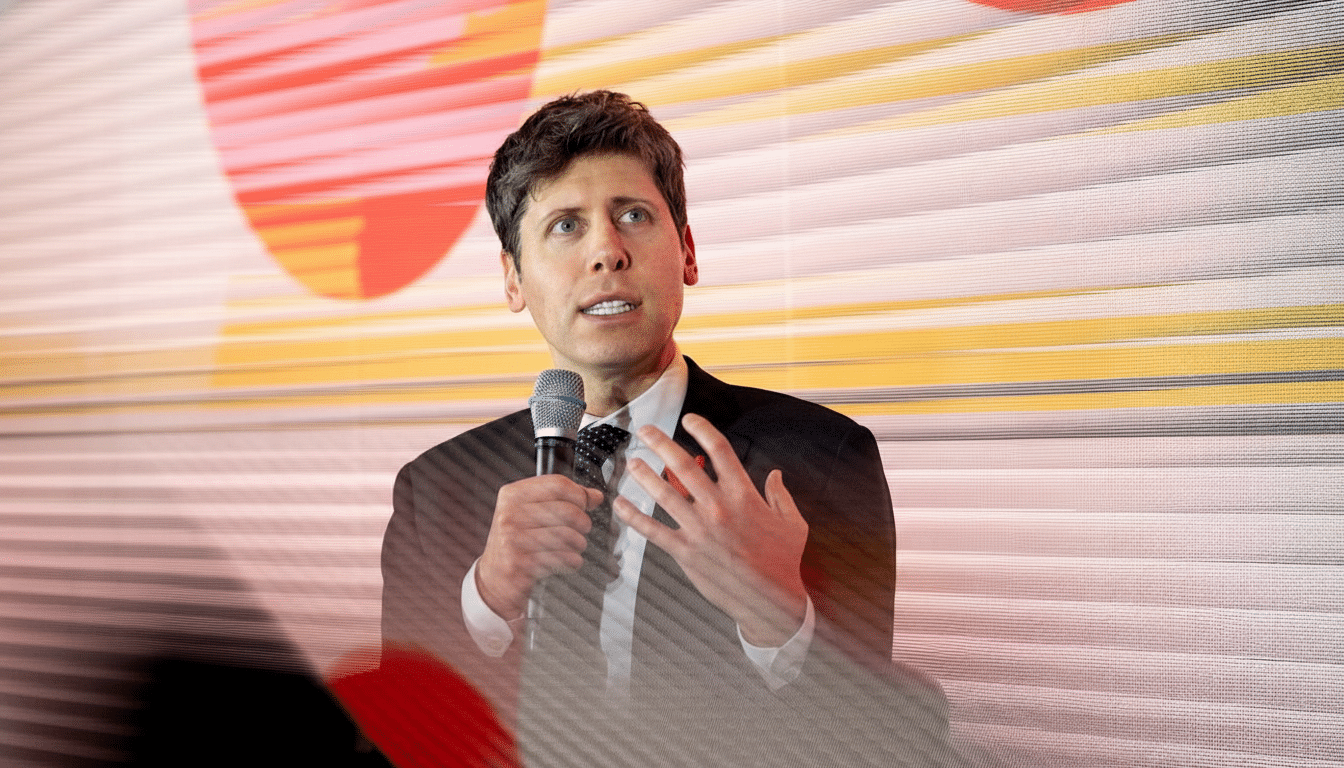
While small by design—roughly six or seven researchers and engineers—the group sat at a critical junction between frontier model research and downstream productization. The shift to disperse those specialists suggests OpenAI wants safety techniques embedded directly into product and platform teams rather than concentrated in a standalone unit.
Leadership Shift at OpenAI to a New Chief Futurist
Achiam’s new remit as chief futurist centers on analyzing how accelerating AI capabilities could reshape economies, geopolitics, and social systems—and how OpenAI should respond. He has indicated plans to collaborate with technical staff, including physicist Jason Pruet. The role signals OpenAI’s interest in foresight and long-horizon scenario planning, even as day-to-day alignment work becomes more distributed.
Notably, this is the second time in as many years that OpenAI has reconfigured high-level safety efforts. The company disbanded its Superalignment team in 2024, a group originally launched to tackle long-term existential risks from advanced AI; that effort had been co-led by Ilya Sutskever and Jan Leike, who later departed, with Leike joining Anthropic to continue work on responsible scaling.
Why the Reorg Matters for AI Safety and Governance
Centralized safety teams can set coherent standards and push big bets on foundational research. But embedding alignment researchers with model and product groups can tighten feedback loops, reduce handoffs, and make safety a default part of the development lifecycle. The risk is diffusion of responsibility: without a single team codifying strategy and publishing roadmaps, priorities can fragment and long-horizon research may lose oxygen.
Industry experience cuts both ways. Google DeepMind integrates safety across research and product units while maintaining specialized governance teams. Anthropic publishes a Responsible Scaling Policy and invests in model evaluations and interpretability alongside core research. Regulators increasingly expect “safety by design” built into development pipelines, aligning with the embedded approach OpenAI appears to be taking—provided the company maintains clear ownership, metrics, and external transparency.
The Regulatory and Market Backdrop for OpenAI
Frontier model governance is tightening. The EU’s AI Act introduces risk tiers and obligations for general-purpose models. The U.S. has directed agencies to operationalize the NIST AI Risk Management Framework, emphasizing testing, monitoring, and incident reporting. The UK’s AI Safety Institute is running structured evaluations of cutting-edge systems. Against this backdrop, OpenAI’s internal structure will be scrutinized for how it translates safety intent into measurable controls, disclosure, and post-deployment monitoring.
Independent benchmarks and incident trackers have also matured. The Stanford AI Index has documented rapid growth in model capability alongside an uptick in documented failures and policy interventions. Enterprises are moving from pilots to production deployments, which raises the stakes for robust instruction following, secure tool-use, and reliable content moderation at scale. Alignment work is no longer just a research curiosity; it determines whether products meet regulatory, customer, and societal expectations.
What to Watch Next as OpenAI Reorganizes Safety Work
Key signals will be whether OpenAI publishes an updated safety plan, including explicit ownership for high-risk evaluations, red-team coverage, and model capability gating. Look for evidence of tighter pre-release testing, more public model cards and system cards, and commitments aligned with external frameworks. Another marker: whether Achiam’s futurist office influences product roadmaps or policy stances, bridging long-term scenarios with near-term safety engineering.
Disbanding Mission Alignment does not necessarily mean deprioritizing safety. It does, however, raise a familiar execution challenge: making safety everyone’s job without making it no one’s job. With rapid model updates and agentic features arriving on fast cadences, how OpenAI answers that challenge will shape developer trust, regulator confidence, and the company’s license to operate in the next wave of AI deployment.