


OnePlus has finally started to tease its upcoming Turbo 6 series with headline features that place the battery and display specs in rare company.
OnePlus leaders have teased promotional images of the device on Weibo, confirming a huge 9,000mAh battery and a 165Hz display as well as a Snapdragon 8s Gen 4 chip. The teasers also reveal two models — Turbo 6 and Turbo 6V — suggesting a dual-prong strategy to combine an all-out performance charge with a more approachable counterpart.
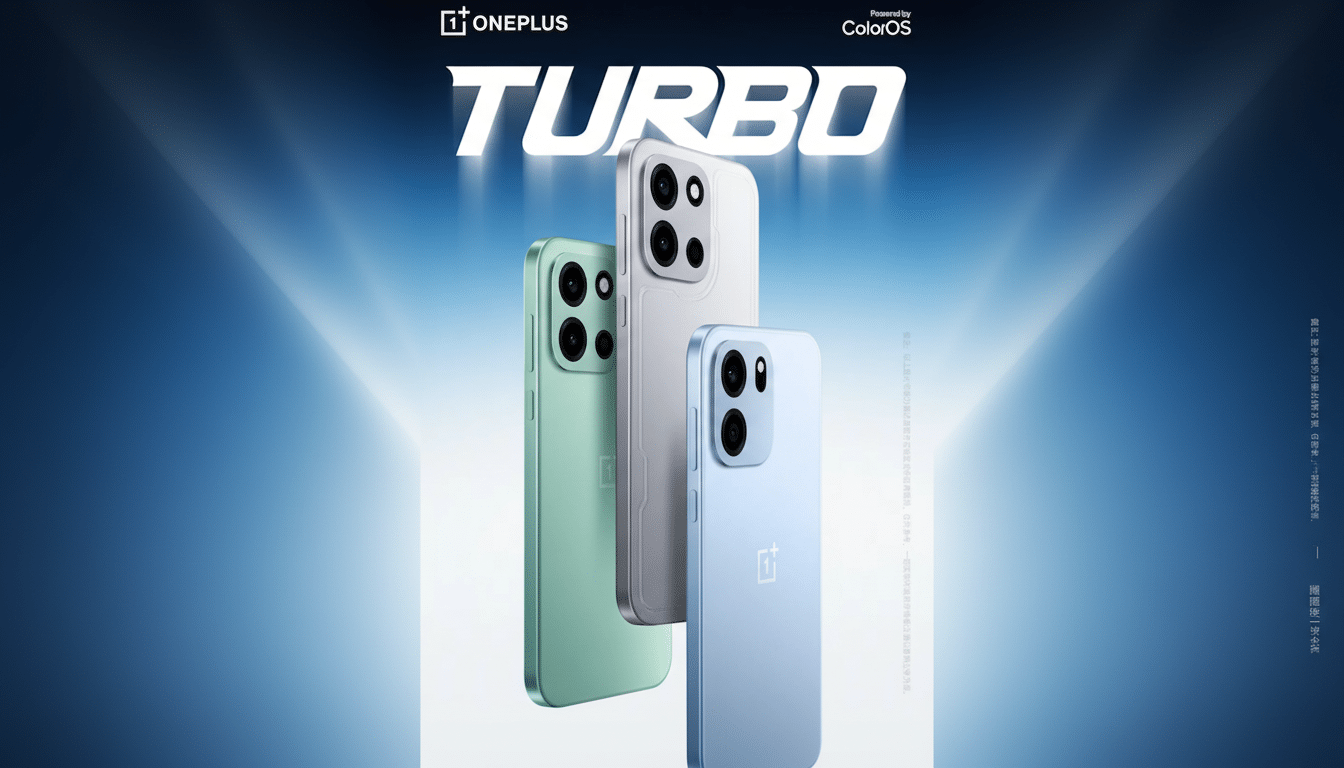
Official teasers detail major hardware upgrades
The big number is the battery. At 9,000mAh, the Turbo 6 line would dwarf the common 5,000mAh cells in mainstream flagships and even exceed those of gaming-first phones that regularly range between 5,500mAh and (at most) 6,500mAh. Coupled with a dual-cell implementation — a common configuration for high‑power fast‑charging solutions — this capacity would be able to offer marathon-grade longevity without sacrificing the fast-charge persona OnePlus owes its China lineup to. The engineering challenge will be managing thermals and weight, an area where big-battery phones like these have always traded sleekness for staying power.
The display is hinted to be at a 165Hz refresh rate, which is ultra-fast and generally found on gaming-focused phones only. Though most high-end phones still max out at 120Hz, leaping to 165Hz could make fast-scrolling and gaming feel a smidge more fluid in practice, given that the software (and touchscreen sampling) can keep up. Look for tunable refresh strategies to control power draw, since 165Hz full-time would otherwise chew through even a hefty battery lead.
Graphics in the teasers indicate Qualcomm’s Snapdragon 8s Gen 4. In the past, Qualcomm’s “s” versions have provided flagship-adjacent performance that favored efficiency and cost; goliath CPU cores mashed together with less-costly parts. If that pattern holds, the Turbo 6 might sit at just the right level for power users who crave snappy performance and robust battery life — without feeling as though they need to chase down drunken-fool levels of maximum silicon.
Two divergent-design models show different priorities
The photos reveal two different designs. The Turbo 6 has a triple rear camera design, but with small orientation changes that make it feel very modern, OnePlus flagship–like. It comes in green, black, and silver, the latter of which has a holographic edge pattern that’s an eye-popping addition without crossing over into gimmickry. The Turbo 6V instead packs a dual-camera system and shows off a more humble design in blue, black, or silver; it feels like it’s supposed to appeal to the masses.
The Turbo phone teased is notably missing the brand’s newer “Plus Key,” a multifunction key located on the side of some recent models which has supplanted the legacy alert slider. Its lack of inclusion also strongly hints that OnePlus is shaping ergonomics here more in the direction of a standard layout (which might be good for fans who haven’t settled on a maneuverable hardware control scheme).
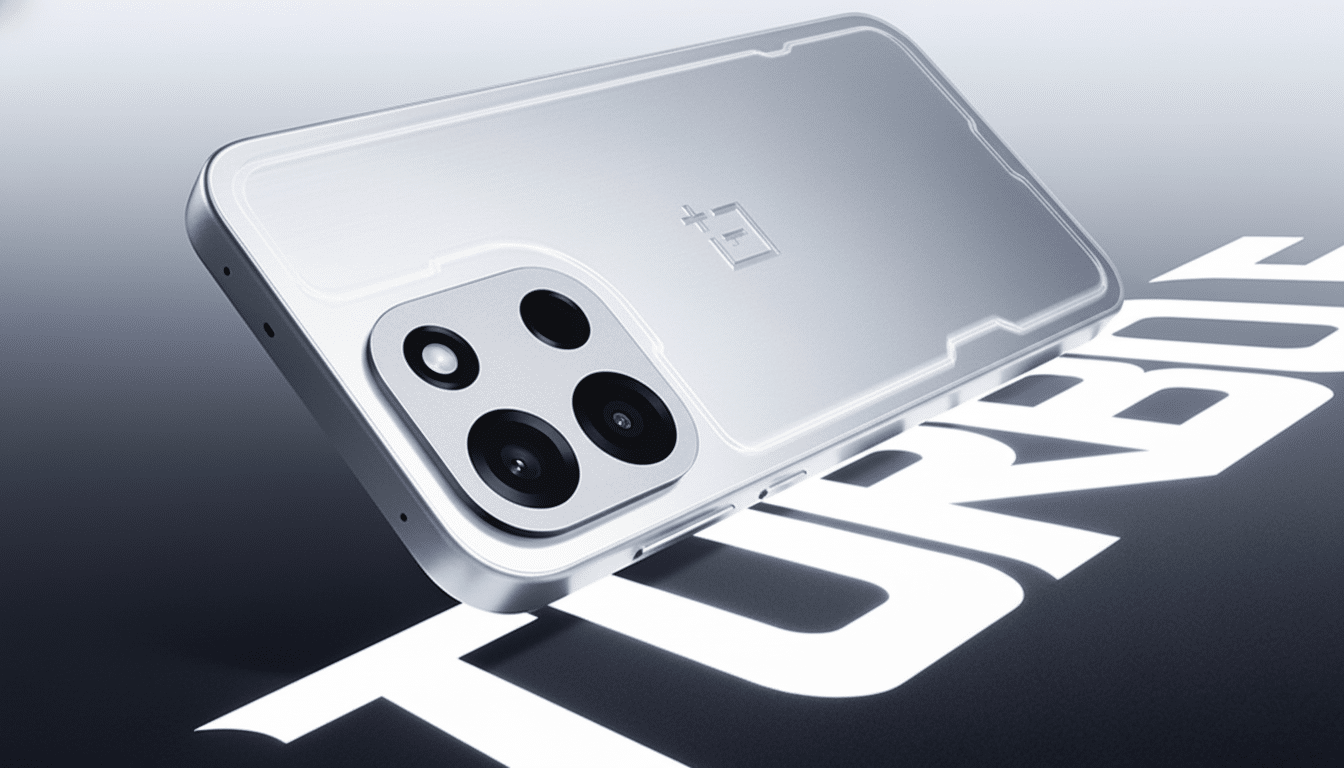
Battery reality check and the user impact
9,000mAh raises some practical questions. 6,000mAh phones typically already show multi-day endurance in many third-party tests, so the Turbo 6’s pack could be game-changing for consumers who use their phone relentlessly — competitive gamers maybe, or commuters streaming high-res video, and those navigating offline maps while traveling. On paper, that’s a double-digit % jump over what you’d expect from flagships in general, which would theoretically make all-day 165Hz usable or conservative two- to three-day stints at adaptive refresh rates. The trade-offs to look for: device thickness, weight, and any throttling under sustained load.
Charging speeds are another variable. OnePlus regularly passes 100W in its local market, but power constraints increase with capacity. Even if the Turbo 6 manages triple-digit wired charging, it will be an impressive achievement in heat dissipation and battery chemistry. If it goes with a slightly lower wattage, that also could be an intentional decision to save the cells’ longevity across multiple charging cycles — an increasingly significant factor as customers hang onto their devices for longer periods.
Market positioning and the potential global outlook
The Turbo name will work for China and there’s industry talk of a potential global launch under the Nord umbrella.
That would make sense if it were following the usual OnePlus playbook of region-specific names and configurations but with similar core hardware. A two-model approach also reflects the company’s segmentation in recent years: a hero device that leads with specs and a sidekick that emphasizes price-to-performance.
Looking at the Snapdragon 8s Gen 4 callout, we’d expect to see what’s effectively a performance tier that targets enthusiasts with heavy multitasking demands, frequent gaming, and sustained responsiveness. Add that to a 165Hz panel and an unusually large battery, and the Turbo 6 looks set to be more of a stamina-first performance phone than an all-out camera-led flagship — though camera tuning will obviously still be key given OnePlus’ increasing focus on imaging partnerships and processing pipelines.
What to watch next as OnePlus reveals more details
There are some key unknowns to pinpoint: the confirmed charging wattage, exactly how the battery differs between Turbo 6 and 6V, final camera sensors, and whether a global version of this phone — if we ever see it — retains the same headline features. Official Weibo posts raised eye-popping expectations, and OnePlus now has a chance to turn numbers into a complete device that actually lasts longer, feels faster, and doesn’t suffer the ergonomic compromises that jumbo batteries have brought to so many other phones.