


A leaked build of One UI 8.5 hints that Samsung is bringing back pollen tracking to its Weather app, and that’s no small thing for millions of allergy sufferers.
It’s a feature that used to exist, perhaps around the One UI 7 days, and it returns in the form of discrete cards you can peek at to see tree, grass, or ragweed levels in your area.
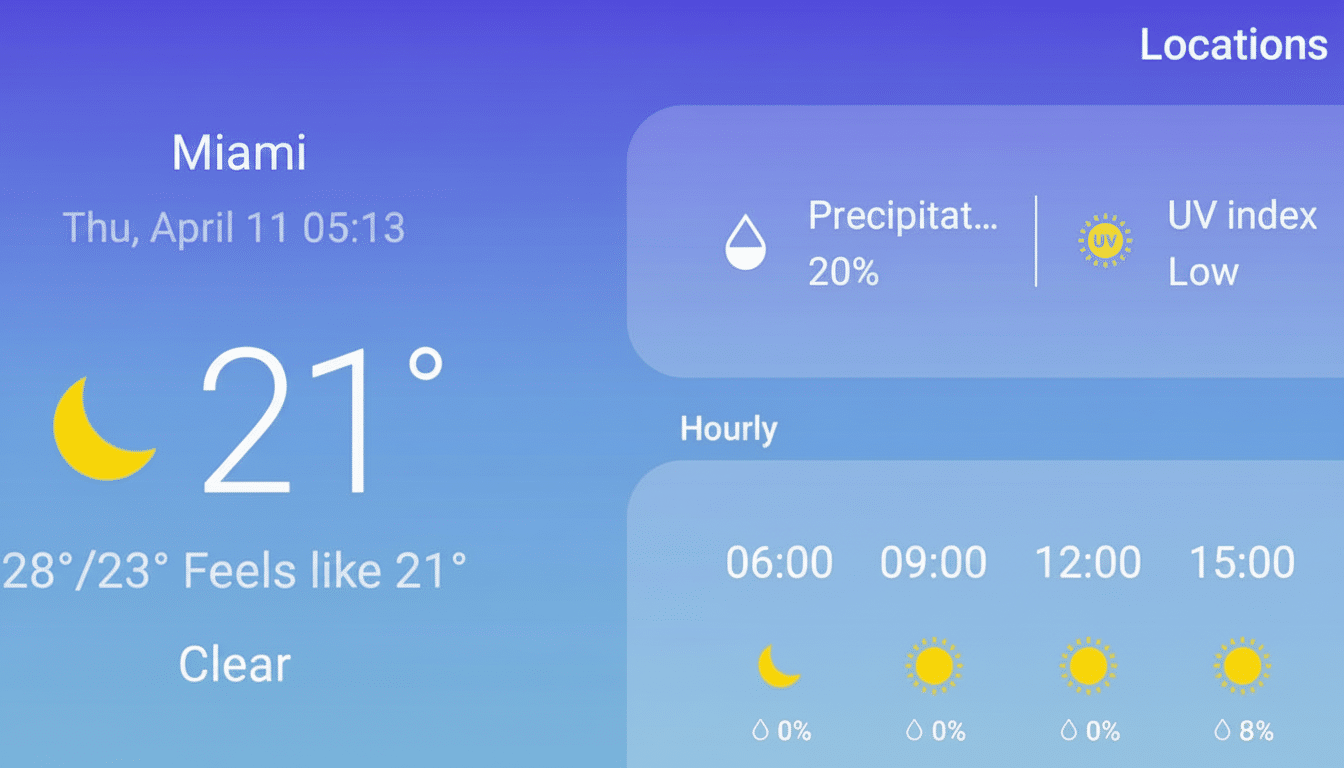
What’s coming back in Samsung Weather app
In the pre-release software I tested, Samsung Weather features three color-coded leaf icons: for tree, grass, and ragweed.
Each of those icons is also annotated with severity labels like “None,” “Low,” and “Moderate,” finding a balance between telling a user how much they might expect to experience outside without requiring them to drill through menus.
Tapping any pollen card directs to The Weather Channel’s Weather.com for historical readings and daily forecasts. Details about what catered information ends up being displayed through that pass-off—as with other stats Samsung already surfaces (and regional coverage c/o Weather.com)—are unclear in a user’s region.
That same One UI 8.5 build is also refreshing the app’s navigation chrome. Similarly, the back arrow, search button, and overflow menu pick up cleaner and less playful glyphs that better fit Samsung’s overall visual polish this time around. The redesign doesn’t change much of the core feature set, but it narrows the look and feel across Samsung’s first-party apps.
Why is this pollen data valuable for Galaxy users?
Allergy triggers are hardly a niche issue. The Asthma and Allergy Foundation of America says that over 100 million Americans suffer from allergies every year, and pollen is a major offender in the spring. Roughly a quarter of adults report having seasonal allergies, according to Centers for Disease Control and Prevention survey data, and many people plan workouts, commutes, and open-window evenings around air quality and pollen counts.
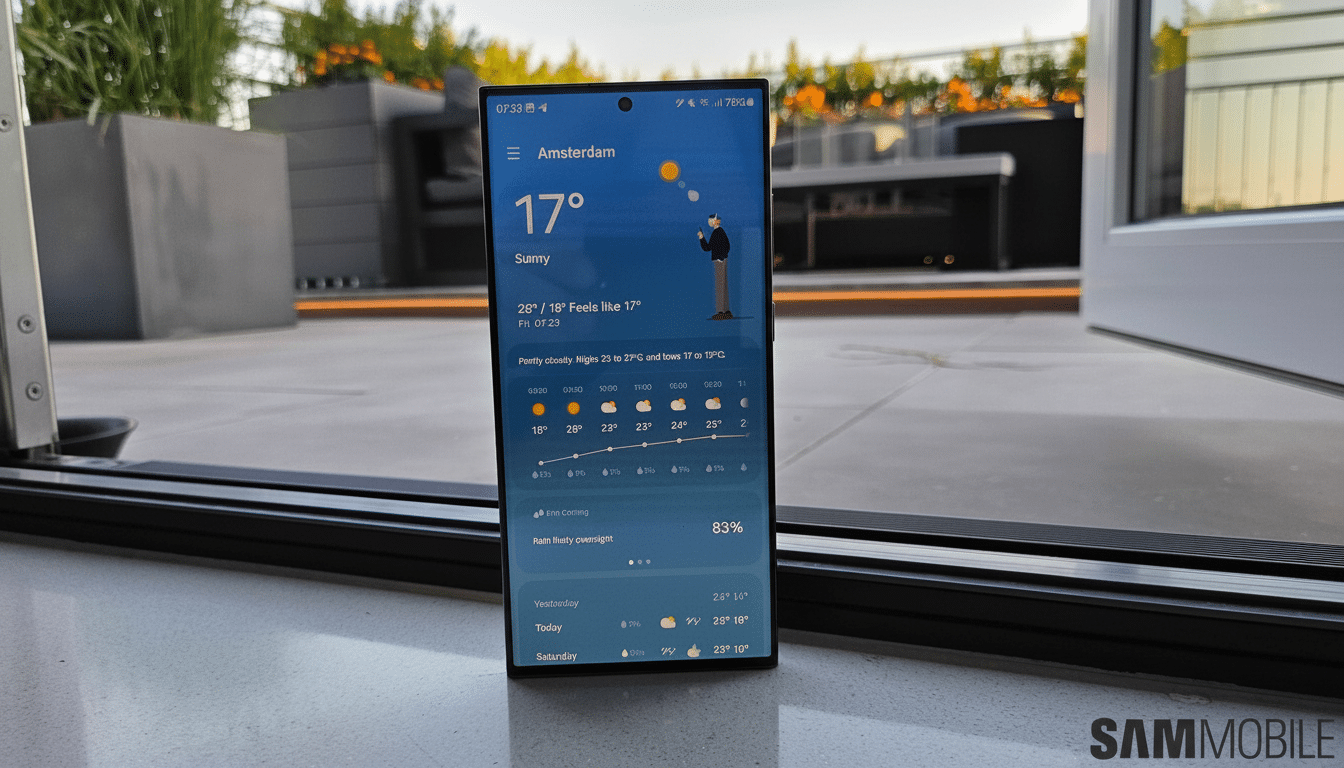
Pollen counts can swing widely even within the same city, depending on tree cover, recent rain, and wind. For runners, cyclists, parents of children with asthma, and anyone who has had allergic rhinitis spoil a day just when the brunch substitute for avocado toast is on point, taking a peek at tree or ragweed readings can be the difference maker in a routine vs. symptomatic day. But bringing back these cards would at least put that friction back on center stage and not hide it behind a link or a third-party app.
Availability and data sources for pollen tracking
The build indicates Weather.com as an API for pollen data, much as many of its mobile app contemporaries do. That dependence generally means rollout will follow where partner datasets are strong. Some areas have strong pollen networks; other parts of the world, especially outside North America and Western Europe, not so much. Past that, even where the data is accessible, users may not find it immediately in some areas until Samsung throws server-side switches.
It remains to be seen if the pollen cards will be available for all Galaxy devices out there or if they will only be supported by select models and software release branches. In the past, Samsung has sent out updates for its Weather app via the Galaxy Store apart from full software rollouts, and it’s not clear if this new functionality will come to users as an update to their app when One UI 8.5 hits GA.
How this fits in One UI 8.5 and Samsung Weather
One UI point updates typically bring slight design tweaks along with useful quality-of-life improvements. The simplified icons for the Weather app and the revived pollen view demonstrate both those values: something that looks modern, and data the reader can put to use in daily choices. It’s a tiny feature with huge impact—particularly in the spring and late summer when the historic peaks for tree and ragweed counts occur.
As with all pre-release code, features seen in test builds may not work the same way when they ship—or may arrive piecemeal or later on a market-by-market basis. Pollencast’s return in Samsung Weather is a strong sign that powerful voices on community forums reached the company, and it’s filling a gap where some Galaxy owners were relying on third-party apps.
Bottom line: pollen tracking returns in One UI 8.5
It sure seems like pollen tracking is on the way back in One UI 8.5, along with color-coded cards for tree, grass, and ragweed. Allergen cards funnel through to Weather.com for detailed forecasts. Coupled with some minor UI changes, it’s a welcome quality-of-life improvement that brings back a feature many Galaxy users relied on—and missed.