


Samsung looks to be testing a small but important change in One UI 8.5 that could make living with polarizing security measures more tolerable for power users. Textual references discovered in pre-release builds point to an Auto Blocker setting that allows it to turn itself back on 30 minutes after you toggle the thing off, complete with a visible countdown clock and a mechanism by which you can leave it disabled for all eternity.
Why did Auto Blocker roil the purists and modders?
Auto Blocker came with One UI 6 to protect Galaxy devices from sideloaded malware, USB command misuse and booby-trapped media files. It’s on by default in newer models and is a net win for most people. The friction is when you need to put down and test an unsigned APK, apps built by a continuous integration server, or ADB-driven tools. Auto Blocker cuts these flows off at the spigot unless you disable it — which modders and devs invariably do.
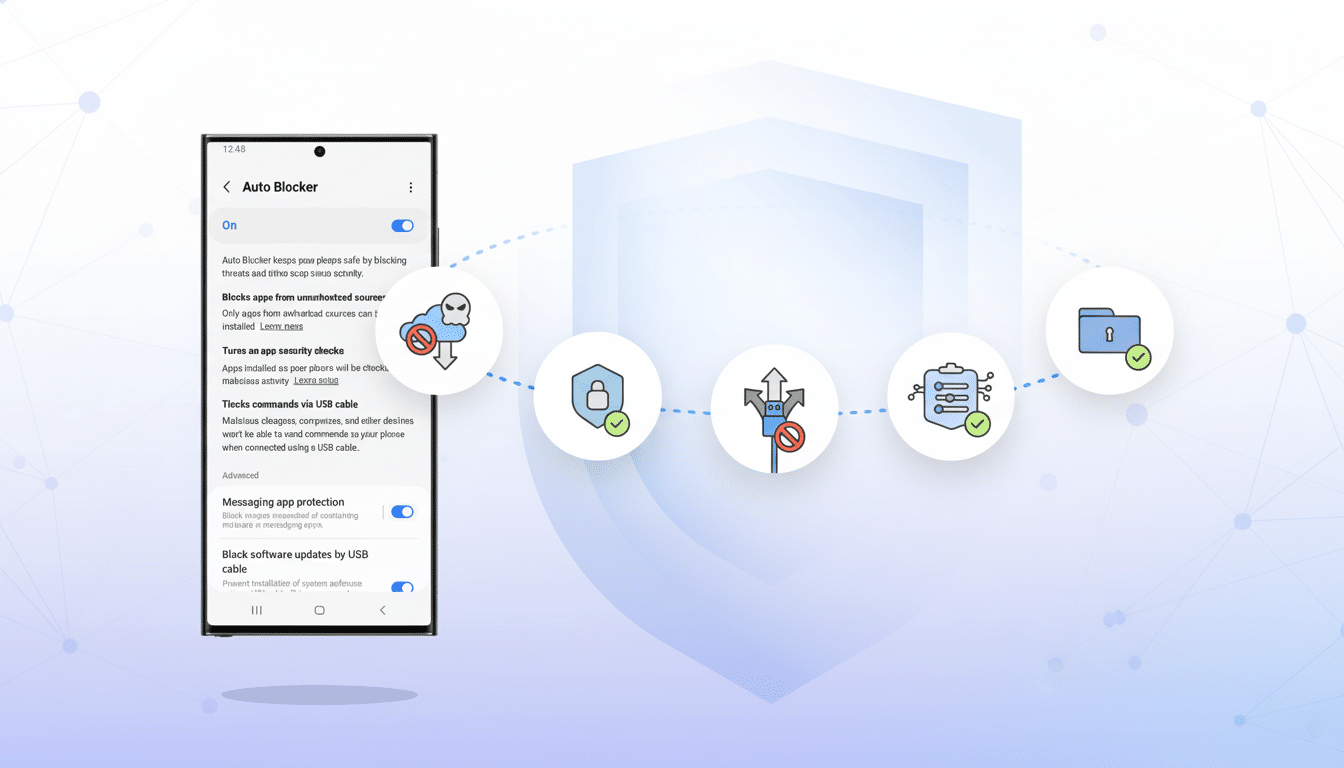
That practice produces a security vulnerability. When users exit the settings page, they could fail to enable protections again. Behavioral studies, like those conducted by organizations like NIST, consistently demonstrate how security measures that are dependent on memory or routine manual follow-through eventually get passed up. Auto Blocker’s “all or nothing” stance compelled many users to refuse it service, effectively defeating its purpose.
A 30-minute window with automatic reactivation
The new switch, hidden in options that reference an automatic reactivation and a “Remaining time” label, strikes the perfect balance. You need to turn off Auto Blocker to install a trusted APK or run an ADB command, and it turns itself back on 30 minutes later so you don’t have to worry or keep a mental checklist. If you absolutely personally must have long sessions where it never goes to sleep (dumb, but whatevs), you can still say no to the auto-on and leave it off.
From a human-factors perspective, this timed re-enable decreases risk without greatly impacting workflow. In specific, it means 30 minutes is sufficient to sideload an app, validate and launch it or at least run a typical debugging increment. And after that, the safety net whips right back up.
Security trade-offs and solid industry precedent
There’s precedent for this approach. Google does give you the ability to pause Play Protect scanning temporarily, up to 24 hours on some devices, when installing from sources other than the Play Store. Auto Blocker’s suggested 30 minutes is more severe, but the principle is the same: a controlled escape hatch for users that doesn’t compromise defenses.
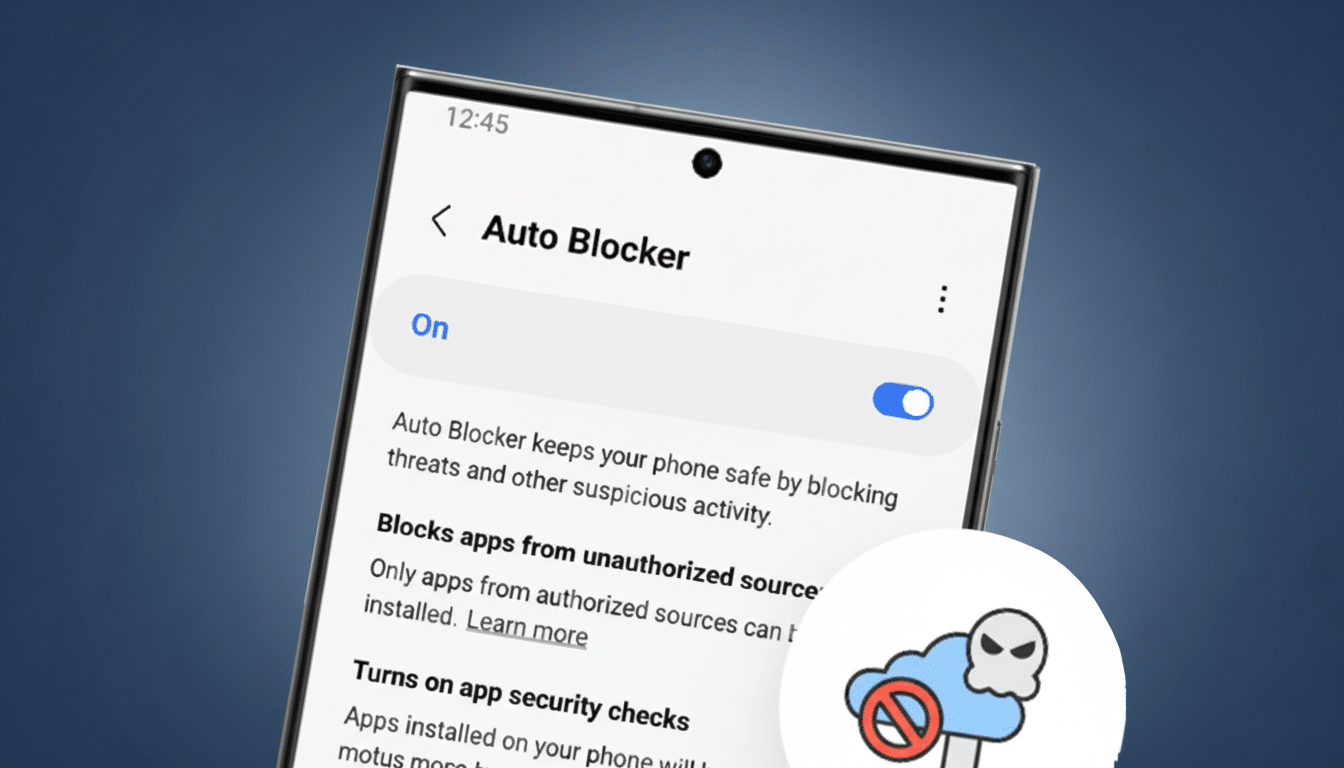
The threats that Auto Blocker goes poaching after do exist. Google’s security bods have described how social engineering and rogue sideloads continue to be prevailing infection vectors, and the CISA Known Exploited Vulnerabilities list has highlighted image parsing bugs – like that libwebp issue we keep banging on about – that miscreants have actively exploited. It’s all sensible guardrails for the very general Galaxy user base to have in place: Blocking untrusted installs, assuring that USB command injection doesn’t work, and scanning inbound media are fine features.
What developers and tinkerers are going to think
The change could be a quality-of-life improvement for developers, testers and hobbyists. Imagine turning off Auto Blocker, landing a nightly build out of CI, going through a test plan knowing the system will get shut down again as you move on to something else. Less time spent diving into Settings, fewer moments several hours in when you realize that the protections never got re-enabled.
It also follows Samsung’s broader security stance without rendering its most technical users immune. Defaults matter, with Samsung making up about a fifth of global smartphone shipments. A second-order reactivation ensures that an appropriately safe default takes over most of the time – even for phones taken in “for experiments.”
How it’s likely to appear in One UI settings
If the strings seen are any indication, that setting will go inside Settings > Security and privacy > Auto Blocker with an option switch for “Turn on automatically,” and a countdown of how long until protections resume. Notably, it seems optional; those who legitimately want Auto Blocker off are able to let it do so.
The bottom line on Samsung’s Auto Blocker changes
If it does ship with One UI 8.5, Samsung will have threaded a needle: keep mainstream users safe by default while making Auto Blocker palatable for enthusiasts who sideload responsibly. It’s a minor design tweak with major effects, decreasing the likelihood of exposure driven by forgetfulness without interfering in real work.