


Nvidia’s letter of intent to support OpenAI with an estimated $100 billion in compute over the next decade, including a 10-gigawatt buildout of Nvidia-powered data centers, marks the beginning of a new era: industrial-scale AI. It’s an audacious bet that compute, not mere incremental tweaks, will usher in the next leap in capability.
What $100 Billion Gets You: Scale and Integration
At this level, the partnership is not just about more GPUs; it’s about a vertically integrated AI utility.
- What $100 Billion Gets You: Scale and Integration
- Why the Timing Matters for Industrial-Scale AI Growth
- The stack: Rubin-era systems, memory and networks
- Power, a position and grid realities at scale
- Economist: token, latency and utilization
- Competitive and regulatory effects on AI supply
- What It Means for Builders, Developers, and Teams
- The risks worth watching in the AI infrastructure race
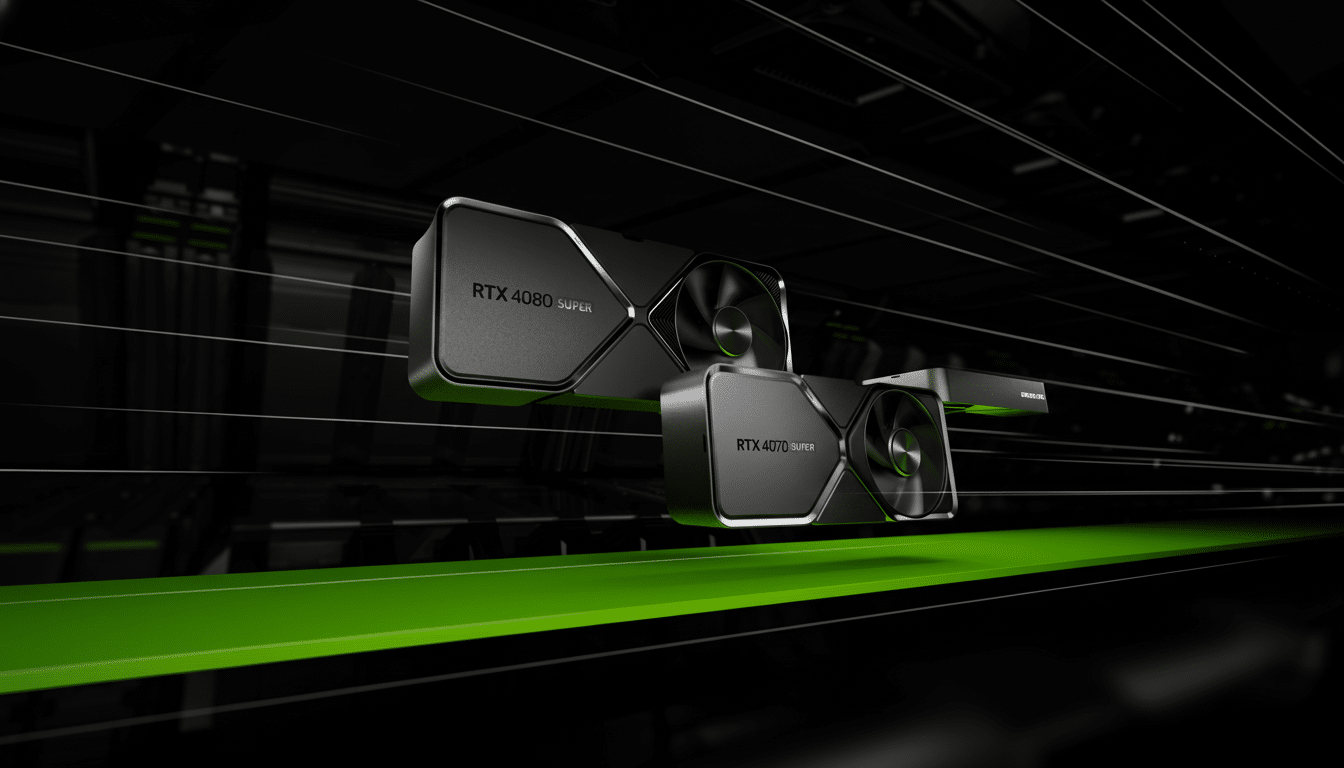
Ten gigawatts is the rough equivalent of multiple large power stations and that in turn would translate to millions of accelerators for model training and global, real-time inference.
Nvidia has described the program as the biggest single AI infrastructure investment to date. Through the partnership, OpenAI secures priority access to next-gen systems and networking – in exchange for which Nvidia will slot its silicon at greatest utilization on landmark workloads that set the market.
Why the Timing Matters for Industrial-Scale AI Growth
Model sizes, context windows and agentic pipelines are spiraling. Inference demand now equals that of training as enterprises roll out copilots, voice interfaces, and multimodal search. Analysts estimated AI-based data center capex is already in the hundreds of billions across hyperscalers worldwide.
For OpenAI, being able to count on capacity is strategic. It de-risks research into larger, more capable models and underpins commercial services that demand always-on, low-latency compute. For Nvidia, it secures a lighthouse customer while rivals are wooing AI-native companies with different silicon.
The stack: Rubin-era systems, memory and networks
The roadmap focuses on Nvidia’s future platforms after Grace Blackwell, starting with the Rubin generation, as well as high-speed interconnects and liquid cooling. Memory is the choke point: The high-bandwidth memory from companies including SK hynix, Samsung and Micron remains restricted even as capacity grows.
End-to-end performance will now depend as much on networking and software as raw flops. Nvidia has been investing in interconnects, scheduling software and inference optimization (from TensorRT to server orchestration) that will be key to turning capital into fungible tokens per second at scale.
Power, a position and grid realities at scale
That’s 10-gigawatt hard in terms of siting, energy mix and cooling. The International Energy Agency says global data center electricity demand has the potential to spiral upward in the coming decade. Power-purchase agreements, grid-interconnect queues and water usage are now board-level matters.
Look for sites with plenty of renewables, nuclear capacity or fast-tracked transmission projects. Sustainability targets and the minimization of utilization will drive the need for direct air/liquid cooling, heat recovery and AI-aware workload scheduling.
Economist: token, latency and utilization
At this level of scale, the unit of account isn’t a GPU – it’s cost per token and seconds to first token. With reserved capacity, OpenAI can optimize batching, quantization and caching throughout the stack to reduce inference cost and improve latency for consumer and enterprise applications.
High utilization is the bad-news canary in the coal mine. Training bursts, fine-tunes dissemination and inference need to be fabric-shared efficiently. Nvidia’s software ecosystem — and OpenAI’s control over workloads — can offer a way to squeeze more useful work out of each watt and dollar than generic clouds do.
Competitive and regulatory effects on AI supply
The deal is a good thing, but it does not supplant OpenAI’s ties to the cloud companies. But the sense of magnitude here establishes a new bar that rivals will need to meet or exceed. It also more tightly couples the lead AI model-maker to the leading accelerator supplier.
Scrutiny is likely. Already, regulators are eyeing AI supply chains, market concentration and compute access in the United States and Europe. Export controls, procurement transparency and energy policy will determine how fast this buildout can go and who gets to utilize it.
What It Means for Builders, Developers, and Teams
For developers and businesses, the potential is evident: accelerated iterations, broader context window, low-cost inference at global scale. Look for more powerful multimodal models, richer agent-based workflows and task-specific versions of the models tailored to applications such as healthcare, finance or code generation.
Industry watchers have observed that OpenAI has seen an upward trajectory in its revenue run-rate as AI assistants and APIs become ever more popular. “If the cost curve bends significantly lower,” he said in a statement to CIO Journal, “we’re going to see new and broader deployment for customer support, analytics and R&D – areas where pilot projects already with a high potential ROI are currently being throttled by compute scarcity.”
The risks worth watching in the AI infrastructure race
- Execution risk is real: supply chain bottlenecks and construction delays; interconnect backlogs can extend timelines.
- Achievement of scale: HBM capacity still needs to ramp in conjunction with advanced packaging and networking silicon.
- Policy changes regarding energy and AI safety could also change deployment plans.
Yet if Nvidia and OpenAI carry out even a large fraction of this plan, the industry’s center of gravity will shift toward bigger, faster, cheaper AI. The return on investment of the $100 billion is straightforward: The next era of intelligence will be constructed upon never-before-seen amounts of compute, and it’ll be built quickly.