


Nubia has announced the Nubia Fold in Japan, and it immediately earns itself quite an attention-grabbing accolade — a 6,560mAh battery, which is the biggest we’ve ever seen on a foldable phone.
In a category where endurance has long been left in the dust by traditional slab flagships, this is an emphatic swing at one of the format’s longest-running pain points.
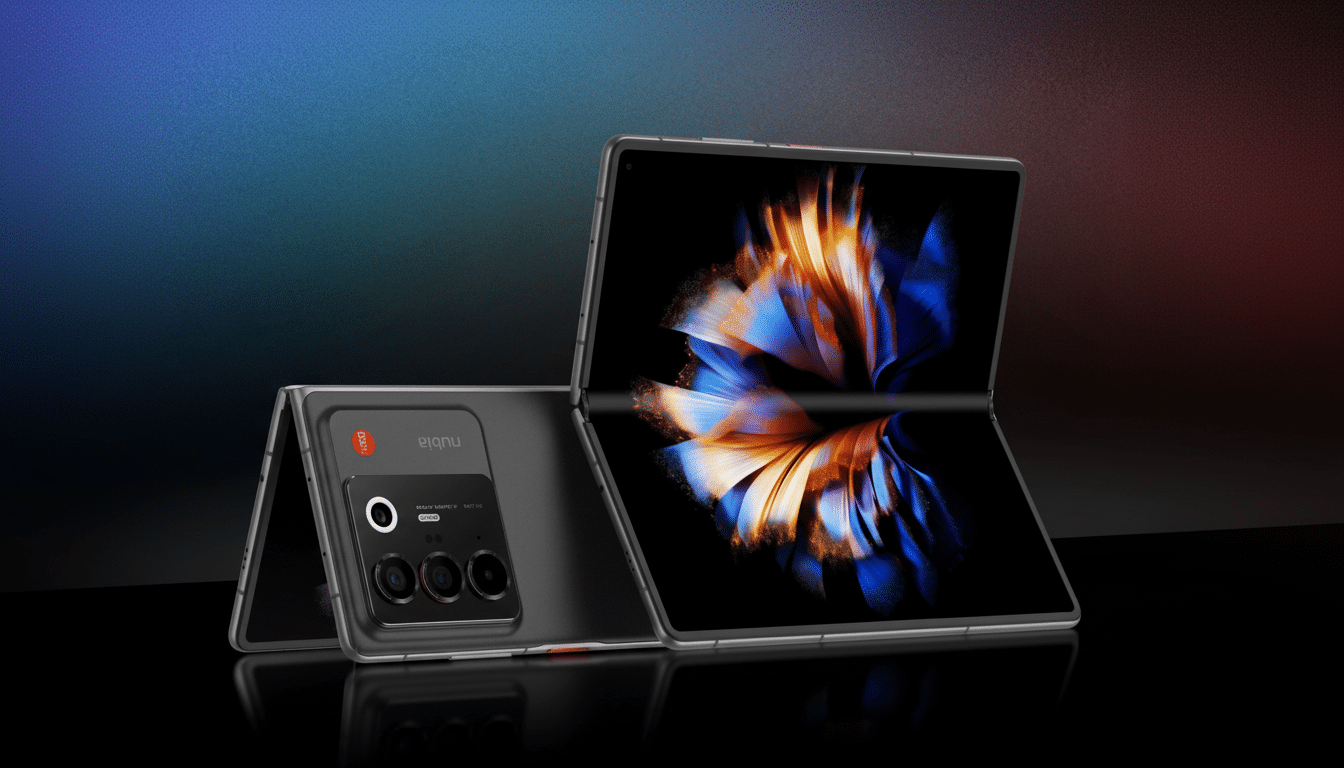
Why a Larger Foldable Battery Really Matters Today
Until now, large inner screens, complicated hinge mechanisms, and usage of both displays have typically hampered battery size and life in book-style foldables. Endurance has been repeatedly highlighted by industry trackers, including Counterpoint Research, as an issue for prospective foldable buyers as the segment steadily expands. By boosting the capacity to 6,560mAh, Nubia is going for that friction directly.
Just to put that number into some context, the Galaxy Z Fold 7 has a 4,400mAh pack inside, while this year’s vivo X Fold comes in at 6,000mAh, and the HONOR Magic V itself is more power-hungry with its 6,100mAh battery (in China).
Nubia’s figure tops them all, with potential to stretch longer for mixed-use sessions (using the inner screen) — like reading, multitasking, and video — without reaching a ceiling where you’ll go desperately in search of an outlet before day’s end.
How It Compares With the Field of Foldables Today
There’s more to a battery than capacity, but that’s a big jump. The Nubia Fold’s 6,560mAh cell supports 55W wired charging, with the company claiming a full charge in around 70 minutes. That’s not class-leading in raw wattage, but it fits the trend toward moderate fast charging meant to balance speed with long-term battery health.
Elsewhere, the device takes on the book-style form factor made popular by Samsung’s Fold line and now followed by Google, HONOR, and vivo. Nubia’s game is all about endurance, not racing to the thinnest possible bezel or having extreme charging wattage — a trade-off that just seems more and more sensible for heavy multitaskers and frequent flyers, according to GSMArena’s write-up.
Hardware Snapshot of Nubia Fold Specifications
The Nubia Fold offers an 8-inch OLED foldable display at 2,480 x 2,200 (for expansive viewing) and a smaller 6.5-inch OLED cover panel at 2,748 x 1,172 for one-handed use.
Power is provided by Qualcomm’s Snapdragon 8 Elite platform, which is supported with 12GB of RAM and 256GB of storage — a clear sign that the smartphone has flagship-level performance to handle split-screen workflows and gaming.
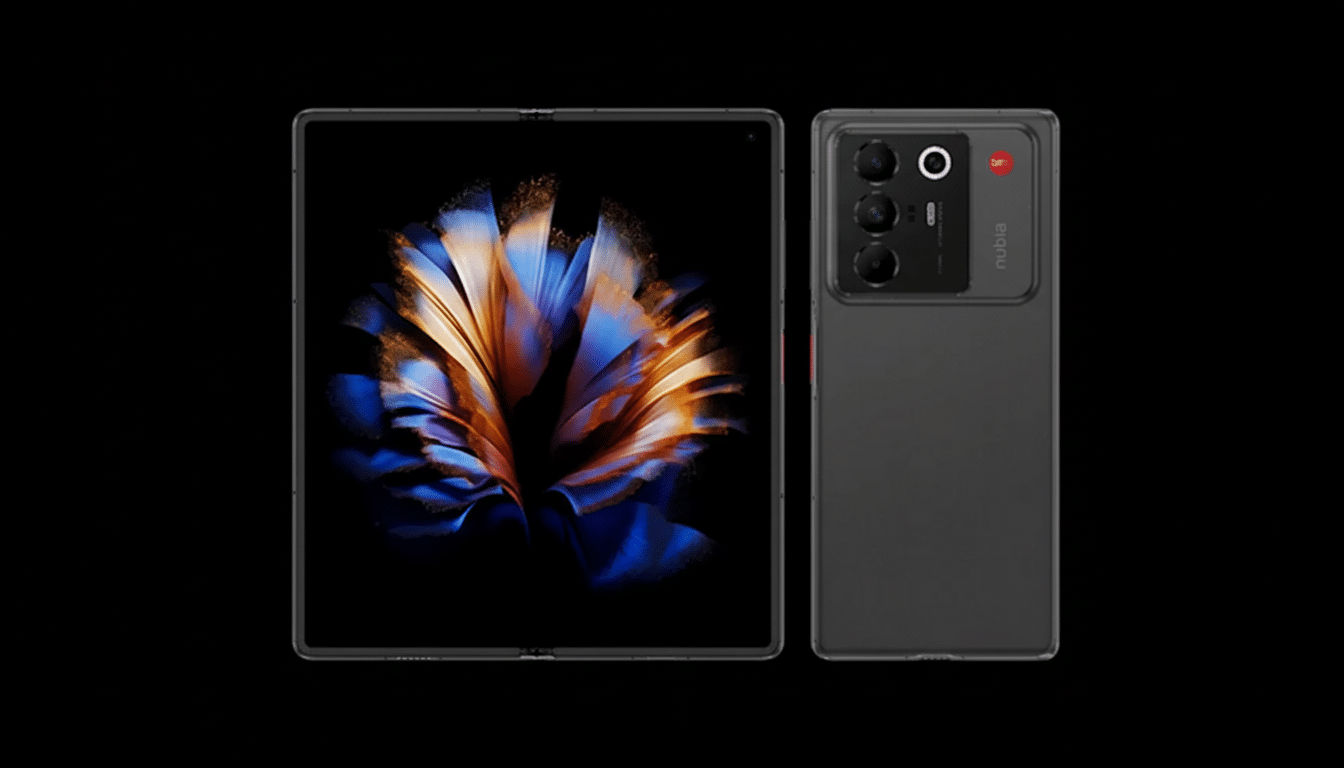
The camera arrangement is typical for a foldable — playful with practicality: main, 50MP ultrawide, and 5MP macro on the back, and 20MP selfie cameras on each display. It’s not going to replace a photography-first slab flagship, but it should be plenty for everyday shooting and video calls, which is where foldables tend to spend much of their camera time.
Reliability is one of the many aspects that the industry continues building up. Nubia rates the device as IP54, promising solid dust protection and splashproofing if not submersion. That lags behind the IP68 rating of Google’s latest foldable, but it’s a substantial level of protection considering the moving parts and slim chassis that come with this form factor.
Connectivity includes Wi‑Fi 7 and Bluetooth 6 as per the spec sheet, along with a side-mounted fingerprint reader and onboard AI features like live translation and call assistant. The package emphasizes pragmatism over flash, an approach that seems to stem from the desires of users who longed for some practical features to go with the flexibility of a folding screen.
Engineering Implications of a Larger Foldable Battery
A 6,560mAh battery in a folding phone means the cells need to be very tightly packed, probably with multiple ones crammed inside; distributing weight and ensuring charging doesn’t overwhelm one side of the hinged device are common design techniques in foldables. Display Supply Chain Consultants has previously observed that hinge improvements, as well as panel slimming, free up precious internal volume; Nubia appears to have spent that dividend squarely on battery life.
The net result should be longer runtime with the inner display in use and additional overhead for power-hungry tasks, such as on-device AI, maps, and video editing. For those who often split-screen or treat the cover display as a primary phone interface, the bigger pack might mean less range anxiety and a longer device lifespan by not needing to perform deep cycles daily.
Price, Availability and Potential Market Impact
The Nubia Fold is currently available for sale in Japan, priced at 178,560 yen or $1,153 (about £750 converted) with a 12GB/256GB model. There is no official word on international availability. If it does, the oversized battery will do what higher ingress ratings and smaller designs have in past cycles: put pressure on rivals to respond.
Analysts at IDC and others predict foldables will continue to gain market share as prices stabilize and durability increases. Endurance has been one of the last major compromises; Nubia’s way shows how manufacturers can push capacity (a bit) without completely ditching the thin, pocketable ethos of book-style devices.
Bottom Line on Nubia Fold’s Battery and Features
With a 6,560mAh battery, the Nubia Fold is currently the endurance leader among book-style foldables. When coupled with a competent flagship system, modern displays, and useful features like an external display for notifications, it changes the expectations of how long a foldable can go between charges in exactly the sort of way that makes these devices more appealing to mainstream buyers.