


Nothing is signaling a fresh twist on its signature lighting system, previewing a new Glyph Bar for the forthcoming Phone 4a series. The company says the redesigned module uses six square light elements driven by nine individually controllable mini LEDs and delivers up to 40% more brightness than earlier A-series models, while aiming to be less distracting in everyday use.
A closer look at the new, brighter Glyph Bar design
The latest teaser shows a compact bar with six square diffusers arranged to create cleaner patterns than the earlier multi-strip layouts. Behind them sit nine mini LEDs that can be addressed independently, enabling more granular effects than simple on/off strobes. According to the company, the brighter output is paired with optics tuned to soften hotspots, which should help the light remain legible without glaring in dim rooms.
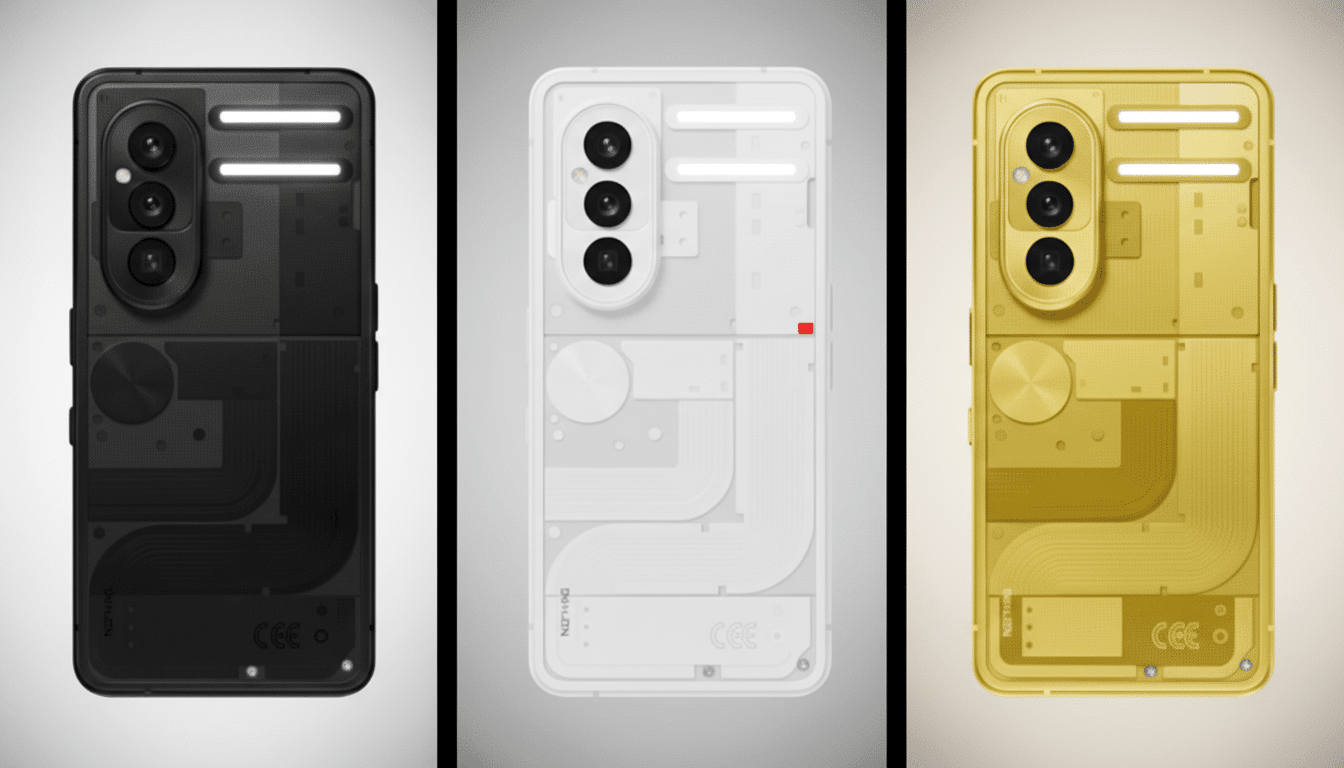
Functionally, that control matters. Previous Nothing phones used the Glyph for charging progress, countdown timers, volume levels, essential notifications, and custom ringtones. Developers also gained hooks via Nothing’s Glyph tools to map third-party signals to light animations, such as ride-hailing progress or delivery status. A denser, brighter bar should make those indicators more visible on a desk, across a room, or outdoors.
Stepping away from the circular Glyph Matrix display
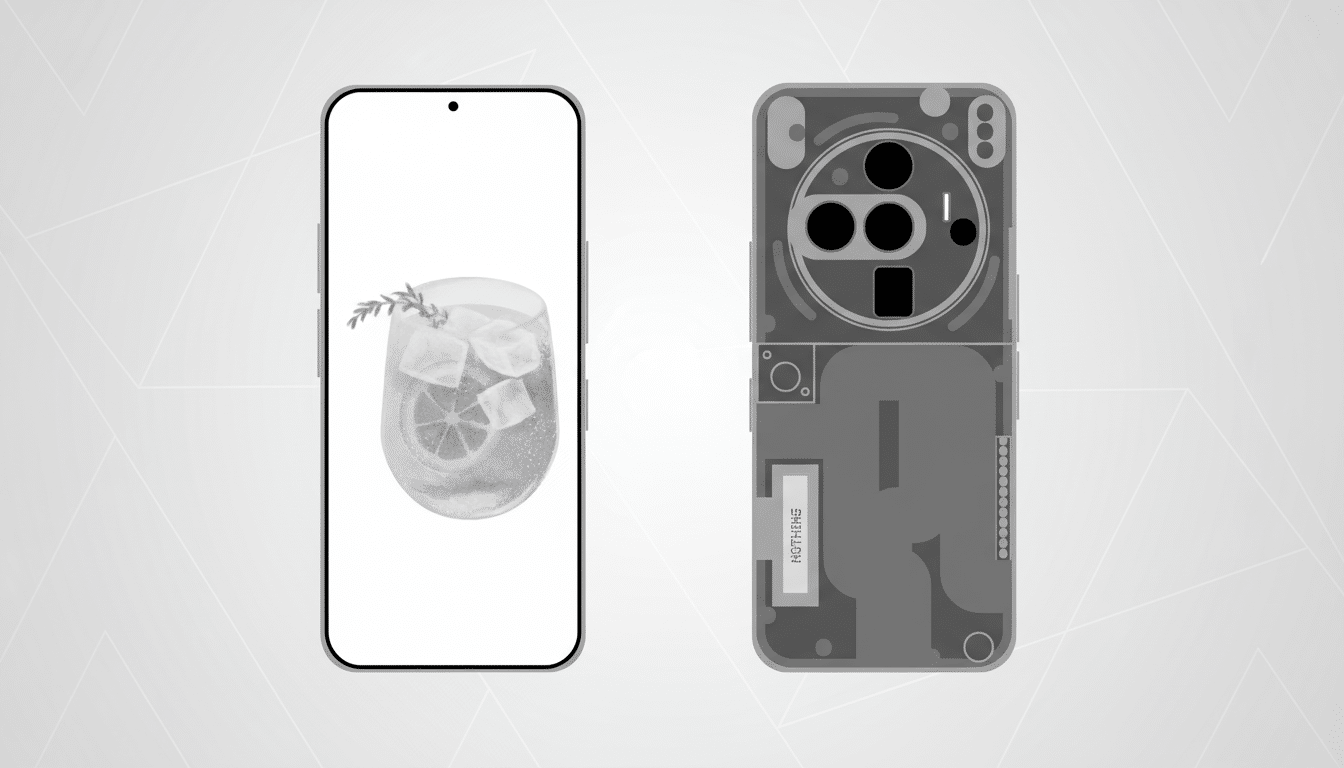
Nothing’s last flagship moved to a circular mini LED display dubbed the Glyph Matrix, a bold departure from the brand’s original light bars. The A-series appears to chart a different course, returning to a streamlined bar layout that favors clarity and cost control over the experimental pixel ring on the premium tier. It’s a pragmatic choice for a midrange phone: preserve the brand-defining cue without overcomplicating it.
The company also emphasizes reduced distraction. Early Glyph designs were eye-catching but could be busy in a dark environment. A tighter, square-cell arrangement with refined diffusion should mitigate that, while the 40% boost promises better visibility in bright spaces—historically a weak spot for notification LEDs on phones.
What the brighter Glyph Bar means for the Phone 4a series
Leaks point to two models, with indicative European pricing around €389 for the standard variant and €479 for a Pro, representing approximate increases of €60 and €20 over their predecessors. Converted estimates place those figures near mid-$400s and mid-$500s in USD, though final regional pricing often varies. If accurate, the brighter, smarter Glyph Bar is positioned as a tangible upgrade that helps justify the bump without drifting from the A-series’ value brief.
Expect the usual suite of customization in software. Prior Nothing devices let users set per-app behavior, schedules, and intensity for the lights. Given the power implications of brighter LEDs, granular brightness curves and “quiet hours” are likely to remain core settings so users can tailor visibility to their environment while conserving battery.
Competitive context and outlook for Nothing’s next A-series
Few mainstream phones treat rear lighting as more than decoration. Gaming models often lean on RGB flair, and some budget devices have experimented with attention-grabbing glows, but Nothing’s approach has stood out because it ties light to system-level functions. Industry watchers have consistently pointed to the Glyph as a rare, recognizable hardware signature in a market of near-identical slabs.
The new Glyph Bar suggests Nothing is refining rather than reinventing that signature for its next midrange release: brighter, cleaner, and more purposeful. The open questions now are how far third-party integrations will go, whether the Pro variant gets any exclusive light behaviors, and how the bar interacts with upcoming software features in Nothing OS. For fans of the brand’s visual language, the teaser hints that the light show is getting sharper—without stealing the whole show.