


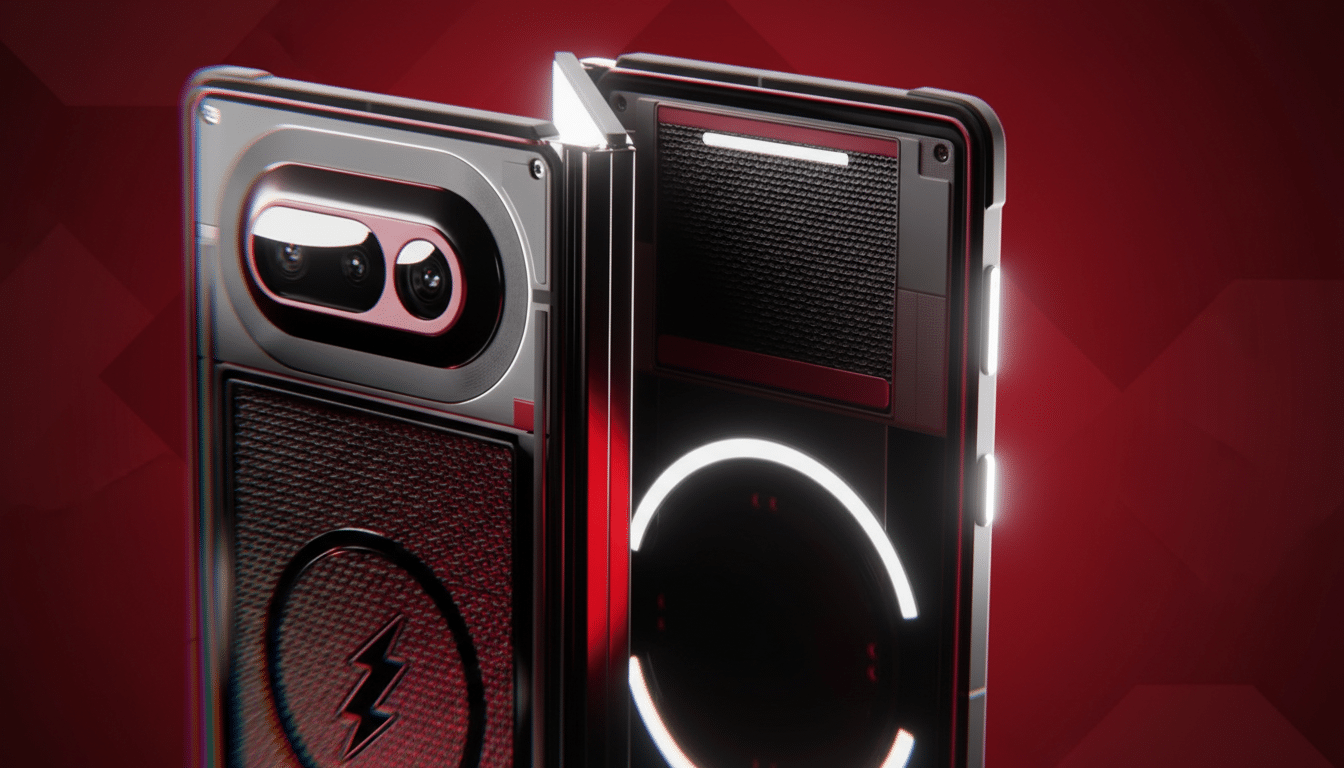
Nothing has turned a viewer prompt from streamer IShowSpeed into a fully costed concept device, imagining a Kevlar-wrapped trifold phone with three independent displays, a removable camera screen, and a build brief that reads like it was written for professional creators. It’s a showcase, not a product, but the company backed it with a detailed 3D model and pricing estimates that reveal how complex and expensive such a niche machine would be to make.
The result targets a single, demanding scenario—livestreaming on the move—where multitasking, ruggedness, and connectivity matter as much as raw performance.
A Purpose-Built Trifold Phone Designed for Streamers
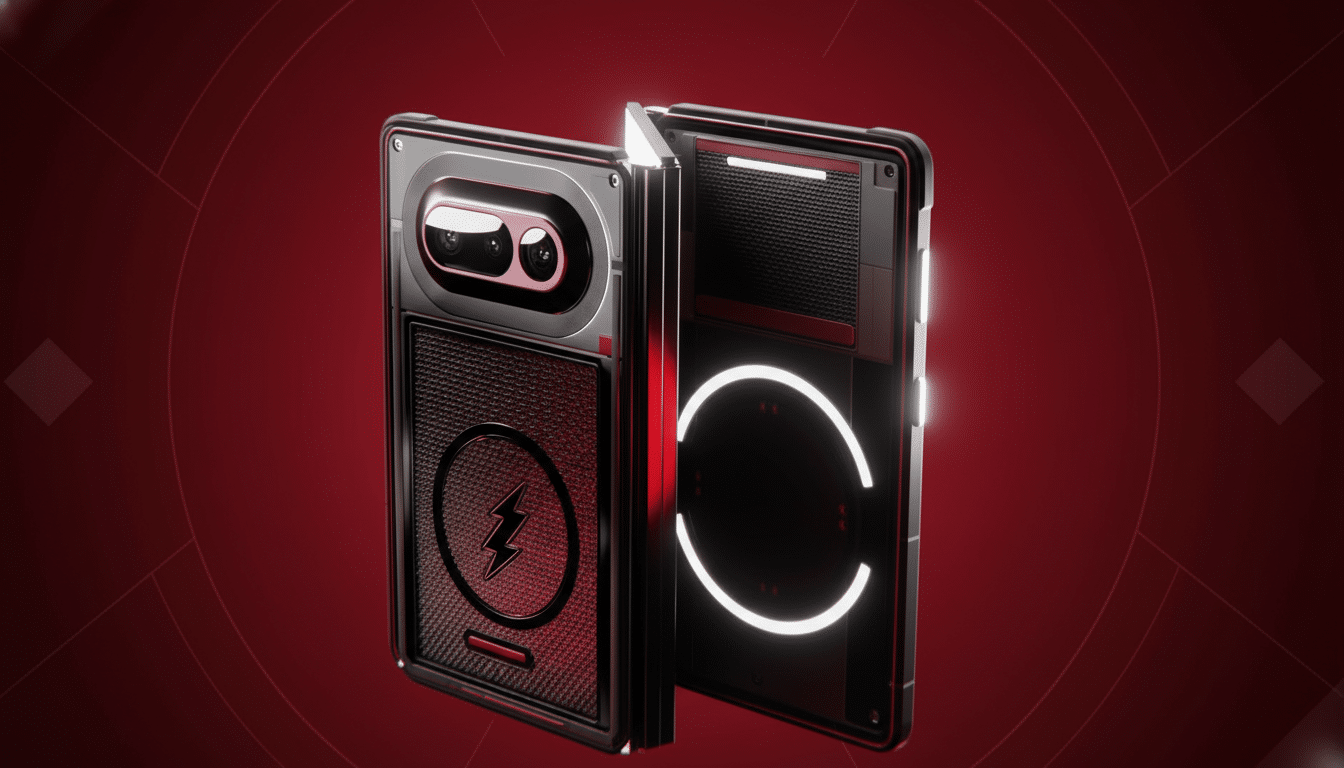
The concept’s three-screen layout is unapologetically task-oriented: one panel for gameplay or the camera view, a second for chat, and a third for stream health metrics or social feeds. Unlike most foldables, these are separate displays rather than one continuous flexible panel, aiming to keep critical windows visible without juggling overlays.
A standout twist is modularity. The third screen can detach and double as a high-quality streaming camera, aided by a magnetic ring that accepts auxiliary lenses. It’s a pragmatic spin on modular ideas that previously skewed gimmicky—here, the extra module serves a creator’s workflow instead of chasing a general-purpose accessory ecosystem.
Materials and Durability Come First in This Concept
The design leans hard into survivability. The non-folding display uses sapphire crystal for scratch resistance, while the frame integrates impact-absorbing TPE at the corners, the kind of material often found in protective gear. The shell surrounds everything in Kevlar set in a heat-resistant epoxy, addressing both drop protection and thermal resilience.
Durability is the pain point foldables still battle. Industry teardown labs and reliability testers frequently point to hinge wear and soft internal panels as failure points, and the mechanical complexity only rises when you add a second hinge. Sapphire and Kevlar won’t fix every failure mode, but they signal a design bias toward resisting abrasion, torsion, and heat—priorities creators value when they’re streaming outside controlled studio setups.
Connectivity and Encoding Challenges for Streamers
Professional streamers often rely on bonding backpacks—think LiveU units—to combine multiple cellular links and maintain a stable uplink while moving. Fitting that caliber of radio and encoding pipeline inside a phone is a non-starter, according to the engineers behind the concept.
The workaround is a tiny USB-C accessory supporting USB4. The $2 dongle lets the phone hand off heavy encoding and network aggregation to external hardware when needed, preserving thermals and thickness. In practice, that decouples the creator’s workflow: use the phone alone for casual sessions, or clip on serious gear for mission-critical broadcasts.
What It Would Cost to Build This Trifold Concept
The bill of materials is pegged at roughly $1,838.50, driven by a parts list that borders on workstation grade: two Snapdragon 8 Elite processors, three batteries, and two titanium hinges among them. For perspective, Counterpoint Research has placed recent flagship BOMs in the mid-$400 to $600 range. This concept’s component cost alone eclipses what many premium phones retail for.
And parts are only the start. Development for the trifold platform is estimated at $50 million, with another $5 million for the modular camera system—$55 million in R&D before a single unit ships. Unless amortized over sizable volume or subsidized by services, sticker shock would be inevitable.
Lessons From Past Modularity Attempts in Phones
Modular phones are a graveyard of good intentions. Project Ara never reached consumers, LG’s G5 modules failed to win sustained support, and Moto Mods—ingenious as they were—ultimately faded as attachment ecosystems thinned. The difference here is focus: rather than a catchall platform, the detachable screen and lens ring serve a tight creator use case, which could help avoid the “solution in search of a problem” trap.
Why This Concept Still Matters for Mobile Creators
Foldables remain a niche at roughly 1–2% of global smartphone shipments, according to multiple industry trackers, but the creator economy keeps accelerating. StreamElements’ market analyses show tens of billions of hours watched annually on livestream platforms, underscoring why stream-first tools—better multitasking, tougher builds, smarter connectivity—are not fringe ideas.
Even if the Kevlar trifold never ships, the priorities it spotlights are already seeping into mainstream hardware: more resilient materials, multi-window interfaces that feel native rather than bolted on, and modular offloading for compute-heavy tasks. There’s a practical spillover, too—the company partnered with Subtle Computing to roll out improved voice pickup and noise suppression for its Ear (1) earbuds, a creator-friendly gain you can use today.
Call it an audacious thought experiment, but it’s a revealing one. Building a phone for work that never sits still demands fresh trade-offs, and this concept bluntly shows where the costs and opportunities lie.