


I was trying to find some cheapo earbuds because my old ones had broken, and instead I got the Pixel Buds 2a, and after weeks of flights, train rides, and commutes I don’t miss my more-expensive sets at all.
Several audio reviewers, including vets at SoundGuys, steered me toward Google’s budget buds — and the advice has paid off in regular comfort, good sound, and features that matter more than spec-sheet flexing.
- Why the Pixel Buds 2a Budget Option Makes Practical Sense
- Fit and comfort trump flashy tricks in daily use
- Sound that travels well across podcasts and music
- Controls that stay out of the way when you are busy
- The ecosystem catch for iPhone users and missing features
- Value verdict and who should buy Google’s budget buds

Why the Pixel Buds 2a Budget Option Makes Practical Sense
At $129, the Pixel Buds 2a are undercutting plenty of other “premium” sets yet offer many of the right essentials: active noise cancellation and transparency modes, Bluetooth 5.4 with multipoint pairing and Audio Switching (an extension of Fast Pair so you can move between devices easily), IP54 dust and water resistance, and up to 10 hours of playtime per charge. That package is uncommonly comprehensive in its price bracket, where rivals frequently sacrifice ANC and multipoint to get headline-grabbing prices.
Google’s design also leans practical. The case is snug, opens with one hand, and is made to be serviceable — a rarity among the throwaway charging cases that dominate its category. For most buyers, these are the features they will feel every day and not just read about on a box. Market trackers point out that comfort, reliability, and battery life play larger roles in repurchase decisions than do exotic codecs.
Fit and comfort trump flashy tricks in daily use
So where do the 2a differentiate themselves? It is all in comfort. The disks fit non-skid into place with a stabilizer fin that softly locks in without pressure points. There’s a range of ear tips from small to extra large and a quick fit test on Android to ensure the seal is perfect. Once seated, there’s no fussing about it — no tugging them off your hat or hair, no micro-adjustments every five minutes. For me, in long listening sessions, that’s more important than fancy processing modes.
This way of wearing earbuds has been widely lauded by independent testers across Google’s recent earbuds for alleviating fatigue and allowing for passive isolation. It comes through here with the fit: good passive noise isolation and relatively modest clamp force generate superior real-world noise reduction before ANC even gets in on the act.
Sound that travels well across podcasts and music
The tuning is meant to be a compromise between what is wanted and needed. It ain’t gonna wow bass chasers out of the box, but it won’t get nutso on vocals either. In a plane, I could jump from a news podcast to a stripped-down acoustics playlist without needing an EQ. The ANC here isn’t class-leading; however, it does cut engine rumble and subway roar enough to keep levels reasonable, while transparency mode allows announcements through without making them sound tinny.
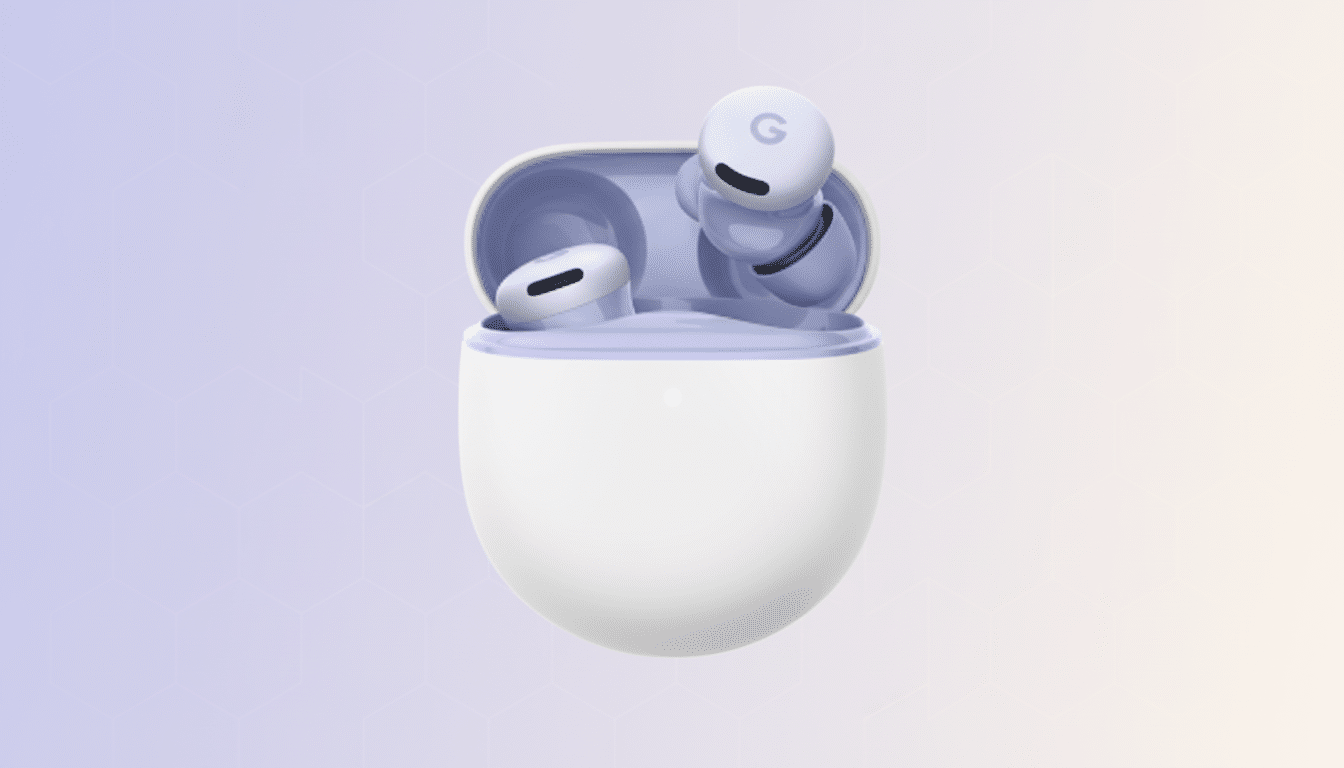
Most importantly, the 2a avoid the boomy, V-shaped default way too many budget buds favor. If you want more thump or spark, the Android app’s EQ gets you there in a hurry. If you don’t, you know at least that the stock profile is a no-fuss listen across genres, spoken word included.
Controls that stay out of the way when you are busy
While a number of earbuds cram in swipes and long-presses that sound clever on paper without it always playing out as well in the real world (and can lead to accidental volume spikes or track changes), not so with these. The Pixel Buds 2a are simple when it comes to controls: taps for play, pause, and track skips, with customization available on Android. The result is fewer misfires and less fiddling — just what you want when you’re dashing to a gate or hustling down the platform.
The ecosystem catch for iPhone users and missing features
There’s one caveat. They pair just fine with an iPhone for basic listening and calls, but there’s no iOS companion app. That means no native EQ, no on-the-fly setting tweaks, and no convenient firmware updates from Gear Fit Manager. You can install updates and adjust settings from a Chromebook or macOS device using Google’s web utility in Chrome, but it doesn’t have the same level of integration as what you’d get on an Android device, or what offerings like Sony and Jabra have for iOS.
If you live full-time in iOS and crave deep control from your phone, well, then that’s a real limitation. If you’re rotating between platforms, or you live on Android as a primary user, then no big deal. Either way, the baseline experience — fast pairing, steady connection, clear calls — translates across devices.
Value verdict and who should buy Google’s budget buds
It’s the Pixel Buds 2a that give you the blend that most of us care about: a secure fit all day, with sound to match, real ANC, and decent connection reliability — without venturing too close to premium pricing. For Android users, they are an easy recommendation. For iPhone users, they’re still compelling, if you can live without a native app. In a market that’s clogged with spec-sheet bait, this is one of those rare times where the “cheaper” option feels like the smarter one.