


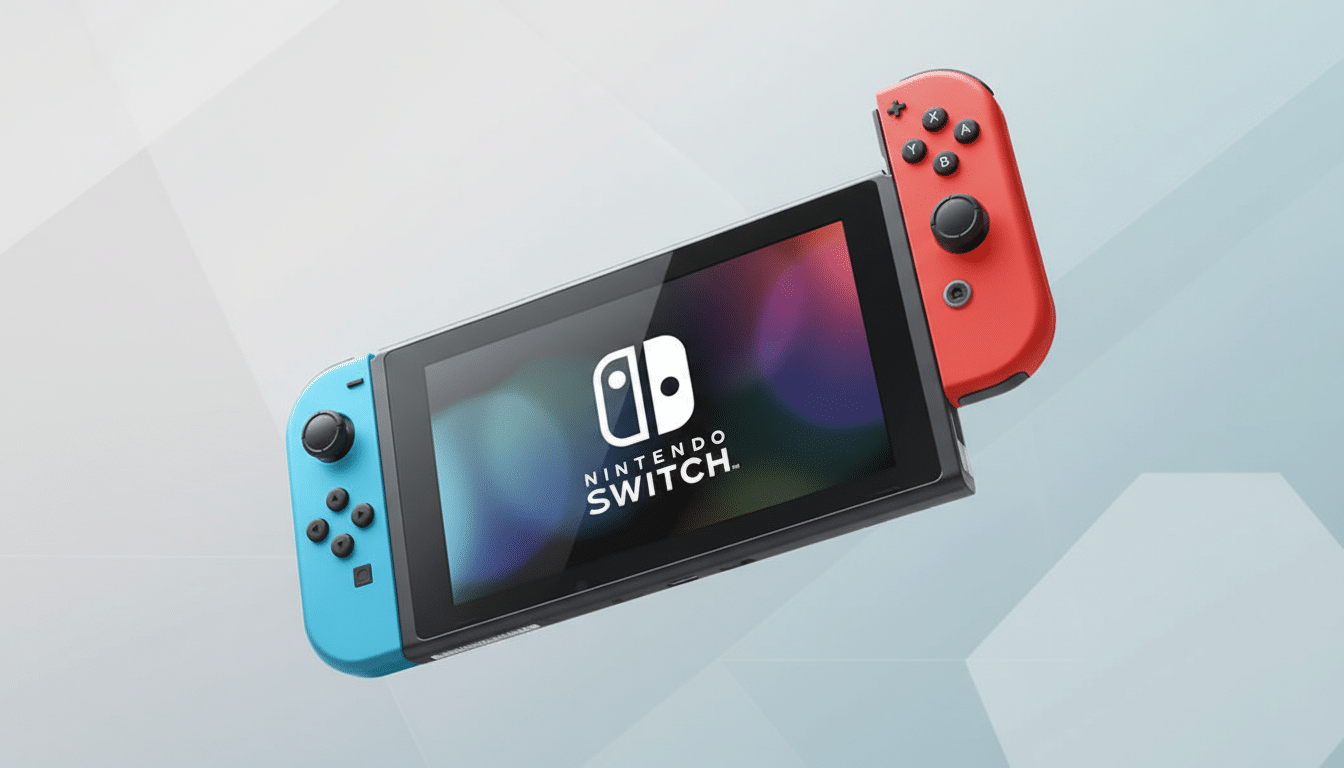
I went hands-on with Nintendo’s newly revived Virtual Boy on Switch, a faithful recreation that doubles as a time machine. It brings back the same striking stereoscopic tricks, the same stubborn red-and-black aesthetic, and yes, the same eye and neck strain that defined the original. It’s impressive, curious, and uncomfortable—all at once.
Hands-On With the New Virtual Boy Switch Add-On
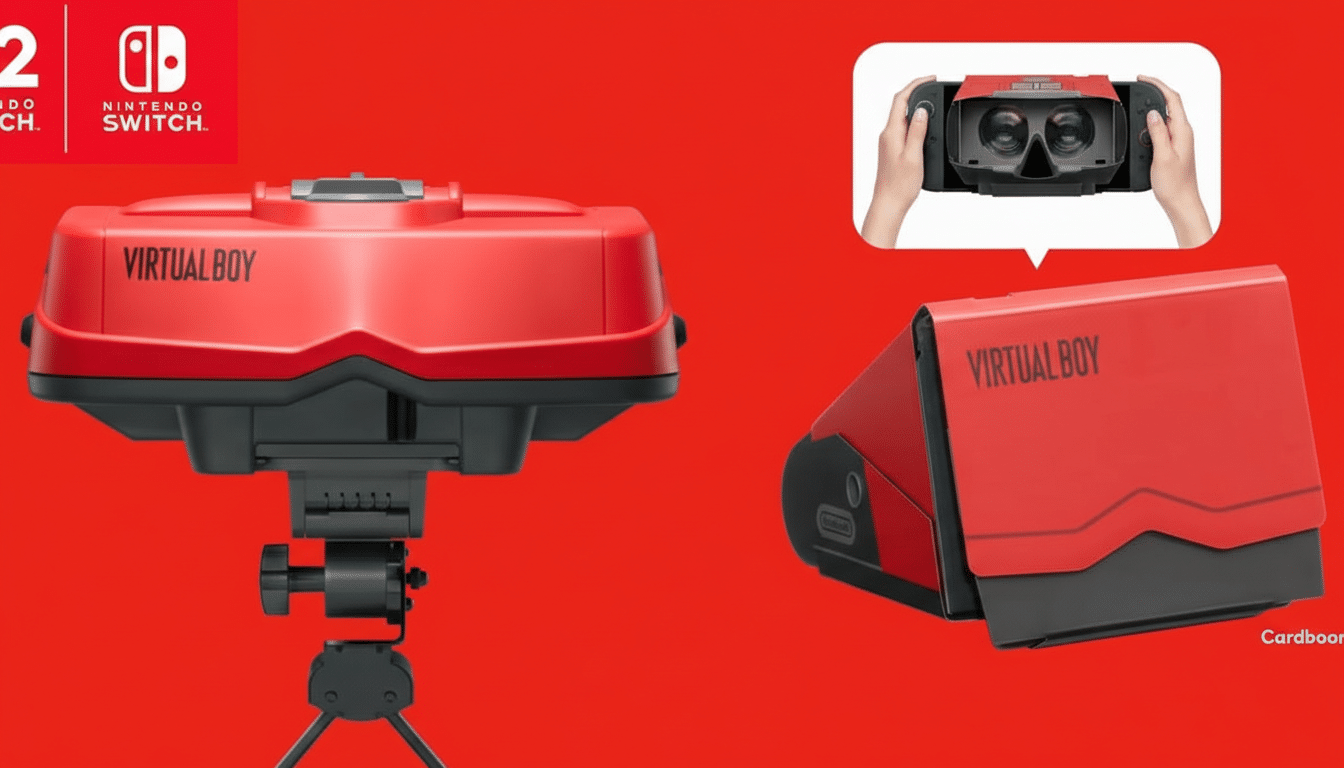
The accessory is a sturdy, two-legged stand that clamps your Switch into a fixed visor. You set it on a desk, grab a controller, and lean in. The optics split the screen into a left and right view, creating bona fide stereoscopic depth that a flat TV simply can’t replicate. Nintendo includes visual options—tint adjustments, intensity controls—to keep the default red-and-black look authentic while offering a few comfort tweaks.
- Hands-On With the New Virtual Boy Switch Add-On
- What Works and What Still Hurts About This Revival
- Launch Lineup and Early Play Impressions From Key Titles
- Price Reality and the Cardboard Option for the Add-On
- Faithful to a Flawed Original, Preserved on Modern Switch
- Should You Play It Now, and Who Is This For Today?
Even with those options, the presentation is intentionally vintage. The 3D effect pops, and it matters: background layers step forward for platforming cues, projectiles arc in true depth, and parallax isn’t just flair—it’s part of the design logic. This is why the games aren’t playable on a television; collapse the stereo and you lose the grammar of the gameplay.
What Works and What Still Hurts About This Revival
After a few minutes, I felt that familiar VR wobble—slight eye fatigue and a neck twinge from hovering over the visor. It’s not catastrophic, but it’s real. The American Optometric Association’s 20-20-20 guideline applies here: every 20 minutes, look 20 feet away for 20 seconds. Studies presented at IEEE VR have long noted that 30–50% of first-time users report some simulator discomfort, and this setup, by design, puts you in the same ergonomics bucket as basic phone-based headsets.
The stand is stable, but you’re locked to a posture. You’re not turning your head, you’re not walking around—it’s a stationary immersion that trades comfort for fidelity. The upside is zero drift and a rock-solid image. The downside is the kind of neck angle that begs for a monitor riser or a thicker coffee table book under the legs.
Launch Lineup and Early Play Impressions From Key Titles
I sampled a starter slate that included Wario Land, Teleroboxer, 3-D Tetris, and the once import-only The Mansion of Innsmouth. Wario Land remains the standout—classic side-scrolling with clever foreground/background hops that only make sense in stereo. Teleroboxer channels a punch-out rhythm where timing reads differently when opponents actually occupy space in front of you. 3-D Tetris is exactly what the title says, and it’s more readable here than on any 2D port. Innsmouth is as atmospheric as ever and, for newcomers, borderline inscrutable without a manual.
What struck me most is how modern the depth cues feel despite the limited palette. The constraints force clarity: silhouettes, timing, and Z-layer logic do heavy lifting. It’s a reminder that art direction, not just resolution, makes or breaks perceived depth.
Price Reality and the Cardboard Option for the Add-On
The hard-plastic add-on runs $99, with a cardboard alternative at $24.99. The pricier unit is the one to get if you care about alignment and stability; a precise interpupillary distance matters for comfort, and rigid optics hold their sweet spot better. The cardboard option, like past DIY kits, is a fun proof of concept but tougher to keep dialed in for long sessions.
Is $99 a lot for a niche of retro? Maybe. But consider the calculus: Nintendo’s Switch install base is well over 130 million according to company reports; if even 1% of owners bite, that’s more than a million users engaging with a rescued platform that otherwise lives in museums and YouTube clips.
Faithful to a Flawed Original, Preserved on Modern Switch
The original Virtual Boy was a bold detour—tabletop form factor, stereoscopic optics built around oscillating mirrors, and a monochrome LED array that screamed “prototype” more than “living room.” Fewer than 25 games shipped, and lifetime hardware sales didn’t crack a million by most analysts’ tallies. It became shorthand for “promising idea, painful execution.”
This revival leans into preservation. The Video Game History Foundation has long argued that official re-releases matter because they capture not just code, but context. Here, that context includes the weight of the stand, the face-in posture, the red-on-black contrast, and the stereo tricks that only work when your eyes are separated by lenses. It’s accurate to a fault—and that’s the point.
Should You Play It Now, and Who Is This For Today?
If you’re curious about game history or you love hardware oddities, absolutely. For everyone else, this is a five-to-fifteen-minute-at-a-time machine. Take breaks, nudge the brightness down, and keep your setup at eye level. The novelty is real and the discomfort manageable when you respect your limits.
As a hands-on, it left me with a grin and a stiff neck. As a preservation effort, it’s a small triumph: Nintendo isn’t burying its most infamous experiment. It’s letting us experience it, warts and all, the way it was meant to be seen—in 3D, up close, and with a gentle reminder to stretch afterward.