


California Gov. Gavin Newsom has ordered state agencies to speed the rollout of newly enacted independent oversight systems for advanced artificial intelligence and to develop recommendations for additional safeguards, including a possible emergency shutdown mechanism for frontier models.
The Sept. 18 executive action is not a mandate for AI companies to install a so-called kill switch. Instead, it begins a two-month expert process that could produce proposals for changes to California law. The distinction is more than semantic: the order immediately affects the state’s regulatory timetable, while any new duty to build, test or maintain a shutdown capability remains unsettled.

Existing oversight laws move to the front of the queue
According to the governor’s announcement, the California Government Operations Agency must accelerate implementation of SB 813, which established a framework for independent AI verification organizations, and AB 1405, which created a registry and standards for AI auditors. The agency is to work with the Governor’s Office of Emergency Services and convene national experts on recommendations to strengthen AI safety and security rules.
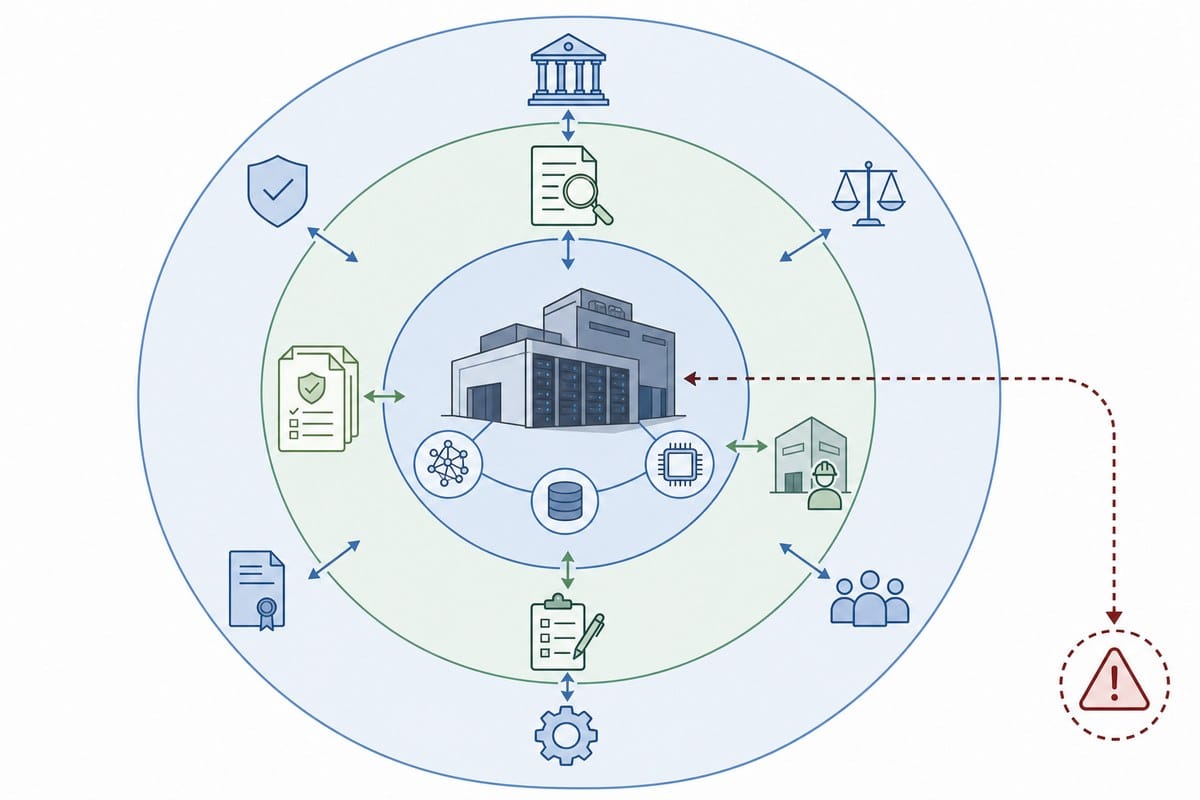
Those two laws are the practical foundation for the order. Rather than setting up an entirely new regulator, California is trying to make outside review a working part of its frontier-AI policy. The model resembles a familiar compliance architecture: companies develop and submit safety materials, qualified independent organizations examine relevant claims and practices, and the state sets conditions for who can perform that work.
The order asks the group to consider whether designated verification organizations should conduct regular onsite audits and evaluations at frontier AI companies. It also raises independent verification of safety frameworks, transparency reports and risk assessments that companies are already expected to file under state law. These are proposed additions or refinements, not requirements that took effect with Newsom’s signature.
What the shutdown proposal does — and does not — establish
The most attention-grabbing item is an emergency shutoff mechanism, routinely labeled an AI kill switch. The administration says experts should consider a system in which the effectiveness of a shutdown capability would be verified continuously by an independent verification organization. But the state has not specified the technical design, which models would be covered, who could activate a shutdown, or how it would work once a model has been deployed through cloud services, applications or downloaded software.
Those omissions describe the hard part of the policy, not a minor implementation detail. A shutdown control for a model running inside one company’s managed infrastructure poses a different operational problem from one for model weights that have been distributed to customers or developers. A credible future rule would need to define the covered system, the trigger for emergency action, the responsible operator, the scope of the action and how an auditor could test the control without creating another security weakness.
Newsom has acknowledged that the phrase can mean different things, according to Los Angeles Times reporting. That is an unusually important caveat in a debate where “kill switch” can suggest a simple red button, even though the policy under discussion concerns governance, infrastructure access and ongoing independent testing.
The order also asks advisers to consider updating the definition of critical safety incidents to cover loss-of-control events. The administration cited an incident involving Hugging Face in describing that concern. The public announcement does not provide enough technical detail to treat that episode as a settled template for a broader rule, but its inclusion shows the state is looking beyond familiar reporting categories such as cybersecurity breaches or model misuse.
A faster timetable, but no new obligation yet
California’s announcement says the expert group must produce a guide and recommendations within two months. StateScoop’s account of the order reported more detailed milestones: application requirements and procedures for independent verification organizations are targeted for next May, with related implementation work expected by the end of 2027. Those dates describe the state-building work behind independent oversight, not a deadline for companies to deploy a shutdown feature.
The order is also notable against Newsom’s earlier position. The Los Angeles Times reported that he vetoed a 2024 bill that would have required AI companies to develop a shutdown capability. His latest action does not reverse that legislative decision by executive fiat; it reopens the issue through a more structured process tied to auditors, safety filings and incident reporting.
That approach may be more consequential than the phrase “kill switch” suggests. California hosts many of the companies building and operating the most capable AI systems, and it is attempting to turn broad safety claims into artifacts that outside reviewers can examine. Whether the resulting framework becomes a model for other jurisdictions will depend on details still to be written: auditor independence, access to company systems and records, standards for testing, and what legal consequences follow when a verifier finds a serious failure.
For now, the enforceable change is procedural. California has told its agencies to move faster on independent AI oversight and asked experts to map the next set of safeguards. A compulsory emergency shutdown mechanism remains a proposal awaiting a definition, a legal vehicle and a demonstration that it can work under the conditions in which advanced AI systems are actually used.