


Intending to marathon a series at 35,000 feet? Your backup battery might not be up to snuff. More and more airlines are cracking down on passengers’ use of power banks in the cabin, with some now prohibiting such devices for use or charge in-flight. The move comes amid growing worry about lithium-ion battery incidents and is oriented to reduce the risk before it becomes smoke in the cabin — or a diversion to the nearest strip of concrete.
What changed and why airlines tighten power bank rules
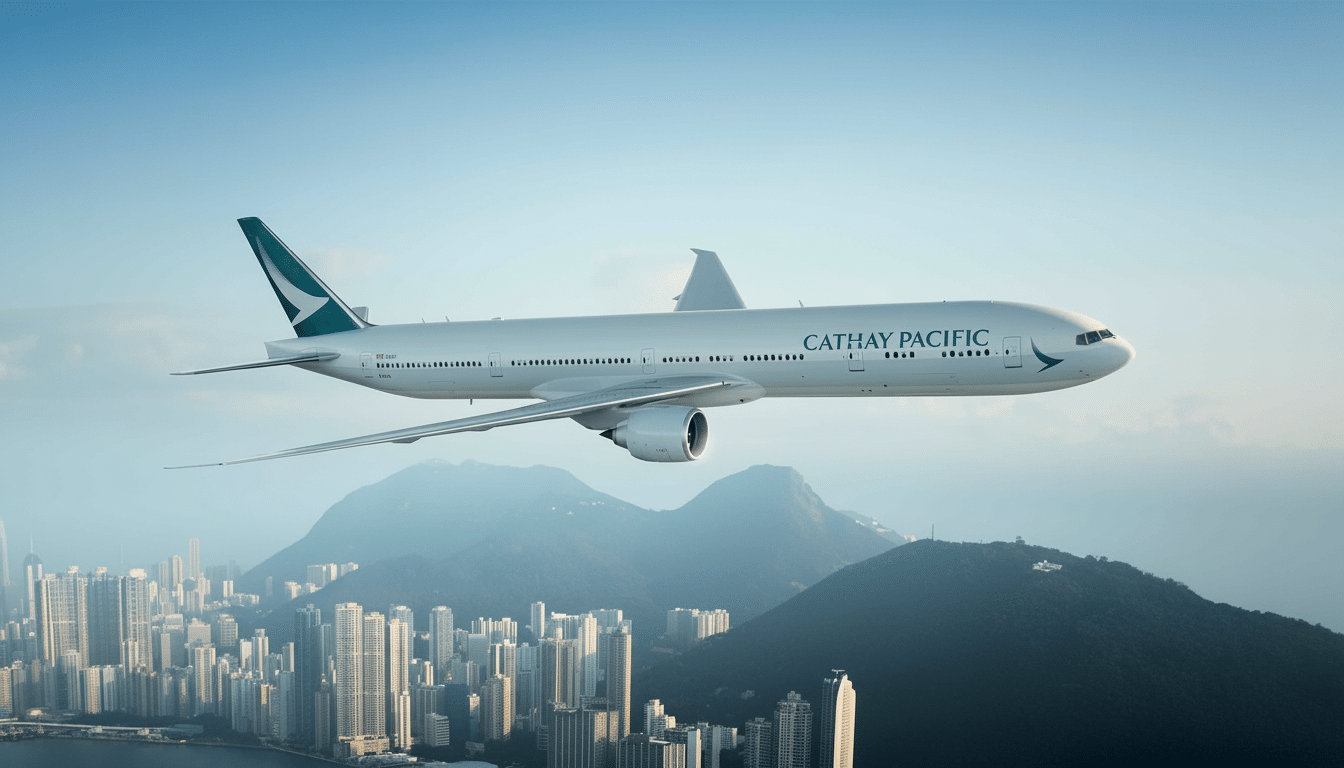
A few large long-haul carriers, like Emirates and a group of Asia-Pacific airlines — Cathay Pacific, Singapore Airlines, China Airlines, EVA Air and Thai Airways among them — have also implemented stricter regulations on the portable batteries. In practical terms, that usually translates to power banks being allowed in your hand luggage but not used for charging devices in-flight — and you cannot charge the power bank itself using seat power.
- What changed and why airlines tighten power bank rules
- The rules travelers must follow for carrying power banks
- How to know if your power bank is permitted
- Onboard charging etiquette and safety tips
- What to do if power banks overheat in the air
- How airlines and regulators are reacting
- A Quick Preflight Checklist for Traveling with Power Banks
The reason is simple: lithium-ion cells can and do fail. When they do, they go into thermal runaway, releasing heat, smoke and flammable gases. FAA records also indicate that there have been over 500 incidents of smoke, fire or extreme heat linked to batteries on U.S.-registered aircraft since 2006, a substantial proportion of them personal electronic devices carried by passengers. IATA and ICAO have both issued repeated warnings to carriers: in-cabin battery events, although usually constrained, can spread rapidly in a confined space. Reducing nonessential charging lowers the chances of failure — and caps the power flowing through a device if something does go amiss.
The rules travelers must follow for carrying power banks
Supporting airline policy is a worldwide minimum established by the bodies that govern aviation. Power banks are defined as “spare lithium-ion batteries” by the FAA, EASA, and a number of national authorities, and this means that:
- Carry-on only. The restriction for power banks is on checked bags.
- Size matters. There’s usually a limit of 100 Wh without airline approval. 100 to 160 Wh generally requires airline approval; the quantity may be limited. Over 160 Wh is not allowed to be carried by passengers on board an aircraft.
- Protect the terminals. Make sure ports are covered, use a case and avoid crushing or puncturing. Batteries that are damaged, swollen or have been recalled must never fly.
New on some airlines is an additional “no-use” provision: the power banks must remain off and stowed during flight. Other airlines that still permit use can serve as a reminder of the perilous dance we do on even the best planes: If you’ve got one plugged in and it starts to get warm, if cables look dodgy or if an area near a seat becomes hot, crew members have a right to ask you to unplug.
How to know if your power bank is permitted
Many power banks advertise their capacity in watt-hours (Wh). If you only have milliamp-hours (mAh), use the following formula: Wh = (mAh ÷ 1,000) × nominal voltage. For regular cells at 3.7 V:
- 10,000 mAh ≈ 37 Wh
- 20,000 mAh ≈ 74 Wh
- 27,000 mAh ≈ 100 Wh
- 30,000 mAh ≈ 111 Wh
That means most popular 10,000–20,000 mAh models are typically fine; units that reach up to 30,000 mAh may need airline approval or be denied.
Be aware that a charger’s output rating (for example, 65 W USB‑C PD) is not its capacity. Regulators are interested in stored energy (Wh), not charging rate. Flag missing, illegible or inconsistent labels to gate agents and cabin crew.

Onboard charging etiquette and safety tips
Look out for stricter enforcement of simple behaviors: keep your batteries within reach; don’t jam them into the cracks of a seat and avoid daisy-chaining (phone to power bank to seat power).
If your airline prohibits the use of power banks on flights, opt for seat USB or AC outlets and make sure you keep a short, undamaged cable. If charging is permissible, keep an eye on the device, unplug it if it becomes warm and never charge under a blanket or pillow where heat can accumulate.
Airlines are also starting to ban charging the power bank from seat power. Charging a battery-in-a-battery is riskier than a single device and adds heat in the place where it is most difficult to shed heat.
What to do if power banks overheat in the air
Stop using it and immediately contact crew, then place it on a hard, nonflammable surface. Under guidance from the FAA and EASA, crew will use a halon extinguisher to put out flames before cooling the device with water or non-alcoholic liquids to keep it from reigniting. Don’t carry a smoking device, poke it, or smother it in a bag or blanket. Fast reporting is the single most important thing you can do.
How airlines and regulators are reacting
Experts warn that the challenge is not just educating passengers but preparing crews to respond to lithium fires and other incidents. Regulations such as those of the FAA, EASA and UK Civil Aviation Authority still adhere to IATA’s Dangerous Goods Regulations that codify 100 Wh and 160 Wh threshold requirements, with cabin carriage for spares. Some airports are also checking large-capacity power banks in security for clear labels and compliance.
Policy discrepancies will remain — some U.S. airlines still allow for reasonable in-seat power bank use so long as it falls under standard limits — so ultimately, the burden is on travelers to consult carrier-specific pages before stashing anything away. If you have a diverse itinerary, you need to play by the strictest policy to prevent a gate surrender at the last minute.
A Quick Preflight Checklist for Traveling with Power Banks
- Check the Wh rating and labeling of your power bank.
- It has to fit into carry-on, with protected ports.
- Carry a short, certified cord and skip the daisy-chains.
- If in-flight use is banned by your airline, rely on seat power instead.
- If anything feels warm or smells odd, unplug and immediately tell a flight attendant.