


Rian Johnson has confirmed a pleasingly weird piece of pop nostalgia-meets-modern mystery cinema crossover: the same London locale used for Rick Astley’s Never Gonna Give You Up became the backdrop for a crucial scene in Wake Up Dead Man, one of the internet’s most enduring video memes.
After fans pointed out the visual similarities, noting that the production filmed a gym sequence in exactly the same spot where Astley once danced his way into meme infamy, the director accepted the connection on Bluesky. Johnson quipped that he tried to sell the significance of the moment by airing the song on his phone for a far-from-tearful crew.
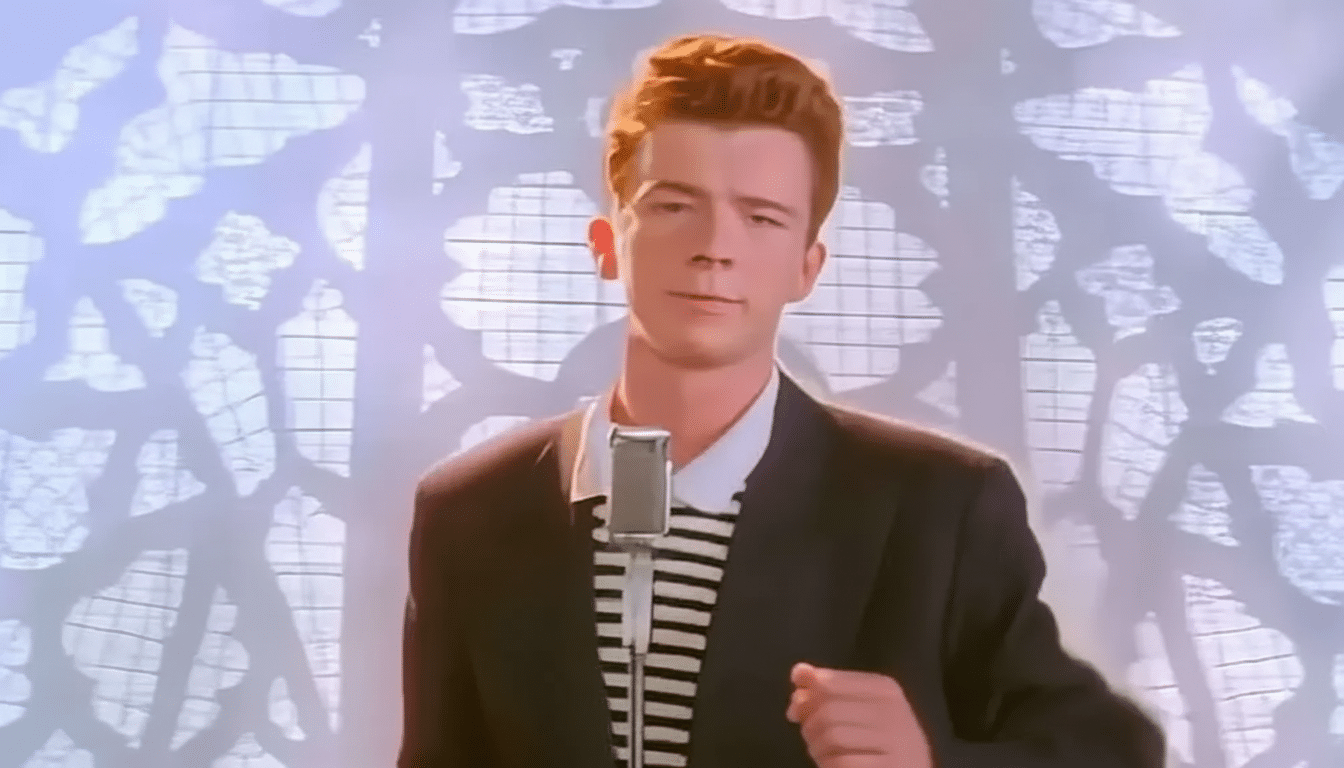
A meme meets a mystery in a London filming location
Not that many artifacts of pop culture can last as long as Never Gonna Give You Up. The song’s official video has easily over 1.5 billion views on YouTube, thanks to “Rickrolling,” the bait-and-switch prank that transformed the single into a digital-era shaggy-dog story. The pop music scholars are fond of holding it up as early evidence that platform-era remix culture could revitalize and repurpose old content.
On the other end of the pair is Knives Out, Benoit Blanc’s whodunit universe’s springboard into pop culture fame. Company figures have long insisted the series ranks as one of the most viewed films to launch on big streamers, and Johnson is one who drops little bits of playful cultural texture into his mysteries — meaning this locally specific nod feels entirely on brand.
Inside the shared London location used by both
The close-up is synchronized to the Harrow Club in West London, a community and sports facility built inside a decommissioned church. Its airy hall — arched windows, tall ceilings and a sprung floor — fulfills odd clues that can be seen in both Astley’s video and Wake Up Dead Man’s gym scene. The club’s own publicity materials speak of a long-standing youth and community mission, the history of which has made it an unexpectedly character-rich, flexibly utilitarian filming space.
Location pros say that spaces like the Harrow Club, which has been a multipurpose hall since it was built in 1926 as an Edwardian boys’ club, have sweet but increasingly rare packages: manageable light sources, sound-friendly architecture and easy access for gear. Film London has identified community venues as the workhorses of the capital’s screen ecosystem, cherished by productions seeking period texture without the logistical headaches of shutting down busy public sites.

Confirmation from the director on the location overlap
Johnson’s Bluesky note did more than confirm some fan sleuthing — it also painted a scene recognizable to any film set. Though the director — attempting, for a stunned, celebratory moment, to Rickroll with a brief blast of Astley’s chorus — crews mostly shrugged around and pressed on. It’s a little, human snapshot of how film shoots condense generations and frame reference points; what reads as internet folklore to one is just the background noise for another.
Why this crossover of meme and mystery resonates now
This is the vanishingly rare Venn diagram where a meme’s afterlife overlaps with an auteur’s franchise. The Rickroll survives because it is easy, social and instantly recognizable; data analysis often reflects surges in clicks when a hot pop culture moment offers a nudge. To fold that legacy into a stylish new mystery is an added level for the watchful-eyed without overtaking the story itself.
It also highlights how London’s adaptive spaces keep resurfacing in media across decades. A hall that once accommodated youth clubs can credibly be made over as a music-video location, then a gym belonging to the modern film — continuity not of story but of architecture. Such repurposed ecclesiastical and civic buildings are, the British Film Institute has long pointed out, of enormous value to film-makers: their intangible air of real life is tougher for purpose-built stages to imitate.
The Harrow Club’s pop-culture footprint in London media
Beyond this tidy match, the Harrow Club’s bigger story is civic rather than cinematic. Originally set up to help local young people and families, it’s still a thriving community center that doubles as a film location every so often. That Janus-faced existence — public mission by day, screen-ready canvas by appointment — helps explain why all of a sudden it keeps popping up in productions seeking authenticity on the cheap.
For aficionados, the confirmation completes a circle between two very different kinds of crowd-pleasing entertainment. For filmmakers, it serves as a case study in how the right location can be twice-over quietly iconic. And for those who ever clicked on a mysterious link and found themselves listening to a familiar synth line, it’s just another notice that pop culture likes to rhyme.