


NASA has sidelined its long-planned lunar Gateway station and is redirecting money, hardware, and attention to a direct build-out of a crewed base on the Moon’s south pole. The calculation is blunt: every extra interface, orbit change, and docking adds time and risk. A surface-first approach is the shortest, most politically defensible path to plant U.S. boots back on the Moon and keep them there.
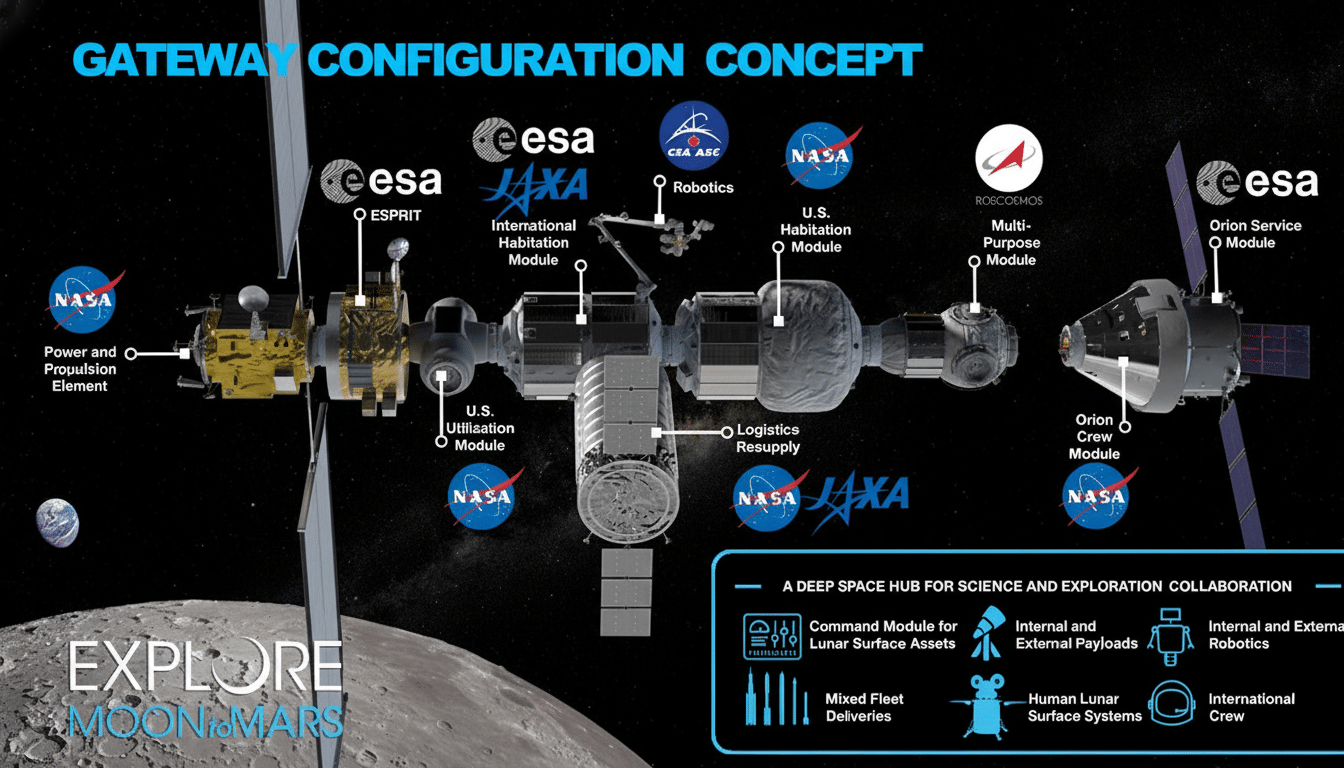
Gateway was billed as a small space station in a near-rectilinear halo orbit, a proving ground for deep-space operations and a staging point for landings. But after another hard scrub of budgets, schedules, and mission complexity, agency leaders decided the outpost would slow the march to sustained surface operations. In its place comes a phased campaign of frequent robotic deliveries, heavier cargo landers, and modular habitats designed to survive brutal polar darkness and cold.
- Why NASA Parked Gateway To Accelerate Lunar Surface Operations
- Schedule Pressure And Geopolitics Are Driving The Pivot
- Follow The Money Behind NASA’s Surface-First Strategy
- What The New Moon Base Plan Looks Like In Practice
- Partners And Industry Fallout From The Gateway Deferral
- Risks And Unknowns Of A Surface-First Lunar Approach
- The Bottom Line On NASA’s Streamlined Moon Base Plan
Why NASA Parked Gateway To Accelerate Lunar Surface Operations
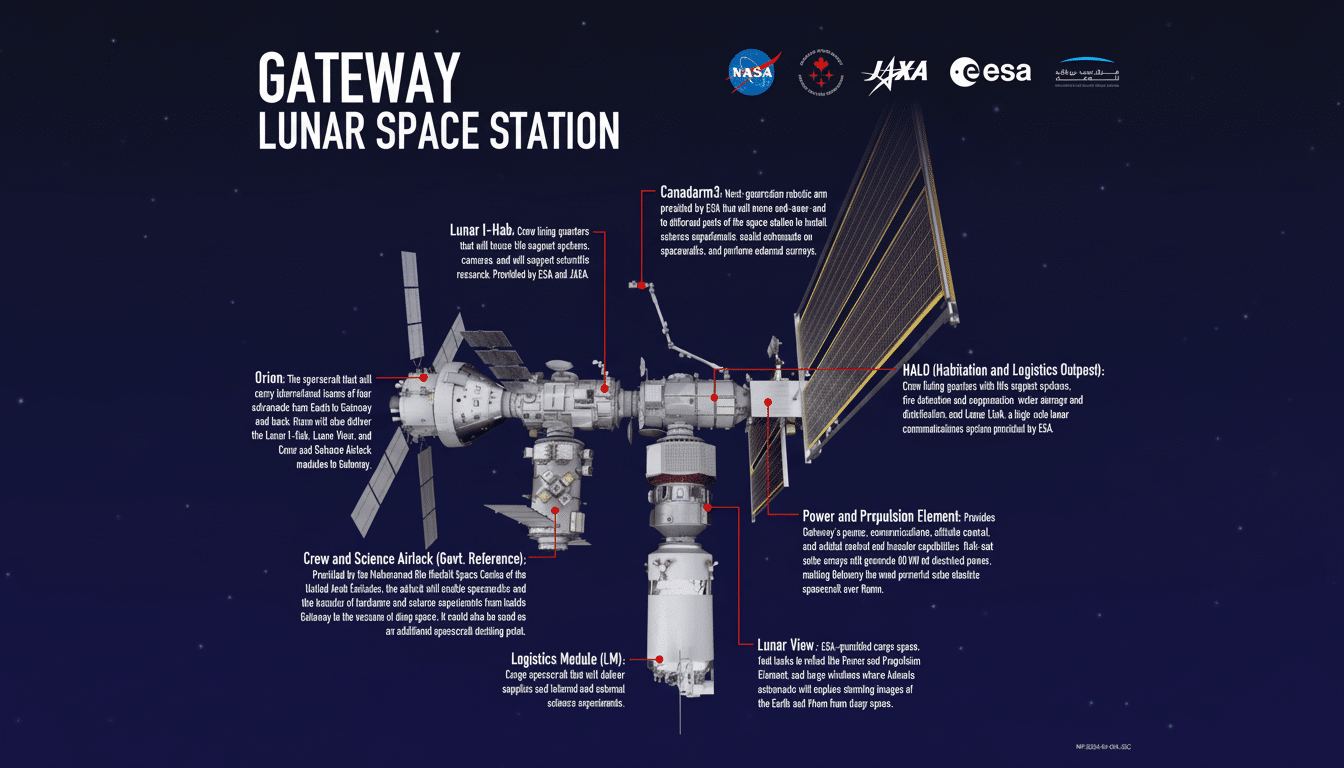
Gateway’s promise was real: a radiation-rich lab for heliophysics, international contributions like ESA’s I‑HAB and ESPRIT, Canada’s Canadarm3, and a logistics hub for reusable landers. The station’s core—Maxar’s Power and Propulsion Element (PPE) and Northrop Grumman’s HALO module—advanced key solar-electric propulsion and cislunar habitation technologies. Yet each added element also multiplied interfaces and integration risk.
Under the previous architecture, astronauts in Orion would rendezvous with Gateway, transfer to a Human Landing System, descend, then repeat in reverse. That choreography hinges on flawless timing across multiple vehicles and orbits. By removing the orbital pit stop, NASA collapses the chain of dependencies and points funding straight at landing cadence, surface power, communications, and mobility.
Watchdogs have long flagged schedule pressure. The Government Accountability Office and NASA’s Office of Inspector General have documented supply-chain bottlenecks, cost growth, and concurrency across Artemis elements. With critical path risk rising, the agency chose to prune the tree rather than add branches.
Schedule Pressure And Geopolitics Are Driving The Pivot
The race isn’t just against the clock. China has publicly targeted a crewed landing and is assembling the International Lunar Research Station partnership. U.S. policymakers want the next human footprints to be American and aligned with the Artemis Accords’ norms for responsible exploration. Gateway, for all its elegance, did not help with the near-term optics of who lands first. A surface-first pivot does.
Follow The Money Behind NASA’s Surface-First Strategy
Budgets are the quiet arbiters of strategy. A station that needs launch services, logistics flights, and multi-agency hardware stacks competes with landers, habitats, and power systems for the same dollars. NASA officials say redirecting Gateway funds and repurposing hardware can cover a significant share of the surface build without a dramatic top-line increase. The ask for a multi-year tranche—roughly $20 billion spread over several years—still depends on appropriators, but cannibalizing noncritical station elements lowers the barrier.
Flat budgets act like cuts in real terms. Streamlining to a simpler objective—land, build, repeat—reduces recurring overhead and makes progress easier to demonstrate to Congress. In a world of annual appropriations, visible milestones win votes.
What The New Moon Base Plan Looks Like In Practice
The blueprint unfolds in phases. First comes tempo: frequent, mostly commercial robotic deliveries to the south pole under programs like Commercial Lunar Payload Services to scout ice, validate landing zones, and test survival tech. Think nuclear or radioisotope heaters for the long polar night, dust-hardened avionics, and precision terrain-relative navigation.
Next, heavier landers ferry in the backbone—kilowatt-class power systems, surface relays, and rugged mobility. A pressurized rover doubles as a mobile habitat, extending traverses into permanently shadowed regions. Graders and power-beam experiments prepare pads and berms to tame plume ejecta, a hazard highlighted by recent lander campaigns.
Finally, modular surface habitats arrive for multi-week crewed stays, with steady cargo flights bringing tools and returning samples. In-situ resource utilization moves from demo to utility: 3D printing regolith into pavers and shielding, and extracting oxygen and water from lunar soil—a cousin to what NASA proved with MOXIE on Mars. Fission Surface Power aims to deliver continuous tens of kilowatts, a game-changer for night operations when solar is starved.
Partners And Industry Fallout From The Gateway Deferral
Gateway isn’t officially dead; it’s deferred. That matters to partners. ESA, JAXA, and the Canadian Space Agency invested in station hardware meant to fly. NASA’s stance is to repurpose where practical—turning labs into surface testbeds, reallocating robotics to lunar construction, and refocusing logistics contracts on cargo landers rather than cislunar freighters. For industry, it’s a reshuffle: station primes like Northrop Grumman and Maxar eye roles in power, habitats, and cargo; lander teams double down on reliability and cadence.
Risks And Unknowns Of A Surface-First Lunar Approach
Skipping Gateway trims complexity but doesn’t erase hard problems. Commercial lunar landers have posted mixed results, underscoring how unforgiving the Moon remains. Surviving multi-week deep-freeze nights, managing dust infiltration, and fielding a steady drumbeat of tanker and cargo launches for heavy landers demand industrial resilience. And ISRU is not bankable at scale yet; early systems will be mass-poor and power-hungry.
The upside is proximity. If a pump fails or a valve sticks, crews are only three days from Earth rather than months away on Mars. That safety net makes the Moon the right place to learn how to live off-world.
The Bottom Line On NASA’s Streamlined Moon Base Plan
NASA is trading an elegant cislunar outpost for a ground game built on repetitive landings, robust power, and gritty surface work. It’s a bet that fewer steps mean faster progress—and that momentum, not architecture, will decide who leads in deep space. If the approach delivers, the agency can always bring Gateway back when it serves the mission rather than defines it.