


Elon Musk has unveiled a fresh north star for his intertwined space and AI ambitions, shifting SpaceX and xAI toward a unifying vision he calls Moonbase Alpha — a lunar manufacturing hub with electromagnetic “mass drivers” hurling AI satellites into deep space. The concept reframes the companies’ shared mission around building colossal compute off-world, powered by abundant solar energy and SpaceX’s heavy-lift logistics, and arrives alongside leadership changes and talk of a public listing.
Why a Moon Base, and Why Now for SpaceX and xAI
For years, Mars colonization served as SpaceX’s rallying myth. But government and commercial demand has concentrated nearer to home, especially on lunar missions and global broadband. With xAI now folded into the narrative, Musk is swapping the red-planet dream for a power-and-compute play that nods to the Kardashev Scale — the idea that advanced civilizations climb by harnessing larger shares of stellar energy. In practical terms, the pitch is simple: AI will devour electricity; space has plenty of sunlight; SpaceX can move the hardware.
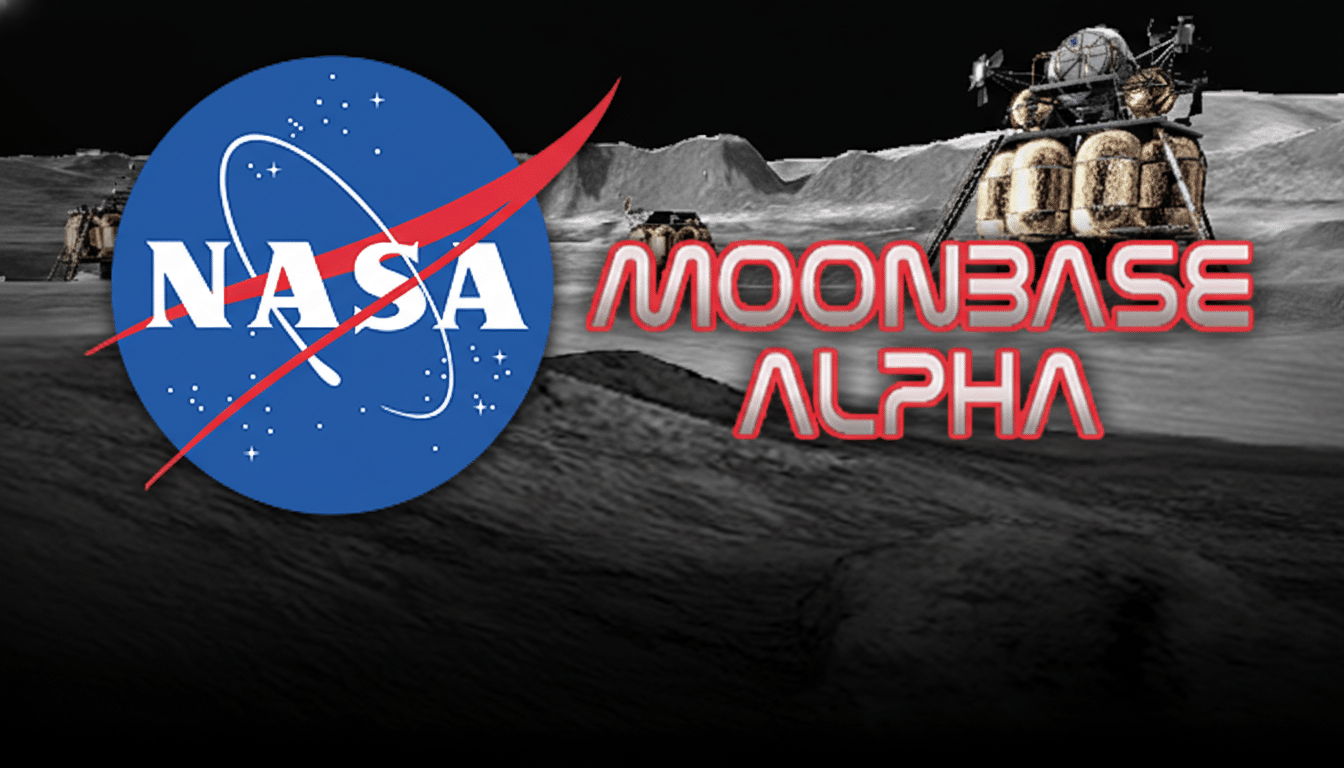
The shift also reflects where the money is. SpaceX’s Starlink constellation has matured into a high-cadence launch business, and NASA has awarded the company multi-billion-dollar contracts to return astronauts to the Moon. A moon-centric story threads these realities together while giving xAI a differentiator in a crowded LLM race: build the compute platform where others cannot.
The SpaceX–xAI Synergy for Off-World Compute
xAI’s frontier models demand staggering power and cooling. The International Energy Agency estimates data centers could consume up to 4% of global electricity within this decade, with AI responsible for a fast-growing slice. That pressure is already warping grid planning and chip procurement. Musk’s answer is to push compute into orbit and, ultimately, onto the Moon, fed by continuous solar power and linked by laser backbones — a natural extension of Starlink’s inter-satellite links and SpaceX’s high-throughput bus platforms.
Space-based compute brings trade-offs. Vacuum simplifies dust and corrosion but complicates heat rejection; without air, waste heat must be radiated away across large panels, increasing mass. Latency to Earth can’t be wished away either. But for training giant models and staging deep-space autonomy — think probes, factories, and sensor networks beyond Earth orbit — space-local compute could be compelling. The prize is a modular, scalable stack: Starship to lift tonnage, orbital assembly to integrate power and radiators, and AI to operate fleets with minimal human intervention.
Inside Moonbase Alpha: infrastructure and vision
The backbone is an electromagnetic mass driver on the lunar surface — essentially a maglev accelerator that flings payloads into lunar orbit without chemical propellants. Because the Moon’s gravity is low and there’s no atmosphere, mass drivers can, in theory, deliver cargo to space with far less energy than rockets. Concepts dating back to Gerard O’Neill’s work suggest >90% propellant savings for bulk materials shipped off the Moon.

What gets manufactured there? Musk’s narrative points to large solar arrays, radiators, structural trusses, and eventually compute modules. In-situ resource utilization is the fulcrum: lunar regolith contains oxygen, silicon, and metals, but turning dust into wafers and advanced chips is a multi-layer cleanroom miracle that Earth barely pulls off. A realistic progression looks like this: start with Earth-made chips and high-value components; use lunar materials for frames, glass, power, and thermal systems; automate assembly with robotics that xAI helps orchestrate.
The Economic Case and the Obstacles to a Lunar Hub
SpaceX has already slashed launch costs through reusability and high cadence, and Starship promises another magnitude of savings if it reaches routine operations. On the demand side, AI training runs can cost billions of dollars and require power measured in hundreds of megawatts for months. If clean terrestrial power remains scarce and expensive, the calculus for space-based power and compute tilts from sci‑fi to strategic.
Yet the stack is daunting. Building a self-sustaining lunar industrial base requires reliable cislunar logistics, radiation-hardened electronics supply chains, precision manufacturing in one-sixth gravity, and water and oxygen extraction at scale. Programs from NASA’s Commercial Lunar Payload Services, ESA’s in-situ resource studies, and DARPA’s orbital manufacturing initiatives show early momentum, but none erase the hard physics of thermal management, materials processing, and multi-year capex cycles in a harsh environment.
Strategy Signal For Investors And Talent
As a narrative, Moonbase Alpha is classic Musk: an audacious end state that doubles as a recruiting filter and an investor story. It explains why an aerospace firm would absorb an AI lab, gives xAI a mission beyond chatbots, and sets a bar competitors can’t easily mimic. For SpaceX, it also harmonizes near-term revenue — satellites and lunar services — with a long-run moat built on infrastructure others will be late to copy.
The tell will be near-term proofs: orbital data center demonstrators, high-power solar and radiator trusses assembled in space, and subscale electromagnetic launch tests on the Moon or analog sites on Earth. If those dominoes fall, Moonbase Alpha stops being a metaphor and starts reading like a master plan. If they don’t, it still accomplishes something valuable right now — it makes the best engineers ask, “Why not?” and shows investors what winning looks like at planetary scale.