


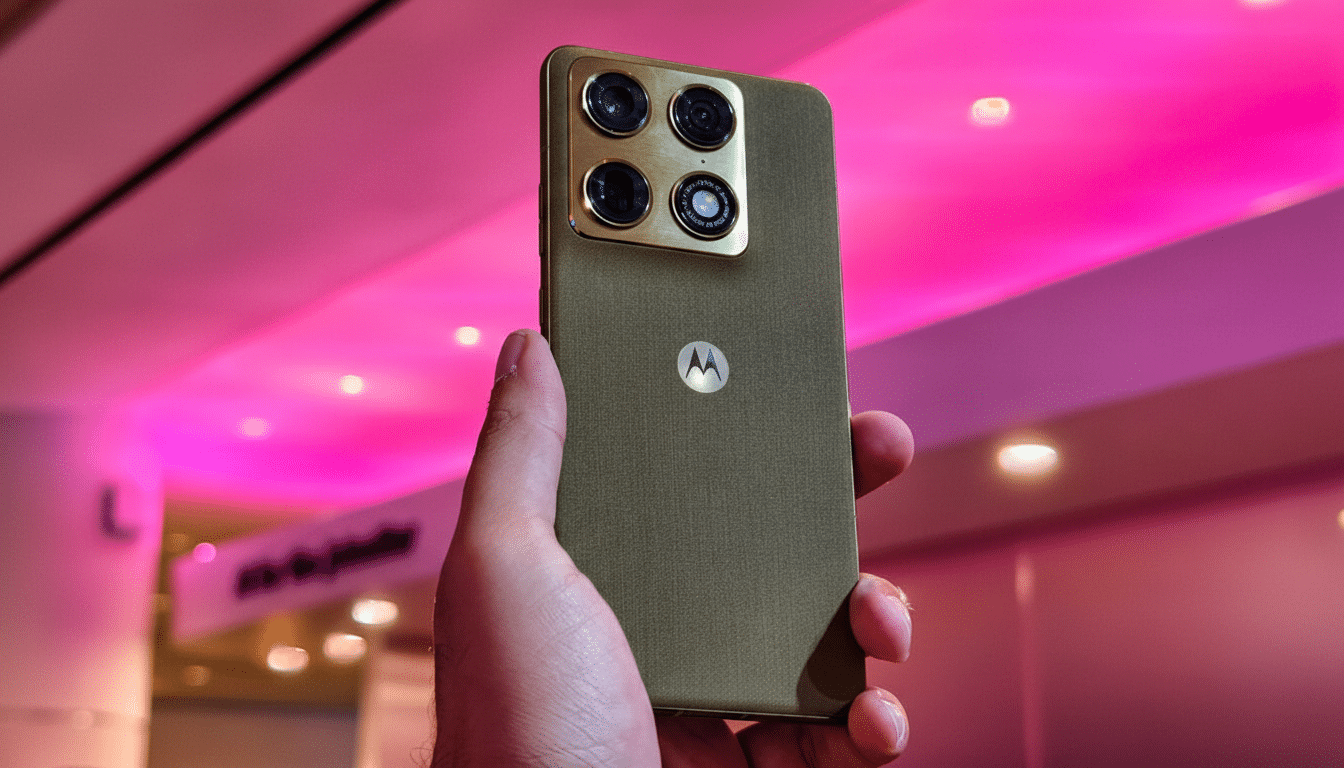
Motorola’s new Signature phone arrives with a promise that once seemed unthinkable for the brand: seven years of Android updates. It’s a bold pledge that places Motorola alongside Google and Samsung on longevity. But big promises are easy at launch. The hard part is proving they hold up across devices, markets, and years of shifting priorities.
I want this to be a turning point for Motorola. The industry needs more competition on software support, not less. Yet history and the fine print raise practical questions about whether this policy is durable, timely, and broad enough to matter for most buyers.

Why Seven Years Sounds Great On Paper for Buyers
Seven years places the Signature in rare company. Google’s Pixel 8 family and Samsung’s latest Galaxy flagships commit to seven years of OS and security updates, setting a high bar that reduces e-waste and improves total cost of ownership. Research firms like IDC and Counterpoint have tracked longer replacement cycles in mature markets, drifting toward the three-to-four-year range, which makes extended support increasingly relevant.
Android’s architecture is also friendlier to long-term updates than it used to be. Project Treble, modular system components via Mainline, and a stabilized kernel baseline make it easier to keep devices patched. In theory, Motorola can ride those platform gains to deliver consistent long-term updates without heroic engineering for every release.
Motorola’s Track Record Gives Me Pause on Updates
Motorola’s historical weakness has been support consistency. Premium models have arrived with just two or three OS upgrades in the past, and midrange lines like Moto G often trailed competitors by a wide margin. Even when Motorola experimented with longer coverage on select devices, the policy didn’t reliably scale across the portfolio.
That’s the core worry with Signature: is it a halo exception, or the start of a company-wide standard? A single flagship with a best-in-class policy doesn’t fix the experience for millions of users buying Razr and Moto G handsets. If the seven-year commitment doesn’t extend to the next wave of foldables and the mainstream lineup, the headline will age faster than the phones.
Cadence And Clarity Matter More Than A Number
“Seven years” sounds impressive, but cadence is what keeps devices safe. Will Motorola ship monthly patches for several years, or default to quarterly updates early in the lifecycle? Enterprise buyers notice the difference. Google’s Android Enterprise Recommended program expects security updates within 90 days; anything slower makes fleet managers nervous.
Then there’s major Android releases. Google has proved it can deliver day-one updates to Pixels, and Samsung regularly moves dozens of models to new Android versions within a quarter. Motorola needs a public SLA for OS rollouts—measured in weeks, not vague “coming soon” windows—to show this policy isn’t just about the total years, but about timely, reliable delivery.
Feature parity also matters. An OS upgrade that omits core features because of hardware constraints is still an upgrade—but it risks feeling like a checkbox. Motorola should disclose how it will handle future AI-heavy features that may demand newer NPUs and memory bandwidth, so users understand what “update” means in year five or six.
One Phone Does Not Make A Policy for Customers
If Motorola is serious, Signature can’t stand alone. The Razr series should inherit the same seven-year pledge, and the Moto G line needs a meaningful step up. Even five or six years on budget models would instantly change the value equation, matching what Samsung has done by pushing long support into its A series.
Consistency builds trust. Buyers and carriers plan procurement cycles around predictable policies, not one-off experiments. A published matrix showing years of OS and security coverage by series—and whether patches are monthly or quarterly—would do more for Motorola’s credibility than any launch keynote.
The Supply Chain And Carrier Wildcards Ahead
Seven years means seven years of cooperation from chipset vendors, modem and camera suppliers, and kernel maintainers. When a third-party component falls out of support, OEMs face costly backports or feature cutbacks. That’s solvable with early contracting and careful part selection, but it’s not free.
Carriers add another layer. Certification pipelines in the U.S. and elsewhere can delay builds for months, fracturing schedules by region and SKU. Samsung and Google mitigate this with parallel testing and transparency on phased rollouts. Motorola needs similar operational muscle if it wants to keep Signature owners updated at pace worldwide.
What Would Earn My Confidence on This Promise
Three commitments would turn skepticism into optimism.
- First, publish a portfolio-wide roadmap that extends the seven-year policy beyond Signature and materially raises support on midrange phones.
- Second, define cadence: monthly security patches for at least four years, with a clear window for major Android releases, and quarterly after that.
- Third, back the promise with serviceability—battery and parts availability through authorized networks—so devices can actually survive long enough to benefit.
The Signature announcement is the right headline. Now Motorola has to do the hard work that follows: deliver updates quickly, extend the promise broadly, and keep communicating when the plan gets tough. If the company does that, I’ll be the first to say seven years isn’t just a number—it’s progress.