


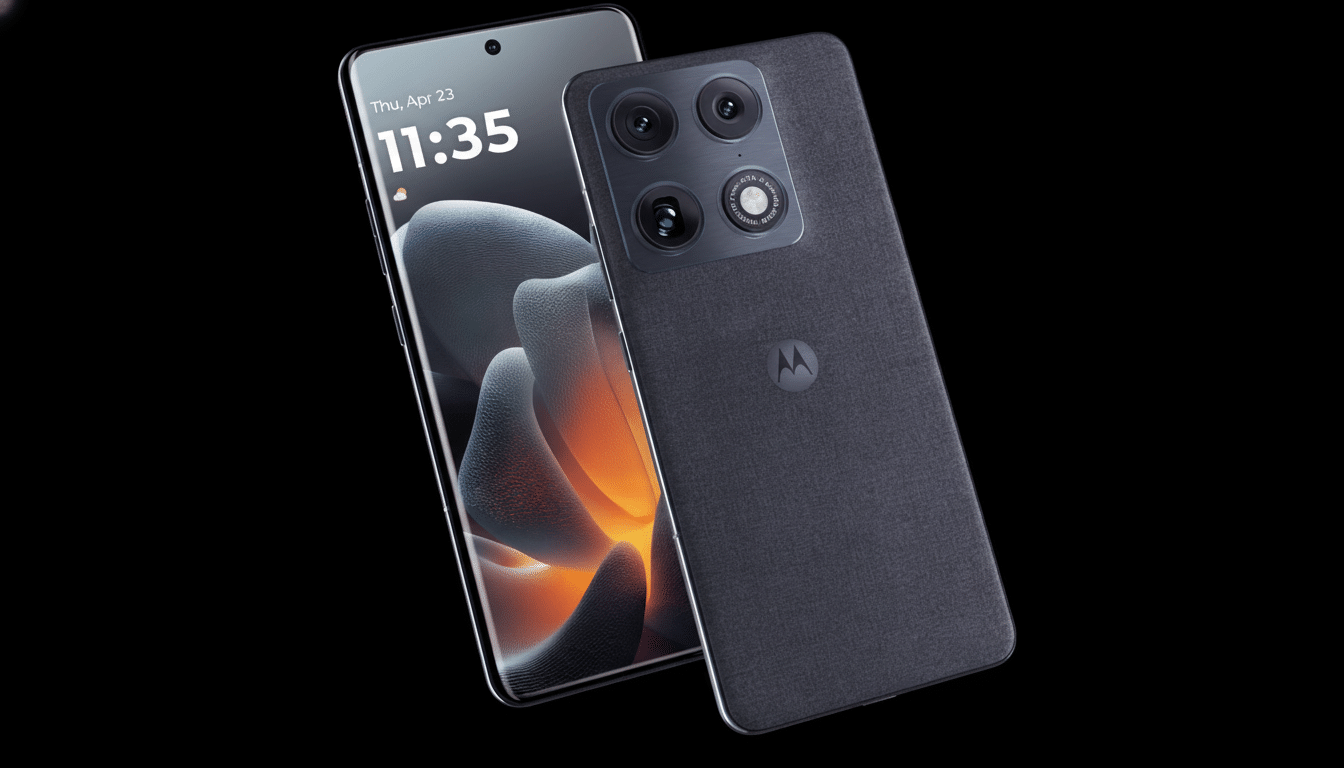
Leaked images provide one of the best looks yet at what appears to be Motorola’s first device under a new Signature line, suggesting the phone maker may set its sights slightly higher than it has in the past when it comes to branding and aspirations. Shared by experienced leaker Evan Blass, the renders depict a high-end handset in Carbon and Martini Olive colors, which confirm several flagship-level features that are all about photography and display quality.
What the leaked renders reveal about Motorola’s Signature phone
The phone features a centered punch-hole display with heavily curved edges and minimal side bezels, the all-around look that Motorola usually keeps limited to its flagship class. The chassis looks svelte and monolithic, though it is interrupted by a camera island that sits square at the top left of the rear panel. Within the module sit three cameras and one LED flash, with small etchings that telegraph a few key specs.
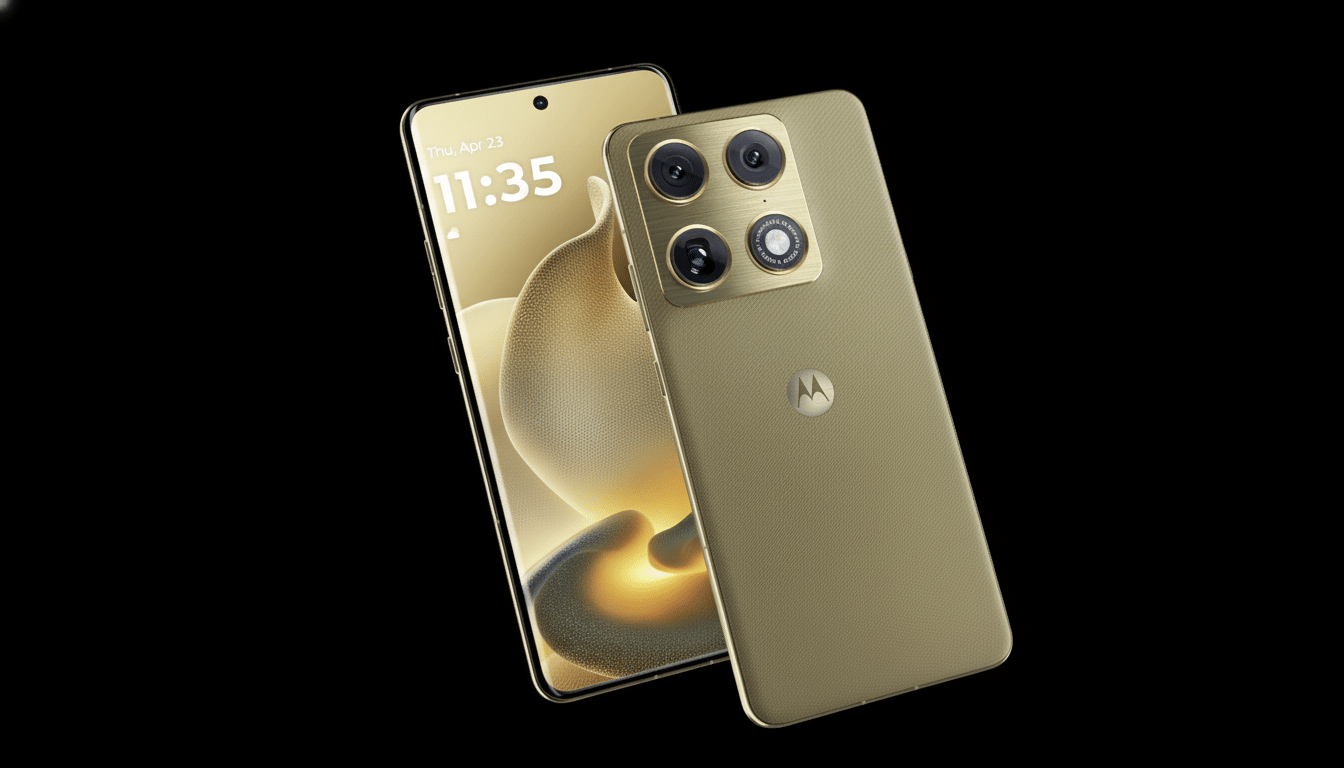
Those markings still include a 12–71mm focal range, as well as optical image stabilization and Sony’s LYTIA sensor—all specifications you’d see associated with a modern flagship imaging stack. The two-tone, as in the Carbon version we played with and a subtler green Motorola is calling Martini Olive, reinforces the design language of the brand’s current models, and, looking around, we’d guess this is much closer to a retail-ready unit than it was at engineering samples.
Camera hardware and imaging ambitions behind the system
The 12–71mm so-called branding is probably an indication of what’s effectively the system’s ultimate equivalent focal coverage from ultra-wide to standard to telephoto, with the ~71mm number essentially correlating to about a 3x optical zoom module.
Recent chatter also suggests a periscope-style telephoto, and the squared-off camera housing provides space for a folded lens element in addition to (again) a high-resolution one and an ultra-wide.
Sony’s LYTIA line is centered on faster sensor readouts and greater dynamic range, two attributes that help make for cleaner low-light shots and more reliable HDR. Couple all that with optical stabilization and Dolby Vision capture support, and you receive some strong suggestions as to what’s on Motorola’s mind: crispy telephoto shots, increased color data per frame (no shade thrown at 8-bit HDR), natively compatible 10-bit HDR video for display on contemporary TVs and streamers. If the tuning is right, this would be a significant uptick from the brand’s past couple of flagships, which have been at least too-speedy-battery-lasting and at most blow-your-qualitative-socks-off-camera-life IRL depending on conditions.
Silicon and display expectations for performance and visuals
Some early benchmark sightings suggest you’ll be getting Qualcomm’s Snapdragon 8 Gen 5 in standard and higher-clocked Elite editions, alongside up to 16GB of RAM. That combination would still place the phone in elite company for performance, particularly when it comes to AI-assisted camera features and power-efficient gaming. In general, Motorola has played thermals rather conservatively, but Gen 5’s architectural gains should hopefully keep peak performance on tap for longer before aggressive throttling sets in.
The display is expected to be a 1.5K OLED, which is the perfect middle ground that many flagship phones are now turning toward. Visually, 1.5K yields noticeably crisper text and UI elements than 1080p panels while using less power compared to full 1440p at the same brightness and refresh rate. Also expect a high refresh threshold and LTPO behavior to bring it down if static to conserve battery. Dolby Vision support on the camera side generally accompanies displays that are calibrated for HDR mastering, so color matching should be a consideration.
Why a Signature line is important for Motorola’s premium push
Branding is the main story here. Placing a Signature device above the regular flagship line shows Motorola is serious about scaling for halo status, against Ultra and Pro rivals. And this isn’t just about a more professional finish in general; it’s about furthering the company’s claim to be taken seriously in a segment where buyers demand best-in-class optics, the latest silicon, and consistent software polish over time.
The timing is right in the context of broader market movements. Even while overall volumes remain lumpy, the premium $600+ segment hit a record share of global shipments, Counterpoint Research reported. That transition pushes brands toward it with aspirational models that raise average selling prices and deliver a halo effect to mid-price products. Places like Latin America, where Motorola is a leading player in unit shipments, could use a halo device to further bolster brand identity and carrier relations.
What to watch next as Motorola readies its Signature device
There’s no official release window or even a name for this phone at this point, although previous leaks have connected the project to an internal codename Urus. Look for certification filings and carrier database visits in the weeks leading up to retail availability. If the camera system and Snapdragon brain operate as promised — and if Moto were to actually support them with long-term software support and tune the images properly, both of which are huge ifs — then this might be Moto’s most serious premium push in years.