


vivo is expanding its support for ZEISS-branded camera accessories, with the phone maker promoting that its full X300 series will be compatible with the firm’s 2.35x telephoto converter and corresponding camera kit. The move pushes pro-style shooting tools beyond a single halo device and into more broadly flagship-like territory, hinting that attachment-based optics are about to go bigger in mobile photography.
ZEISS kit now spreads across the vivo X300 series
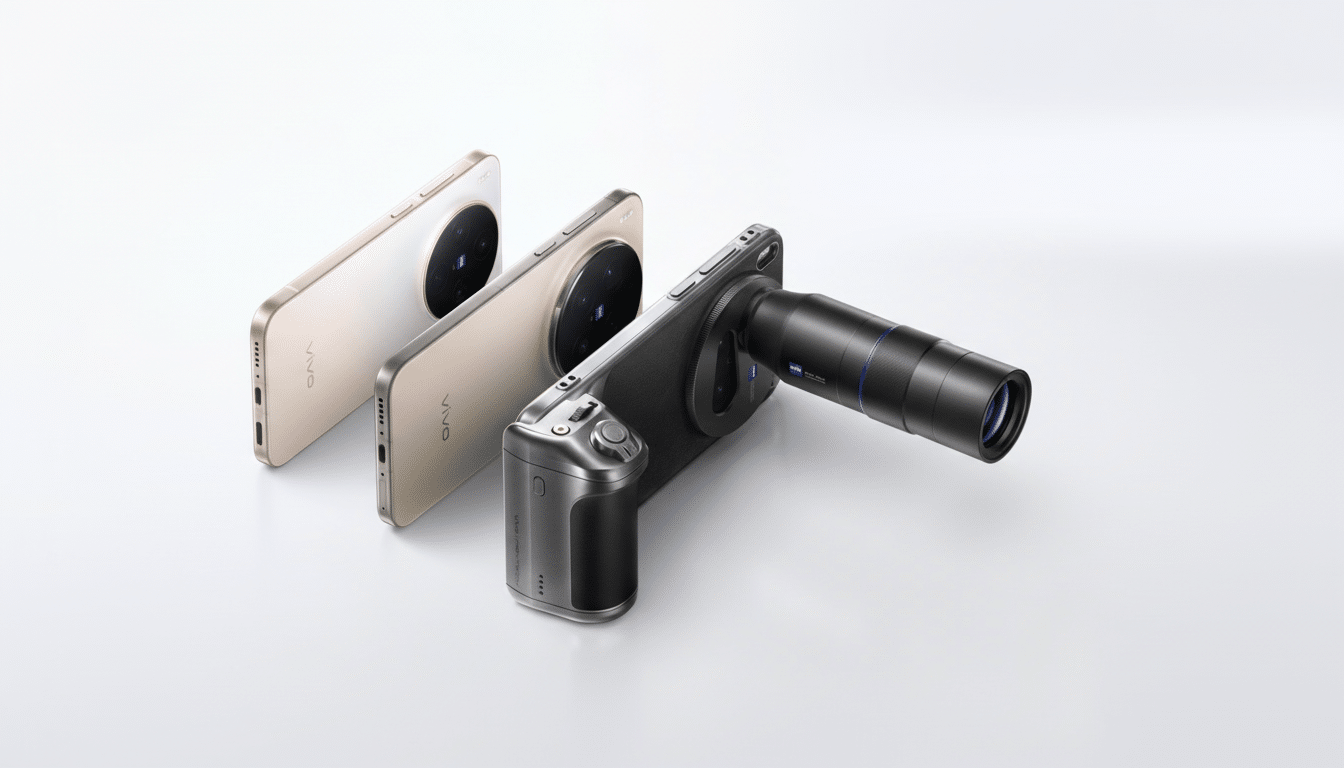
“The ‘whole’ X300 series phones support the vivo x ZEISS 2.35x telephoto converter, and the revolutions are unlimited,” it said in an official Weibo post. Company images show the base X300 and the X300 Pro both equipped with a modular camera kit in a new silver that is more suitable for lighter phone finishes or, alternatively, a classic black intended for the Pro model.
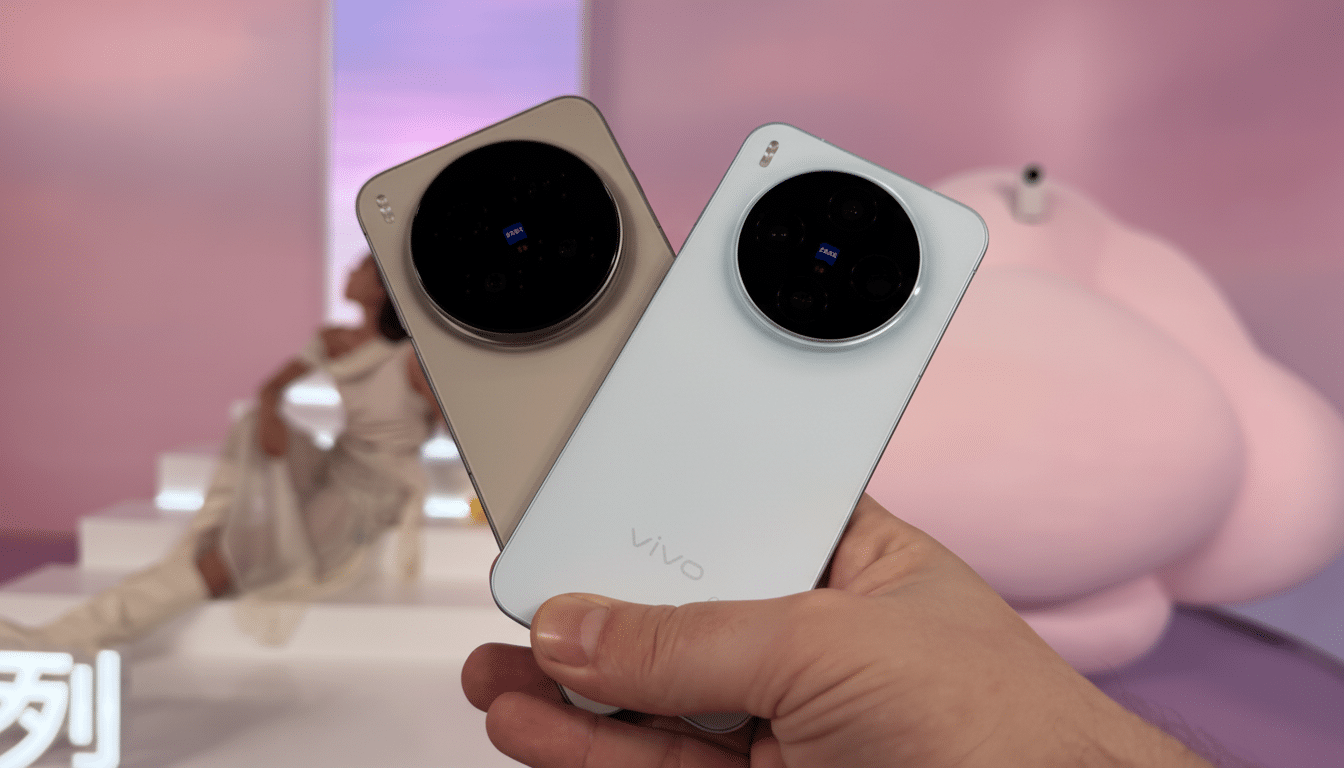
Like its predecessor, the kit revolves around a removable converter lens and a mount that secures cleanly over the telephoto camera. The Pro-focused package also comes with a camera grip that sports a physical shutter button, dedicated dial controls and an ergonomic hold for steadier framing. The grip wasn’t shown with the typical X300, but it looks like it should snap on just the same.
The 2.35x converter was announced alongside the vivo Ultra sibling, but opening it up to the entire X300 series is making optical reach (relatively) more irresistible for enthusiasts too busy pocketing lighter cameras on a whim.
What the 2.35x converter adds to your telephoto
A telephoto converter alters the field of view of your phone’s built-in tele camera, allowing you to achieve real optical magnification rather than just digitally cropping an image. In practical terms, that should translate to tighter framing on distant subjects — think stage performances, youth sports or cityscapes — while capturing detail and micro-contrast that software zooms often struggle to maintain.
ZEISS’s optical chops matter here. Anticipate T* anti-reflective coatings to reduce flare and ghosting in difficult lighting, with increased edge-to-edge clarity compared to some other mobile lenses in the market. There are some trade-offs: any external converter will add bulk, and like in all traditional teleconverters, you can expect some amount of light transmission loss. But on today’s flagships, which have powerful stabilization and computational imaging at play, the end result is usually cleaner long-range shots than what you’d get from digital zoom alone.
The mounting system is key. A sturdy, custom-designed bayonet or clamp eliminates alignment problems — one of the chief drawbacks of universal clip-on lenses — and enables the phone’s autofocus and stabilization systems to give it their best shot. The optional grip provides additional stabilization for hand-held shooting, and allows creators to use the kind of tactile controls they’d expect on a larger camera that most smartphones lack.
Android accessory arms race officially heating up
vivo is not the only one chasing accessory-grade optics. OPPO has already confirmed that its next Find X series will support a Hasselblad camera kit, highlighting a broader trend, too: namely, the rise of camera-brand collaborations which go beyond color science and tuning to whole hardware ecosystems. Leica’s collaboration with Xiaomi and Hasselblad’s with OPPO and OnePlus head in the same direction.
There’s a market signal behind them. Studies from the likes of Counterpoint Research routinely show that camera performance is one of the most requested purchase drivers for high-end phones. Attachments that offer real optical gains — and a more “camera-like” experience — are one way to stand out at a time when sensor sizes and periscope zooms are the table stakes.
Ultra support and the possibility of worldwide sales
vivo’s statement that the full X300 series can be used with this converter very much suggests the Ultra variant will too, although the company hasn’t discussed a kit for that model.
Fans are speculating that the ZEISS family expands beyond a single teleconverter, as options like a wide-angle or macro attachment mean there’s more potential to complete the on-phone optical system.
One lingering question is international reach. Smaller, niche accessories are often launched domestically by smartphone manufacturers and later brought to some foreign markets if they look likely to sell. Past camera grips and limited-edition bundles have conformed to that rotation. More widespread availability would be a sign that the company thinks of creator-centric kits as a permanent fixture, rather than just a specialized sideshow.
What it means for mobile shooters and creators
Periscope optics, combined with the latest multi-frame processing, is already a mainstay on today’s flagships to pull off impressive zoom. An excellent converter and grip only push things further, combining computational photography with real glass and improved ergonomics. And testing houses like DXOMARK heavily weigh that zoom performance; in everyday use, add-on optics can make the difference between a mushy crop and a shot worth sharing.
It’s not for everyone — pocketability is compromised — but when it comes to travelers, creatives and power users, that might be a sacrifice they’ll be willing to make. With vivo’s ZEISS kit support broadening beyond the brand’s Android flagships, look for accessory ecosystems to become a more obvious battlefield in the next few waves of premium handsets.