


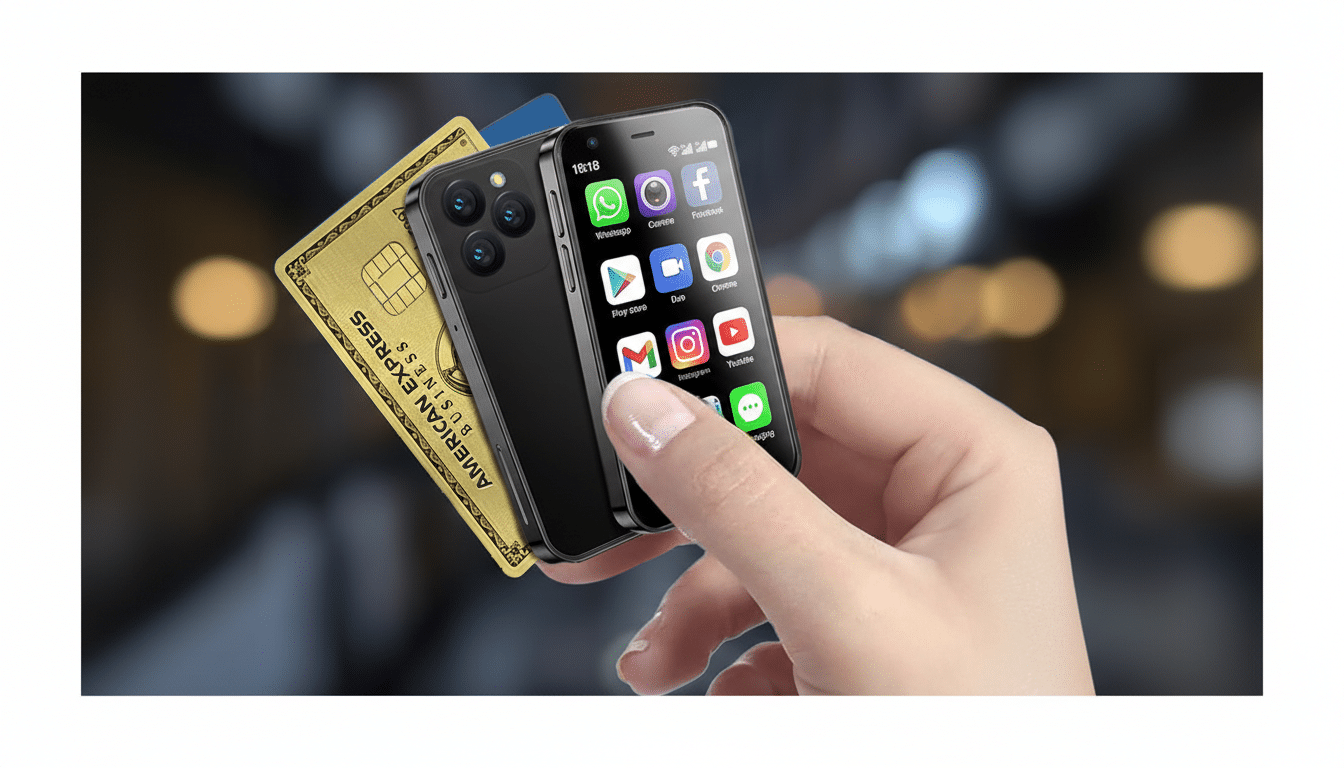
Ultraportable phones rarely make headlines, but a credit card–sized Android device dropping to $99.99 is hard to ignore. The NanoPhone Pro is a true 4G LTE smartphone with Google Play access that tucks into running shorts, a coin pocket, or a festival wrist pouch—places your glass-and-metal slab won’t comfortably go. For travelers, athletes, and anyone who values a backup line, this is a compelling way to get modern apps and connectivity without the weight or worry.
A Tiny Phone Built for Real-World Use and Travel
Despite its footprint, this isn’t a toy. The NanoPhone Pro supports calls, texts, LTE data, GPS, Wi-Fi, and Bluetooth, and it runs Android with certified Google Play access. That means everyday apps like Google Maps, WhatsApp, Gmail, Instagram, Spotify, and YouTube install and update normally. Face unlock speeds up access, and the interface scales well enough for quick replies and turn-by-turn directions.
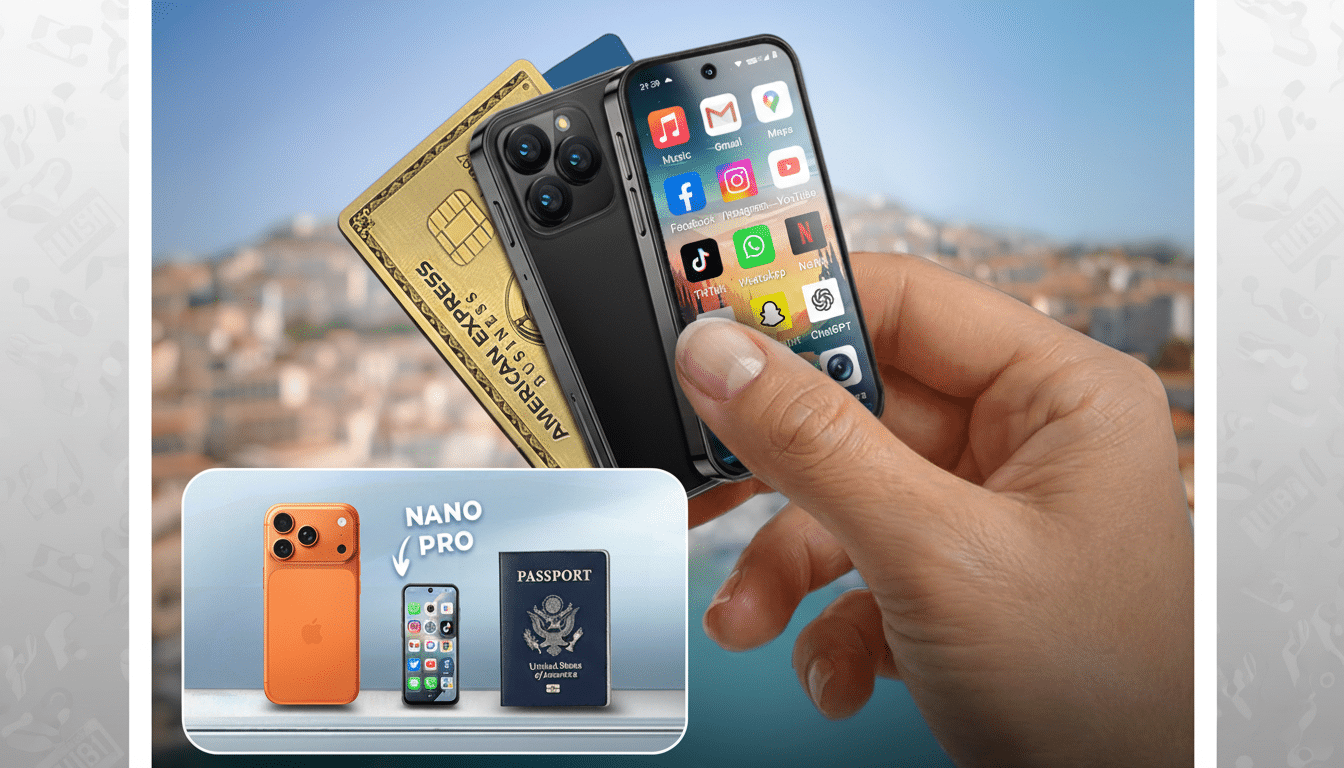
It’s unlocked and designed for global travel, with broad LTE band support and dual SIM. Pop in your everyday SIM, then add a local prepaid line abroad to cut roaming costs. Being able to keep your primary number in airplane mode while using a travel data SIM is a stress-free way to stay reachable without torching your main plan.
Where It Beats Your Big Phone in Daily Life
Large flagships are great for binging video and gaming; they’re not great when you’re sprinting to a gate, weaving through a packed concert, or clocking a 10K. A micro handset is lighter, harder to fumble, and easier to stash securely. Runners and cyclists can pair it with wireless earbuds for music and rely on GPS without strapping a brick to their arm. At crowded events where pickpockets target oversized phones, keeping a smaller device zipped inside a money belt is simple risk management.
There’s also the peace-of-mind factor. Many travelers carry a secondary phone as a “decoy” or emergency device. If your daily driver is lost, damaged, or battery-dead, a spare that still makes calls, authenticates 2FA codes, and loads boarding passes can turn a disaster into a hiccup.
Network and App Compatibility Across Carriers
The NanoPhone Pro’s unlocked design and broad LTE band support mean it works with many U.S. and international carriers, but network rules vary. Most U.S. providers now require VoLTE for voice calls; before you switch, check the device’s IMEI against your carrier’s BYOD checker. AT&T and T-Mobile typically allow compatible unlocked LTE phones with VoLTE enabled, while some networks maintain whitelists for certification. Tethering is generally supported on Android if your plan allows mobile hotspot usage.
Because it has certified Google Play access, you’re not stuck sideloading. Apps that matter on the move—navigation, messaging, payments, authenticator tools—install cleanly and receive updates via Google Play Protect. Just remember that mini screens reward simplicity: pick trimmed-down launchers, bigger system fonts, and compact keyboards to reduce mistypes.
Price Math and Trade-Offs for This Mini Smartphone
At $99.99, the NanoPhone Pro undercuts most rugged or “minimalist” smartphones and many LTE-enabled wearables, while preserving full Android flexibility. It’s promoted as 50% off its $199.99 MSRP, placing it squarely in impulse-buy territory for frequent travelers or fitness-focused users who don’t want to risk an $800-plus flagship during rough-and-tumble days.
There are compromises. Smaller screens make typing and photo framing less enjoyable. Cameras in this class won’t replace your main shooter. Batteries are inherently smaller; plan on nightly charges and bring a compact USB-C power bank if you map or stream for hours. Water resistance and drop protection vary by micro handset, so a snug case and lanyard are smart adds.
Smart Ways to Deploy a Secondary Phone Safely
Keep your primary SIM in the NanoPhone Pro during workouts; leave the flagship at home. For international trips, run a local data SIM in the NanoPhone Pro for maps, ride-hailing, and translation, while your main phone stays safely in the hotel or powered down except for Wi-Fi. Parents can use it as a training phone for kids: install a supervised Google account, add location sharing, enable app restrictions, and you’ve got a controllable first device that won’t break the bank.
Security still counts on small screens. Use biometric unlock plus a strong PIN, enable Find My Device, and back up SMS and authenticator accounts before you travel. If the device supports eSIM in your region or future model revisions add it, you’ll gain even more flexibility when hopping carriers.
Bottom Line: A Capable $99.99 Mini Android Travel Buddy
The NanoPhone Pro proves a capable smartphone doesn’t need to be a pocket-filling slab. For $99.99, you get a legitimate Android handset with LTE, dual SIM, and Google Play—exactly what you want in a travel companion, workout buddy, or just-in-case backup. If you’ve ever wished your phone could be lighter, smaller, and less precious for a day, this deal answers the call.