


Mill just made its kitchen food recycler an easier yes. For a limited time, the white Mill bin is 15% off, bringing the price to $849.15 from $999, with discounted upgrades to black and stainless steel as well. If you’ve been on the fence about tackling food waste without the mess of backyard composting, this is the rare deal that meaningfully lowers the barrier to entry.
Why This Deal Stands Out For Kitchen Food Waste
Food waste is a daily nuisance and a planetary liability. The Environmental Protection Agency reports that food is the single largest component of U.S. landfills by weight, making up about 24% of municipal solid waste. Landfills are also the third-largest source of human-related methane, a potent greenhouse gas. ReFED estimates households account for the largest share of surplus food, underscoring that what happens in our kitchens matters.
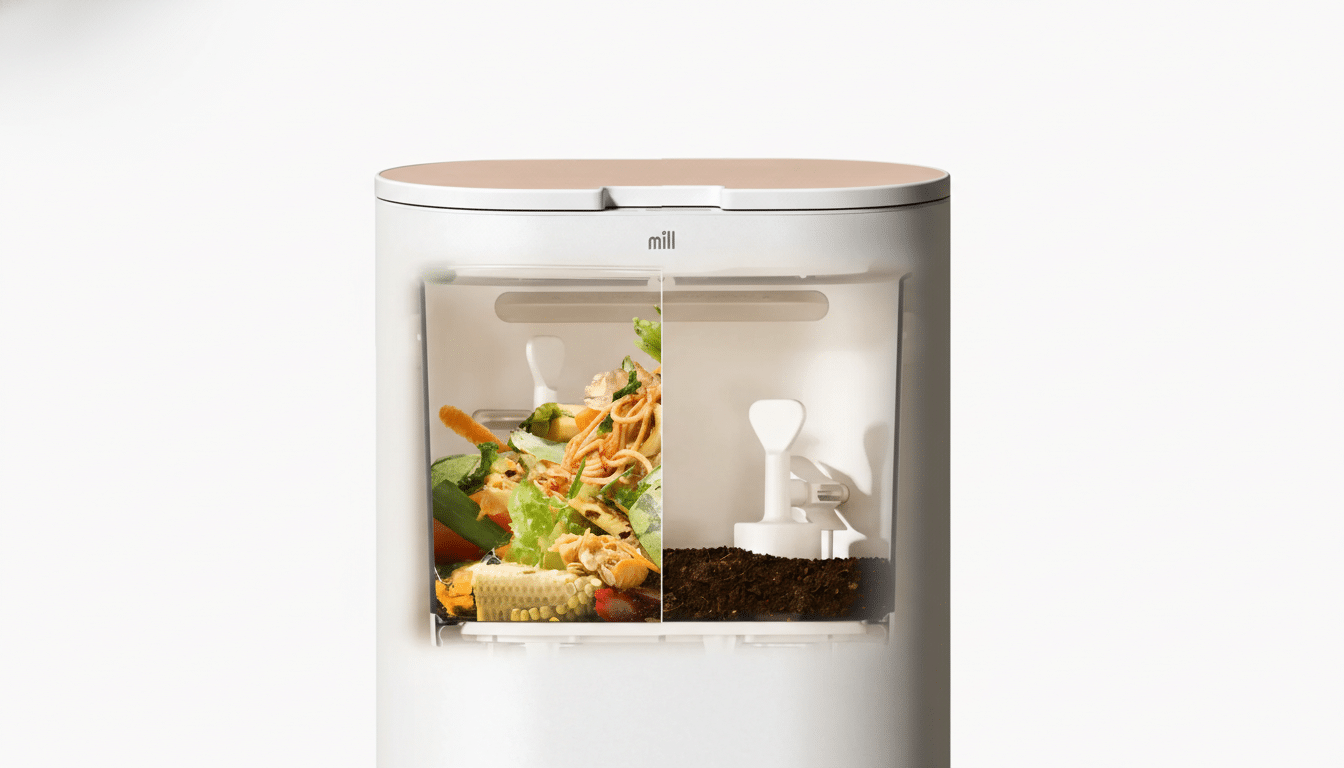
That’s why a sub-$850 price on a premium, plug-and-play solution is notable. Mill’s system replaces smelly trash runs and leaky bags with tidy, odor-controlled “grounds,” turning an everyday hassle into a manageable habit that slots neatly into your nighttime routine.
How Mill’s Food Recycler Works In Your Kitchen
Drop in plate scrapings, peels, stale bread, and even items most composters forbid—meat, most dairy, and small amounts of desserts. Mill dehydrates and gently grinds those scraps, cycling quietly overnight to produce dry, soil-like grounds. Because there’s no microbial decomposition in the bin, it’s not compost; it’s controlled dehydration that drastically reduces weight and odor.
Here’s the differentiator: those grounds aren’t trash. Mill’s mail-back program lets you empty your bucket into pre-labeled boxes and send them via USPS. The company aggregates and processes the material into a safe ingredient for chicken feed, working with small farms to close the loop. It’s an unusually direct path from kitchen to agriculture—no backyard pile, no municipal waitlist, and far less room for contamination.
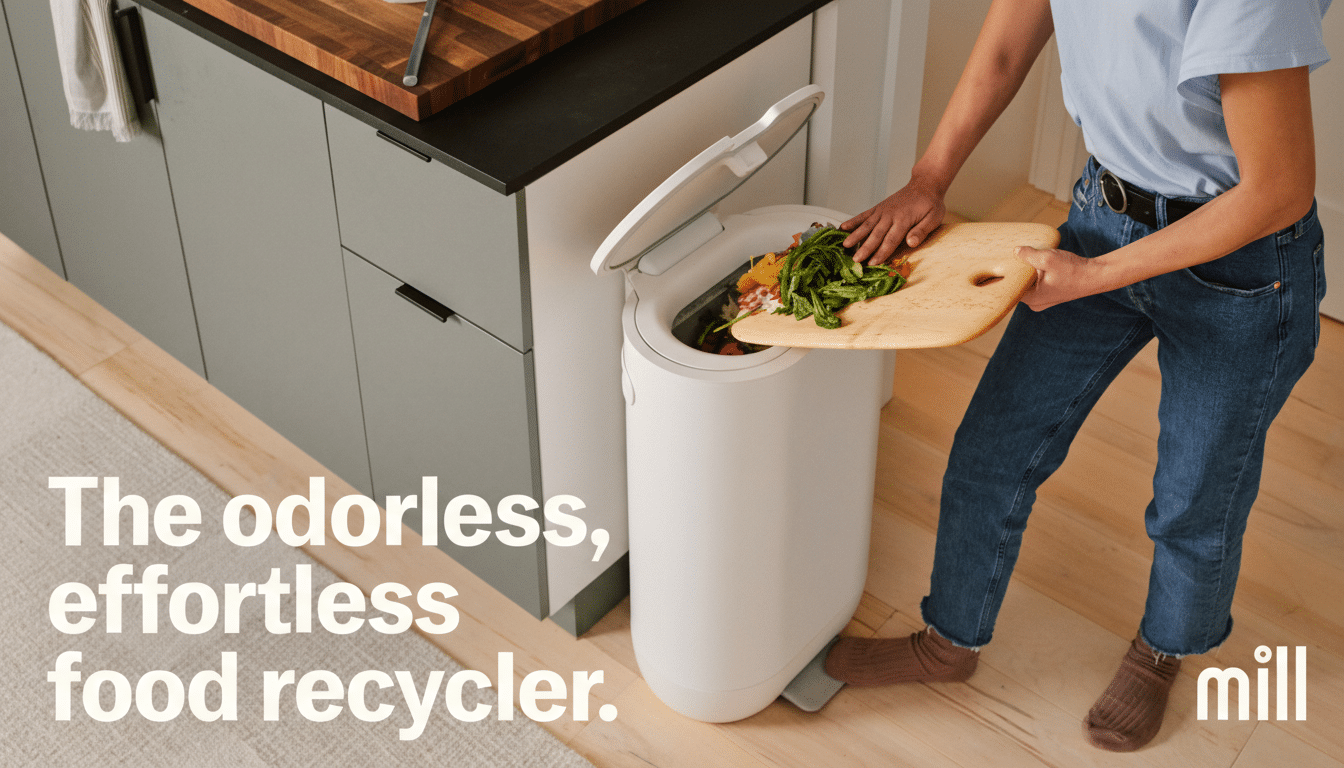
The bin’s carbon filter and sealed lid help keep kitchens fresh, while app controls schedule cycles and track impact. Many households find the overnight run fits naturally after dinner cleanup, with the bin routinely handling the day’s scraps without fanfare.
Pricing and Configurations During the Valentine Sale
The Valentine promotion takes 15% off all finishes. The white base model lands at $849.15 (down from $999). The black version drops to $976.65 (regularly $1,149), and stainless steel is $1,019.15 (regularly $1,199). For buyers debating the subscription, the discount effectively offsets much of a year of Mill’s mail-back service, which runs about $194 annually.
It’s important to factor ongoing costs into your decision. Compared with the recurring spend on garbage bags and the soft costs of more frequent trash runs (especially in apartments), many users find the subscription pencils out—particularly when paired with the time savings and odor reduction.
Benefits In Daily Use For Busy Home Kitchens
Mill’s appeal is as much about kitchen flow as sustainability. Because scraps are dried nightly, you open the lid to a neutral, crumbly material instead of day-old funk. That means fewer trips to the chute or curb, and fewer “take-out-the-trash” negotiations. The unit is designed for quiet operation and sits flush like a standard bin, so it doesn’t demand layout changes.
For families, the flexible intake—accepting meat and dairy in addition to produce—simplifies cleanup, eliminating the mental math of “what goes where” that often derails composting. For renters or homeowners without yard space, it’s a high-compliance alternative that still diverts waste from landfills and contributes to feed supply.
Sustainability Impact With Real Numbers and Context
EPA data ties food waste to significant methane emissions as organics break down anaerobically in landfills. By drying and routing material into animal feed, Mill keeps it out of the landfill stream entirely, capturing nutritional value before it’s lost. While impact varies by household, user reports often tally hundreds of pounds diverted annually. Translate that across neighborhoods and the avoided emissions add up quickly.
This approach aligns with the food recovery hierarchy championed by the EPA and supported by USDA guidance: keep edible value first, then recycle nutrients where possible. Turning scraps into feed pushes diversion higher up that ladder than traditional landfill disposal.
Who Should Jump on the Sale and Why It Fits You
If you cook frequently, live in a multi-unit building, or have struggled to keep a compost routine, Mill targets the friction points that usually cause drop-off. The limited-time 15% discount is compelling for first-time buyers who want premium build quality and a turnkey diversion pathway without DIY maintenance.
Bottom line: With the white bin now under $850 and premium finishes also marked down, Mill’s Valentine sale lowers the cost of upgrading your kitchen routine while pushing meaningful waste reduction. It’s rare to find a countertop-friendly solution that is this simple, this clean, and this connected from the start.