


MANGMI’s new Pocket Max handheld is about to enter the crowded Android gaming arena with a headline-grabbing launch price, promising big-screen immersion and full-size controls for far less than expected. The company is positioning the device as an affordable 7-inch OLED alternative, aiming to undercut rivals while still delivering enthusiast-grade features.
Pricing and availability details, launch phases, shipping
The Pocket Max opens with a Super Early Bird price of $199 for the first week of sales, followed by an Early Bird phase at $219, before settling at a $239 retail price. That staggered structure is designed to reward early adopters, a tactic increasingly common among boutique handheld makers.
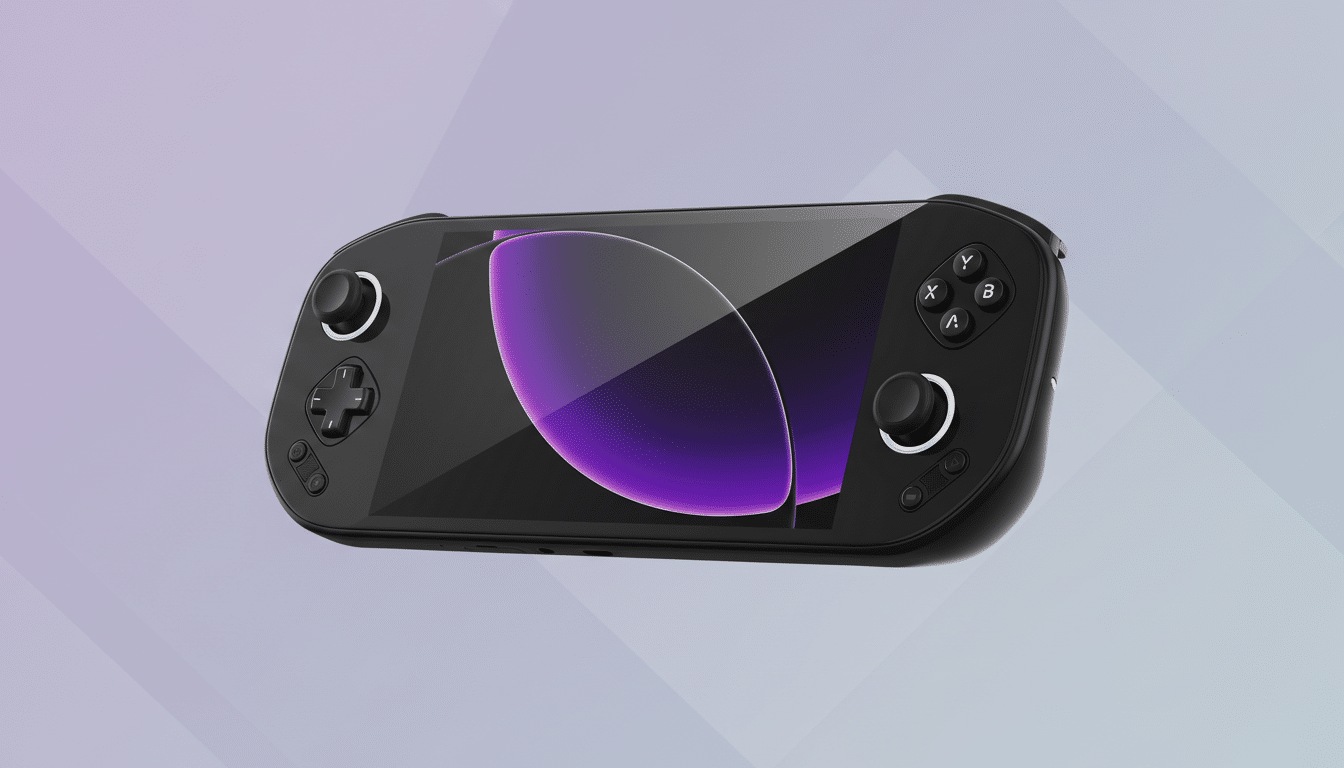
Orders placed during the initial window are slated to ship within 48 hours. Due to the Chinese New Year manufacturing pause, any orders placed after that first wave will be held until operations resume. The handheld will be sold through the brand’s official store and will come in Black, White, and a nostalgic Retro GB finish.
Display specifications and core hardware for Pocket Max
The Pocket Max’s standout feature is its 7-inch 144Hz OLED display. At this price tier, OLED—let alone a 144Hz panel—is rare. Most similarly priced handhelds settle for IPS or lower refresh rates, making this screen a key differentiator for fluid UI navigation, cloud gaming, and fast-paced emulation.
Under the hood, it runs on Qualcomm’s Snapdragon 865 with 8GB of RAM and 128GB of storage. While not a current flagship chip, the 865 remains a capable platform for Android gaming and emulation. In community testing documented by outlets like Retro Game Corps and independent emulation forums, 865-class devices handle GameCube, Wii, and many PS2 titles well, particularly with resolution tweaks and per-game profiles. For native Android games and streaming from services like GeForce Now or Xbox Cloud Gaming, the CPU and GPU combination should feel snappy, and the 144Hz panel can showcase higher frame-rate titles and responsive UI even when game engines cap at lower rates.
That said, buyers weighing raw horsepower should note that Snapdragon 8 Gen 2 devices deliver a sizable jump in CPU and GPU throughput—often well over 2x in mixed benchmarks reported by reviewers at AnandTech and other labs. MANGMI’s counter is clear value: a large OLED screen and thoughtful controls at a price that undercuts most 8 Gen 2 handhelds.
Modular controls, swappable modules, and TMR analog sticks
The Pocket Max leans into customization with swappable face modules for the D-pad and ABXY buttons. It ships with soft membrane modules, but clicky microswitch modules are available for an additional $12. That flexibility lets players prioritize responsiveness for fighters and platformers or a quieter, cushioned feel for longer sessions.
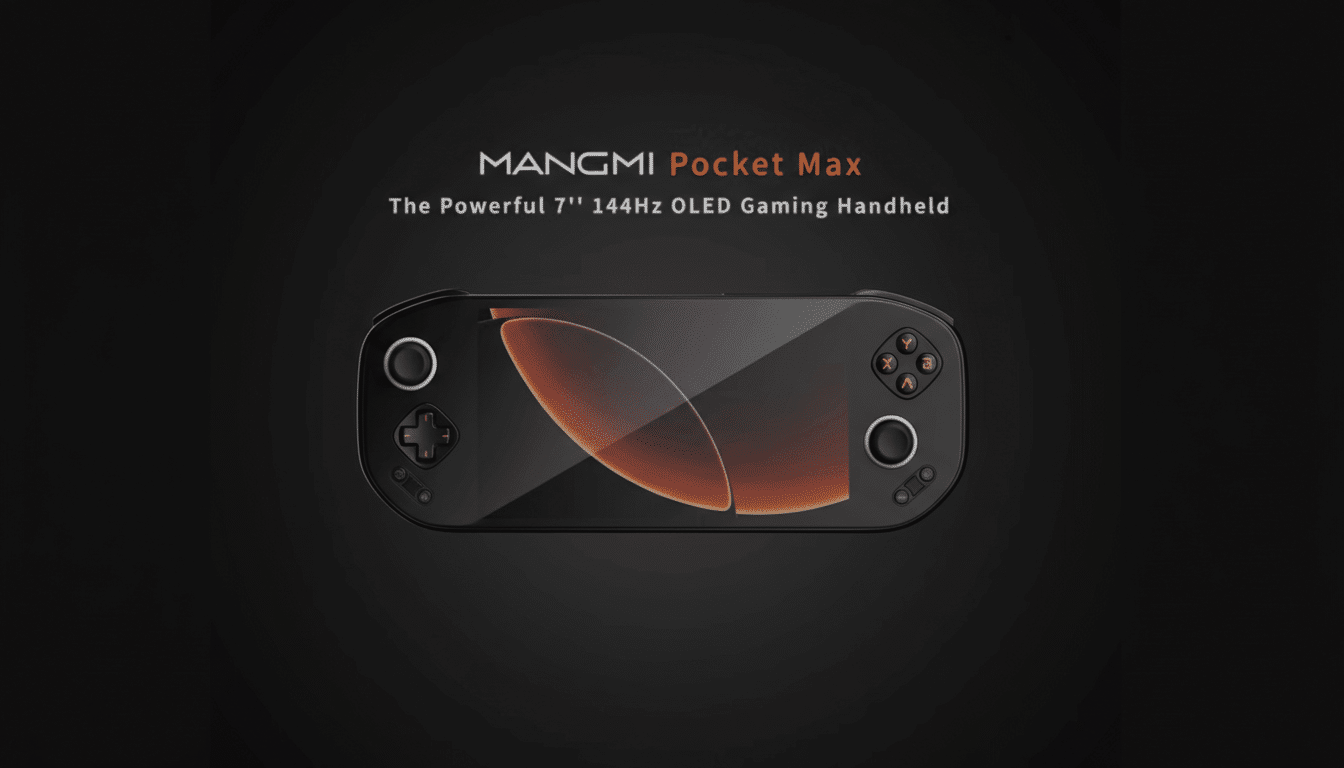
Analog inputs use full-size TMR sticks—a rarity in this category. TMR, like Hall effect sensors, avoids traditional potentiometer wear and is designed to resist drift. For genres that demand precision aim or subtle movement, these full-size sticks should be a tangible upgrade over the short-throw mini sticks common in compact handhelds.
Where the Pocket Max fits in today’s Android handheld market
MANGMI is launching the Pocket Max into a hotly contested segment. The AYN Odin 2, widely regarded as a top Android handheld, has run notable promotions dropping its Base model to around $250, and it features a Snapdragon 8 Gen 2 for class-leading performance. The Pocket Max’s play is different: go bigger on display tech and ergonomics while keeping the entry price under $200 during launch week.
The timing also intersects with seasonal manufacturing slowdowns around the Lunar New Year. Similar to other niche handheld brands, MANGMI flags brief shipping pauses after the initial release wave. Anyone eager to get the device quickly should plan to order during that first week to avoid the holiday backlog.
Early outlook for value, performance, and availability
On paper, the Pocket Max reads like a value disruptor: a 7-inch 144Hz OLED, modular face controls, and full-size drift-resistant sticks at a launch price that undercuts much of the field. It won’t outmuscle an 8 Gen 2 handheld, but for players who value a premium screen and comfortable controls over bleeding-edge silicon, the trade-offs look smart.
If MANGMI can deliver consistent stock and keep the post-launch price close to the $199 opener, the Pocket Max could become a go-to recommendation for budget-conscious buyers who want a big OLED experience without big-spender remorse.