


MagicX has shared a new teaser that showcases its upcoming Two Dream handhelds from every angle, confirming key design choices and a surprising amount of I/O for budget-friendly devices. The Two Dream Light and Two Dream Pro appear in detailed renders posted to the company’s Discord and circulated on Reddit, offering the clearest look yet at the 4:3 gaming machines slated for release, per plans the brand has floated for the future.
Renders Showcase an Ergonomic Build and Thoughtful Layout
The visuals highlight a sculpted rear shell with integrated grips—an uncommon touch at this price tier that’s already earning positive feedback from handheld enthusiasts. Unlike flat-backed designs, the contoured shape should improve long-session comfort and reduce hand strain.
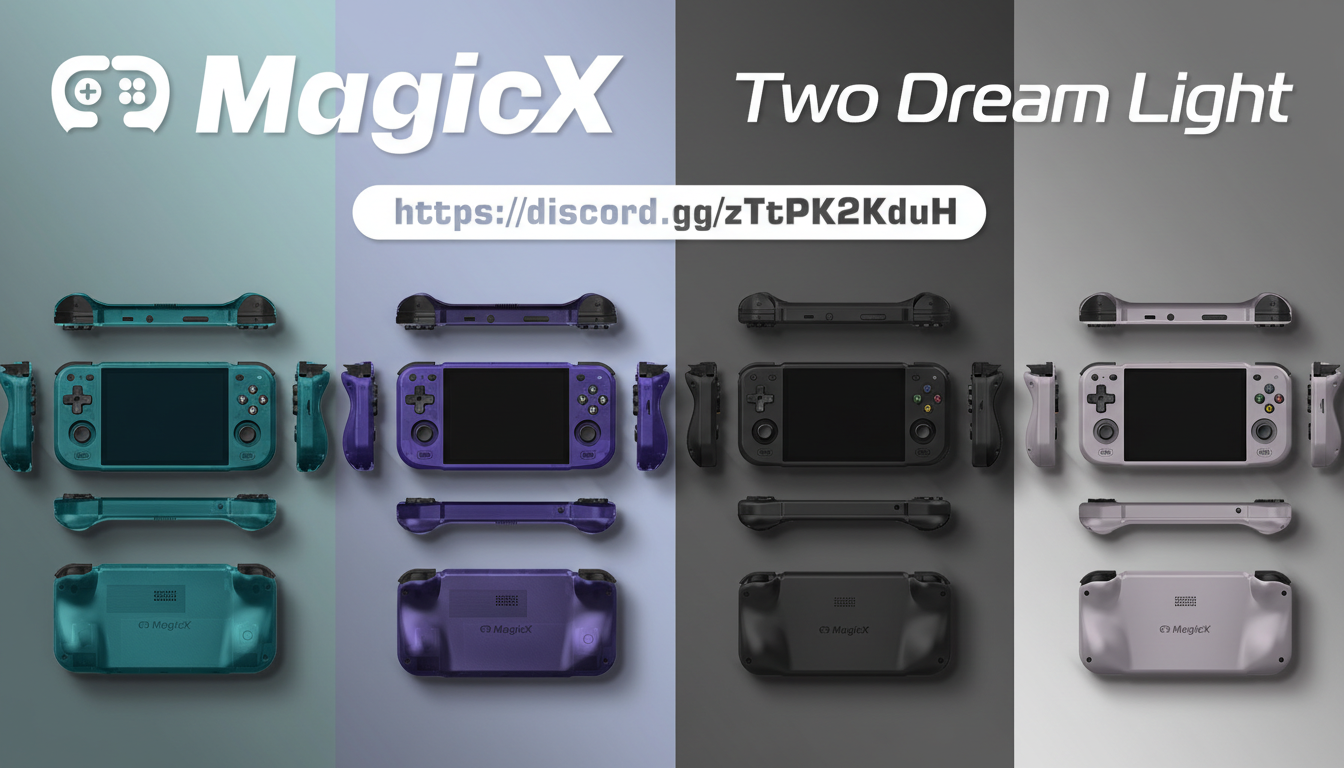
Port placement appears carefully considered: a 3.5mm headphone jack sits on the underside, a microSD card slot is placed on the right edge, and the USB-C port plus power button occupy the top. The renders also show rear exhaust vents and front-firing speakers, suggesting MagicX is thinking about heat and sound direction, two practical pain points in compact handhelds.
Colorways include green, purple, black, and gray, with translucent shells for the more vibrant options. The Two Dream Pro goes further with color-matched buttons in green and purple, and the green variant even matches the thumbsticks. The Two Dream Light keeps things simpler, opting for non-matching sticks and varied button fonts depending on the finish.
Specs Point to Capable Budget Hardware Choices
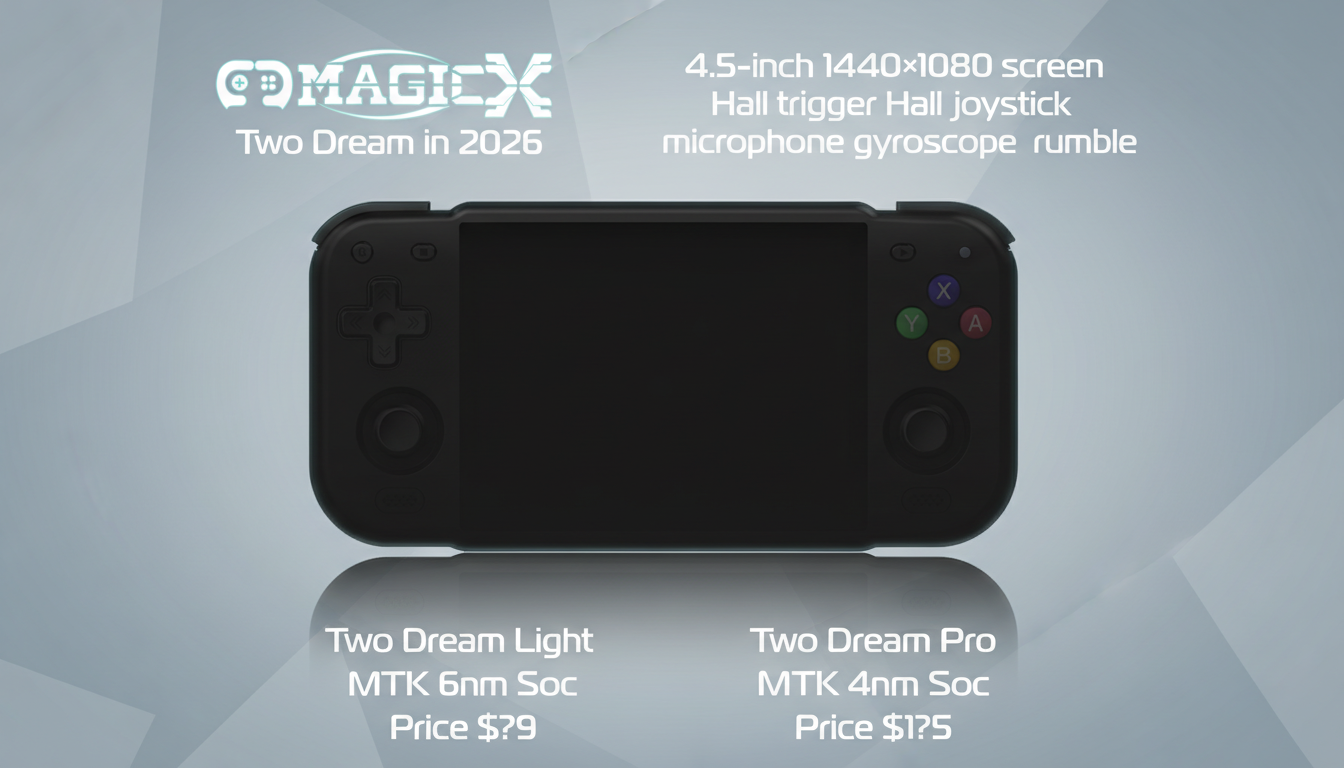
Both models feature a 4.5-inch display at 1440 x 1080 with a 4:3 aspect ratio. On a screen this size, that resolution should yield roughly 400 ppi, which is impressively sharp for retro and indie titles. The 4:3 format remains popular for classic console emulation because it preserves original game geometry without heavy letterboxing.
Under the hood, MagicX says the Light will use a 6nm MediaTek chip, while the Pro will step up to a 4nm part. Even without exact model names, the node differences alone suggest better efficiency and headroom on the Pro. Renders also confirm Hall effect thumbsticks, a welcome upgrade that uses magnetic sensors to reduce wear and mitigate drift—an issue that has plagued potentiometer-based sticks across the industry.
These choices fit the playbook for modern Android handhelds: prioritize smooth emulation up to the sixth generation for many titles, deliver crisp scaling on a 4:3 panel, and keep the controls precise. The inclusion of microSD expansion also makes it easy to manage large libraries without inflating the base price.
Pricing Signals a Potential Market Shakeup for Handhelds
MagicX has teased aggressive targets: under $100 for the Two Dream Light and under $200 for the Pro. If realized, those figures would directly challenge stalwarts in the Android handheld scene. Devices like the Retroid Pocket 4 series and Anbernic’s recent entrants typically span the $149–$199 band, while premium brands such as Ayaneo routinely command several hundred dollars more.
Hitting those price points with a high-density 4:3 display, Hall sticks, and an ergonomic chassis would be a strong signal to budget-conscious buyers. It could also force rivals to respond with better components or sharper bundles, a dynamic that has historically benefited consumers in fast-moving categories.
Why 4:3 and Hall sticks matter for modern handhelds
For emulation, 4:3 remains the most practical compromise. Many classics from the NES, SNES, PS1, and early PC era were designed around that aspect, and a 1440 x 1080 panel offers ample headroom for sharp scaling with minimal artifacts. The result is fewer geometry compromises and cleaner pixel edges compared to forcing older content onto ultrawide or 16:9 displays.
Hall effect sticks, meanwhile, have become a marquee feature across enthusiast handhelds because they measure magnetic fields rather than relying on friction-prone potentiometers. In practice, that means better longevity, more stable centering, and fewer calibration headaches—key quality-of-life improvements for portable systems that see daily use.
What We Still Don’t Know About Specs, Software, and Dates
MagicX has yet to name the exact MediaTek processors, RAM and storage configurations, battery capacity, or cooling design. Software details are also unconfirmed, including OS version and any first-party launcher or performance profiles. The company has floated a future launch window, but firm dates and final pricing are still to come.
Even so, the new renders suggest a thoughtful approach: core ports that matter, a display tailored to retro content, and comfort-focused ergonomics seldom seen at entry-level prices. If MagicX delivers on its teased specs and targets, the Two Dream Light and Two Dream Pro could become the budget handhelds to watch.