


Apple’s two most popular laptops just collided in a real-world face-off: the new 14-inch M5 MacBook Pro against the value-packed M4 MacBook Air. I lived with both, pushed them through creative and productivity workflows, and found a clear winner for most buyers—and a different one for specialists who need every drop of sustained speed.
Both machines share Apple’s modern essentials—fast unified memory, speedy storage, and excellent build quality—but they diverge sharply on display tech, ports, and long-haul performance. Here’s what matters, what doesn’t, and which Mac you should actually buy.
- Performance and AI Workloads: Where Pro and Air Diverge
- Display and Media Differences: Refresh Rates and Sizes
- Battery Life and Thermals Under Sustained Workloads
- Ports and Expandability for Creators and Power Users
- Price and Value: Where Each Mac Offers the Best Deal
- Verdict: The Winner and Who Should Buy Each Mac
Performance and AI Workloads: Where Pro and Air Diverge
The M5 MacBook Pro is built to hold peak performance longer. Apple’s latest chip brings higher memory bandwidth, a new GPU architecture, and per‑core Neural Accelerators that help with on‑device AI tasks. In extended exports, complex code builds, or GPU‑bound 3D renders, the Pro keeps its foot down when the Air begins to ease off.
For everyday work—browser stacks, office apps, photo edits, even light 4K cuts—the M4 MacBook Air feels snappy and responsive. But if your workflow includes running diffusion models, local LLM inference, heavy motion graphics, or multi‑layer timelines, the M5 Pro delivers smoother scrubs and faster time‑to‑result. That gap widens the longer the task runs.
Independent testing outfits like AnandTech and Notebookcheck have long shown Apple’s Pro‑class thermals sustaining higher clocks under load than Air models. The same dynamic holds here: the Pro is the reliable choice when performance consistency matters more than portability.
Display and Media Differences: Refresh Rates and Sizes
The M5 MacBook Pro’s 14‑inch panel is the one you want for color‑critical work and fluid motion. Slimmer bezels, a 120Hz ProMotion refresh rate, and upgraded speakers make a noticeable difference in editing, scrolling, and movie watching, especially outdoors where the Pro’s panel remains easier to view.
The M4 MacBook Air counters with choice. You can go 13.6 inches for maximum portability or step up to a 15.3‑inch screen—still remarkably light at 1.51kg versus the Pro’s 1.55kg. If you draft documents, analyze spreadsheets, or review layouts on the road, that extra screen real estate on the 15‑inch Air is a productivity win without the weight penalty.
Battery Life and Thermals Under Sustained Workloads
Battery is strong on both, but the M5 MacBook Pro stretched roughly 2 hours longer than the M4 Air in mixed work with bursts of media tasks. That headroom is valuable during long edits or travel days when outlets are scarce.
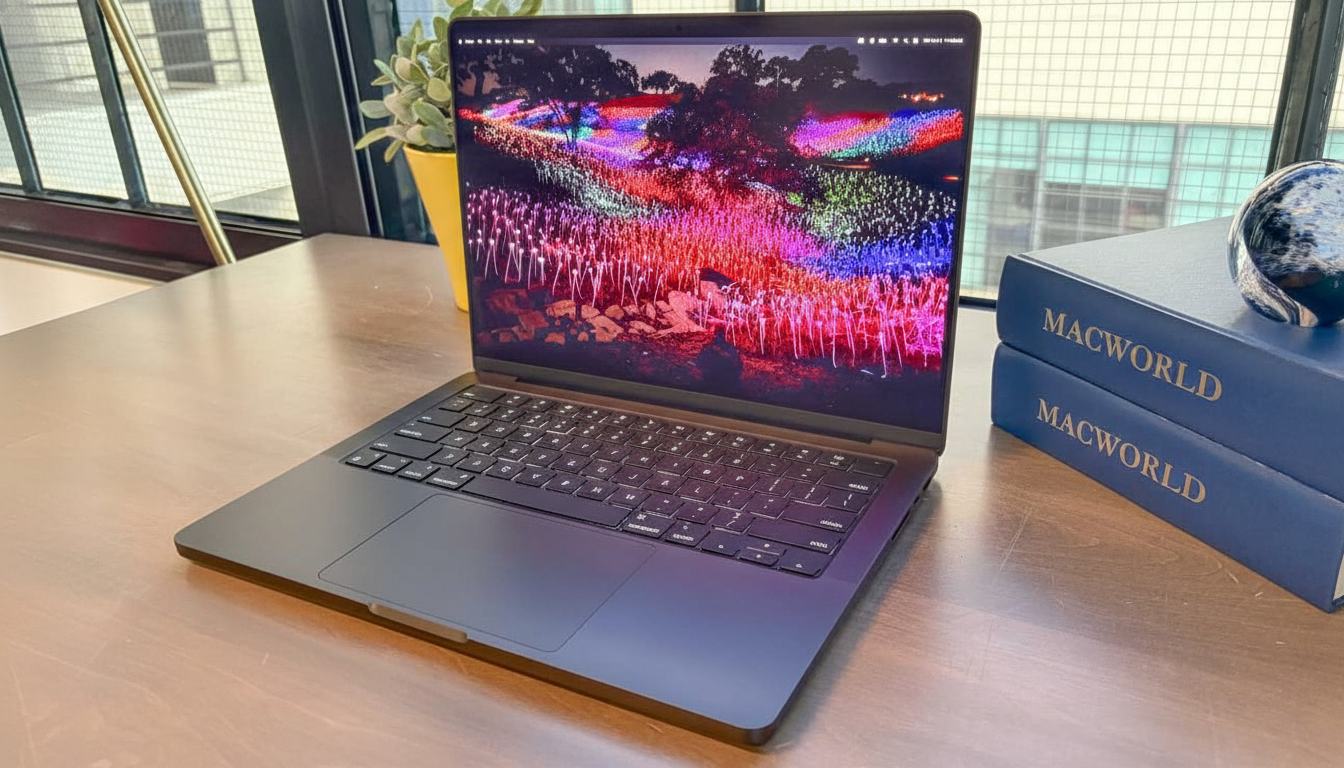
Under sustained load, the Pro’s thermal design keeps performance steadier and temperatures more comfortable to the touch. The Air remains quiet and cool for typical use, but it’s built for bursts, not marathons.
Ports and Expandability for Creators and Power Users
Creators and power users will appreciate the M5 MacBook Pro’s I/O: three Thunderbolt 4 (USB‑C) ports, full‑size HDMI, and an SDXC card slot. It also starts at 512GB of storage and scales to 4TB for large media libraries.
The M4 MacBook Air keeps it simple with two Thunderbolt 4 (USB‑C) ports. That’s fine for students and frequent flyers who mostly dock at a single USB‑C hub, but the Pro’s native HDMI and SD slot cut dongle dependence on set or in the field.
Price and Value: Where Each Mac Offers the Best Deal
Price is the M4 MacBook Air’s ace. The 13‑inch model starts at $1,000 and is frequently discounted to around $750, making it one of the strongest values in premium laptops. The M5 MacBook Pro starts at $1,599, reflecting its display, ports, and sustained performance advantages.
Both ship with comparable default memory, but you should size RAM and storage to your workflow. If you rely on large models, high‑res proxies, or big RAW catalogs, budget for upgrades; if your work is lighter, the base configs are surprisingly capable thanks to Apple’s unified memory architecture.
Verdict: The Winner and Who Should Buy Each Mac
For most people, the M4 MacBook Air wins. It’s lighter, cheaper, and fast enough for everyday productivity, creative hobby work, and travel. The option of a 15.3‑inch display at 1.51kg is a sweet spot few competitors match.
Choose the M5 MacBook Pro if your livelihood depends on sustained performance, on‑device AI inference, or a color‑critical, 120Hz display—and if you want the convenience of HDMI and SDXC built in. Everyone else will get better value, less weight, and still‑excellent speed from the M4 MacBook Air.