


Luminar’s court-run auction for its lidar business ended with a higher offer, as MicroVision emerged with a $33 million bid that surpassed prior proposals, according to bankruptcy filings. The outcome raises the prospect of a faster resolution to Luminar’s restructuring while reshaping the competitive map for automotive lidar suppliers.
The bid eclipses a stalking horse offer from Quantum Computing Inc., which initially set the floor at $22 million and later increased to $28 million. MicroVision’s proposal now sets the bar for the sale, which still requires approval from the bankruptcy judge.

MicroVision Tops Stalking Horse Bid With $33 Million Offer
In a statement referenced in the court record, MicroVision said the deal would include intellectual property and inventory tied to Luminar’s Iris and Halo sensors, selected engineering and operations teams, and certain commercial contracts and orders. The company framed the move as a play for scale and product breadth, arguing the lidar market needs consolidation and tighter execution to unlock wider adoption.
MicroVision, based in Redmond, Washington, has been developing its own lidar hardware and perception software, and previously picked up assets from the defunct Ibeo Automotive Systems. Folding in Luminar’s long-range Iris and 360-degree Halo platforms could give MicroVision a more complete lineup across highway, urban, and mapping use cases—an advantage as automakers ask suppliers to deliver multi-sensor portfolios, not one-off components.
Sale Terms Await Court Approval Following Auction Outcome
The sale remains subject to court approval. If cleared, it would be a key step toward closing Luminar’s bankruptcy, alongside a separate agreement to sell its semiconductor-related division to Quantum Computing Inc. for $110 million. Together, those transactions would provide a clearer path to winding down the case and preserving asset value for creditors.
It is not yet known whether founder and former CEO Austin Russell submitted a formal bid for the lidar assets. He previously attempted to acquire Luminar before the bankruptcy and has been involved in court proceedings over document and device access, which were recently addressed with a protective order covering personal information.
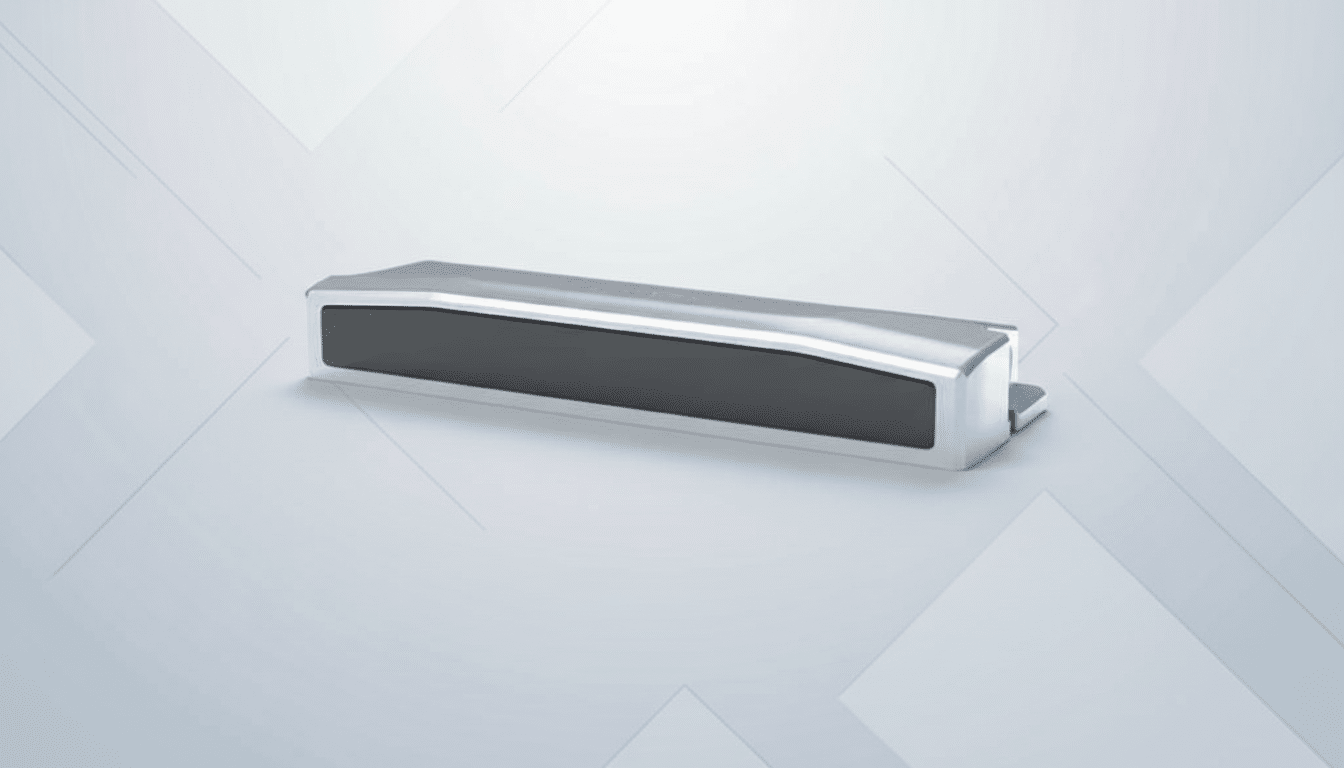
Why Lidar Is Consolidating Across the Automotive Sector
Automotive lidar has entered a shakeout phase. The Velodyne–Ouster merger combined overlapping portfolios and sought roughly $75 million in annual cost synergies. AEye’s bankruptcy underscored the pressures on capital-intensive programs without near-term revenue. Meanwhile, China’s Hesai reported shipping more than 200,000 units in 2023, highlighting the advantage of high-volume manufacturing in driving cost down and performance up.
Analysts at Yole Group and other firms have projected robust growth for automotive lidar over the next several years as advanced driver-assistance systems expand beyond premium trims into mainstream vehicles. The delta between promise and profitability, however, remains challenging. Automakers are demanding unit costs that trend toward hundreds of dollars, not thousands, along with ASIL-compliant safety, automotive-grade reliability, and tight integration with camera and radar. Suppliers that can scale manufacturing, consolidate IP, and sustain multi-year validation cycles are best positioned to win design slots.
Luminar’s Iris has been associated with flagship programs, including highway automation packages on premium vehicles, while Halo targets 360-degree coverage for robotaxi and mapping applications. For MicroVision, absorbing these platforms could broaden its catalog and deepen relationships with automakers and Tier 1s seeking redundancy across long-range and surround-view sensing.
What to Watch Next as Court Weighs MicroVision Deal
Key questions now pivot to execution. Court approval will determine the timing, but customers and partners will focus on how quickly MicroVision can integrate engineering teams, qualify inherited supply chains, and maintain continuity for existing contracts tied to Iris and Halo. Certification milestones, long-term component sourcing, and software-perception roadmaps will be scrutinized as closely as the headline price.
If the sale proceeds as proposed, it would mark another chapter in lidar’s consolidation, with a buyer betting that a larger portfolio and deeper bench can convert years of R&D into durable automotive revenue. For Luminar’s creditors, the dual sales of lidar and semiconductor assets could accelerate recoveries—and, perhaps, bring a swift close to a turbulent restructuring.