


Lucasfilm has confirmed that longtime president Kathleen Kennedy will exit the top job after 14 years, marking the end of a defining era for Star Wars stewardship. Rather than leaving the galaxy far, far away, Kennedy will return to full-time producing as the studio reshapes its leadership for the next phase.
Lucasfilm leadership transition splits the presidency
In a notable change, Lucasfilm is splitting the presidency. Chief creative officer Dave Filoni will assume a dual role as president, while executive vice president and general manager Lynwen Brennan becomes co-president. The structure signals a deliberate balance between creative vision and day-to-day operations, pairing Filoni’s story-first perspective with Brennan’s production and organizational expertise.
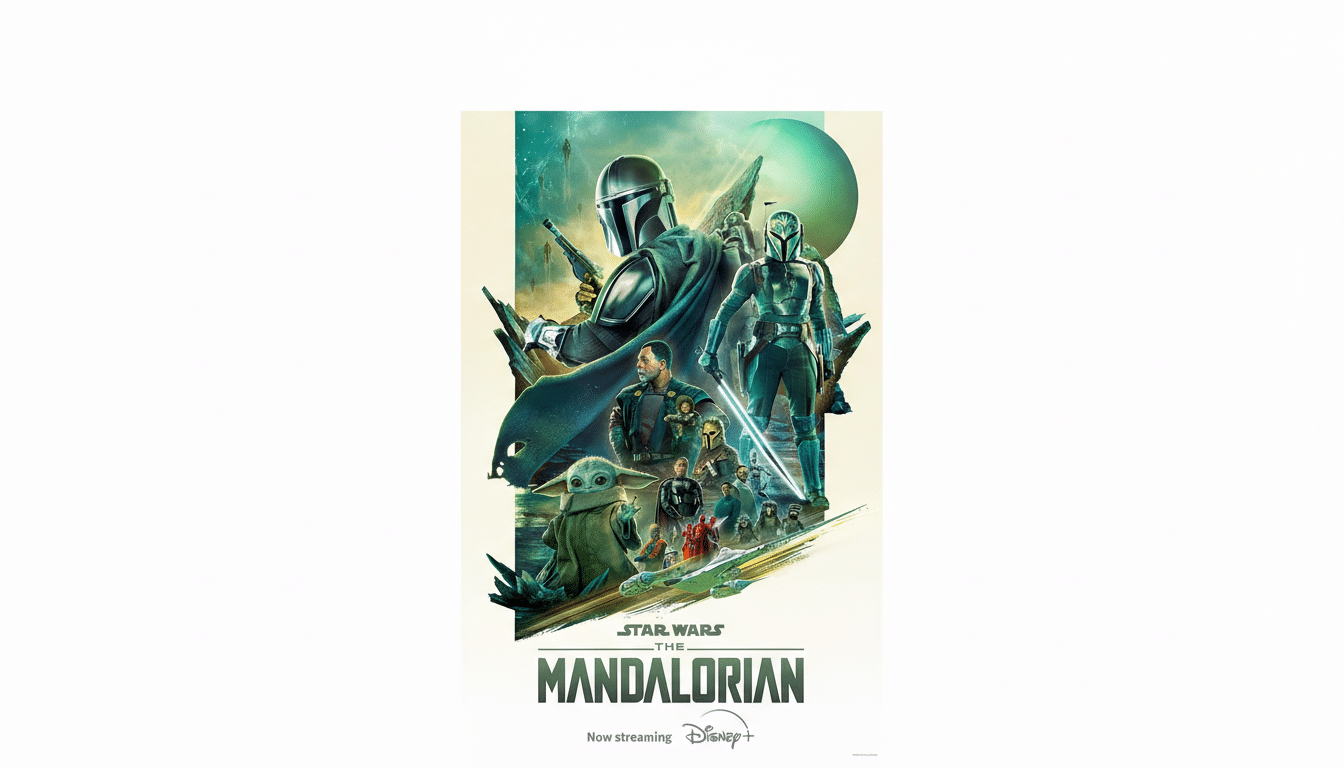
Filoni, widely regarded by fans as a custodian of Star Wars lore, helped architect modern canon across animation and live action. His work on The Clone Wars and Rebels laid the groundwork for The Mandalorian and Ahsoka, translating deep continuity into mainstream hits. Brennan brings a powerhouse résumé from Industrial Light & Magic and Lucasfilm’s global production apparatus, ensuring the studio’s pipeline—spanning series, films, and VFX—stays calibrated to quality and scale.
Kathleen Kennedy’s legacy and impact on Lucasfilm
Kennedy’s tenure reshaped Star Wars as a cross-platform enterprise. On the big screen, Lucasfilm released a new trilogy and two standalones that generated nearly $6 billion worldwide, according to Comscore, with The Force Awakens alone topping $2 billion. On the small screen, the studio became a cornerstone of Disney’s direct-to-consumer strategy: The Mandalorian anchored Disney+ at launch and regularly landed in Nielsen’s weekly streaming charts as a top original.
Critically, the franchise broadened its tonal palette. Andor drew widespread acclaim, with a critics score above 90% on Rotten Tomatoes, proving Star Wars can sustain prestige-grade political drama alongside pulpy adventure. Beyond storytelling, ILM’s StageCraft “virtual production” platform—popularized on The Mandalorian—accelerated a wider industry shift in how epic worlds are made, adopted across multiple studios and tentpoles.
Kennedy’s track record also includes calculated risks and course corrections. The mix of billion-dollar hits and more uneven outcomes pushed Lucasfilm to recalibrate pacing and development oversight. Disney leadership has emphasized a focus on fewer, bigger swings across franchises, and Lucasfilm’s evolving slate reflects that measured approach.

Why a split presidency makes sense for Lucasfilm
Dividing the top job is unusual in Hollywood, but logical for a modern franchise operator. Filoni’s elevation keeps story authority at the center of decision-making, minimizing disconnects between development rooms and greenlight committees. Brennan, a seasoned operator, can protect schedules, budgets, and vendor ecosystems—especially vital when productions span physical shoots, real-time environments, and global VFX capacity.
The arrangement mirrors best practices seen at content giants where creative and operational leadership run in tandem. It also reduces single-point risk: one executive steers mythology and brand coherence; the other secures executional excellence. For a property as scrutinized as Star Wars, that clarity can translate to steadier pipelines and fewer public pivots.
What comes next for Star Wars under new leadership
Kennedy will remain hands-on as a producer, including on The Mandalorian and Grogu, and the newly titled Star Wars Starfighter. Those projects arrive as Lucasfilm seeks to reassert its theatrical cadence while sustaining high-impact Disney+ series. With Filoni charting interconnected narratives and Brennan safeguarding delivery, the studio is positioned to align big-screen tentpoles with character-driven streaming arcs.
The near-term test will be cadence and consistency: can Lucasfilm reestablish a reliable release rhythm without sacrificing novelty? Early indicators are promising. The franchise now has mature world-building across eras, a stable bench of filmmakers and showrunners, and technology that shortens iteration cycles. If the new leadership model keeps decisions closer to the creators while preserving operational discipline, Lucasfilm could convert fan goodwill into sustained box office and streaming engagement.
For an IP that spans generations, the moment is both a capstone and a reset. Kennedy exits the presidency with a transformed studio behind her; Filoni and Brennan inherit a brand with vast headroom. The next chapter of Star Wars will be measured not just by spectacle, but by cohesion—the kind of durable, audience-first storytelling that keeps a galaxy expanding.