


LG just turned an unexpected corner in the earbuds race. The new Xboom Buds Plus, a collaboration with musician and tech entrepreneur will.i.am, pack a feature list that reads like a wish list: a self-cleaning charging case, a built-in Bluetooth transmitter for non-wireless sources, Bluetooth LE Audio with Auracast support, and the usual flagship specs, all for $180.
A Case That Cleans And Connects With Built-In Transmitter
The charging case does double duty. First, LG’s UVnano system activates when the case is plugged in, targeting the ear gels and speaker mesh. LG claims a 99.99% reduction of common bacteria such as Staphylococcus aureus, Escherichia coli, and Klebsiella pneumoniae—useful on a device that spends hours in your ears. It’s not a medical sterilizer, but it’s a practical hygiene layer backed by lab testing often cited in LG’s prior Tone Free lineup.
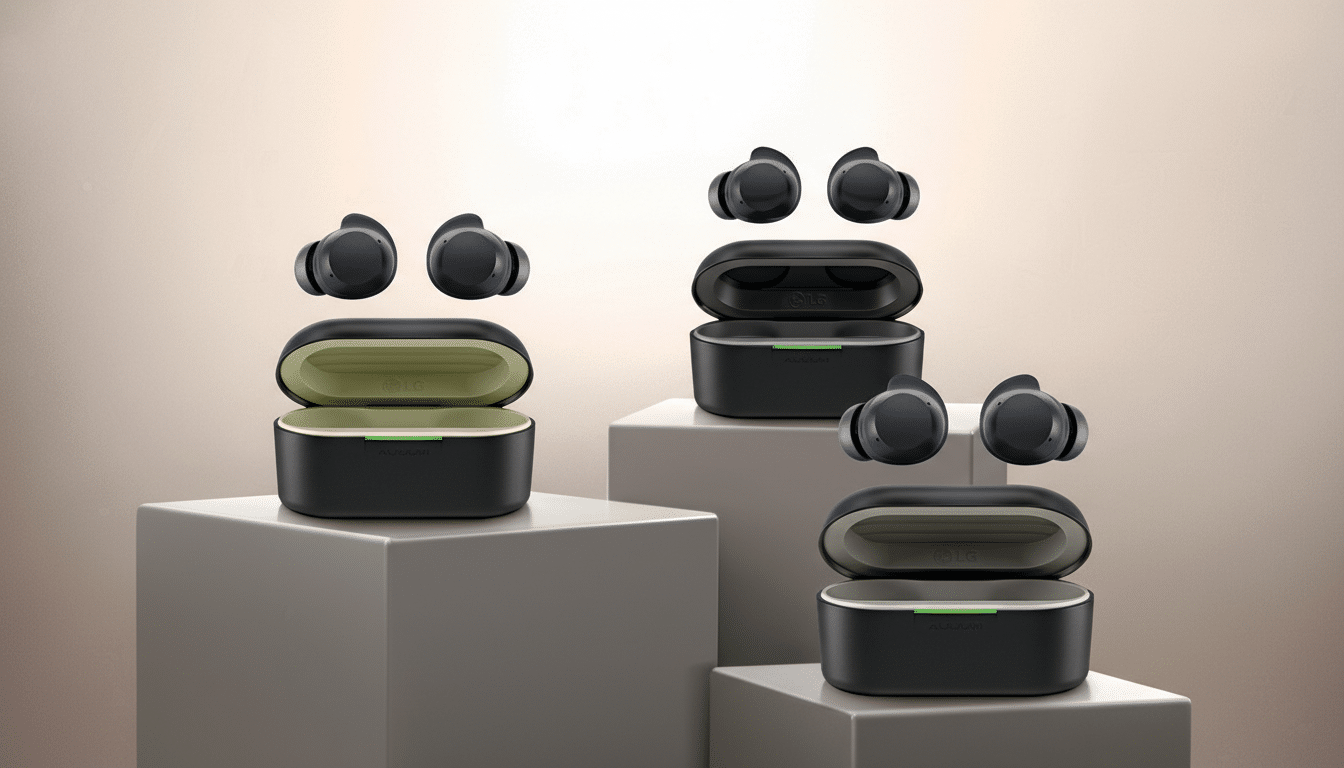
Second, the case itself can act as a Bluetooth transmitter for analog sources—think in-flight entertainment, treadmills, and older laptops. Instead of juggling dongles, you plug a proprietary USB-C-to-3.5mm cable into the case and stream directly to the buds. It’s a small shift with big quality-of-life implications for travelers and gym-goers who’ve long wrestled with airplane adapters and flaky gym Bluetooth.
LE Audio And Auracast Readiness For Shared Listening
The Xboom Buds Plus support Bluetooth LE Audio, which brings the LC3 codec and Auracast. LC3 is designed to deliver better audio at lower bitrates than SBC—Bluetooth SIG data shows LC3 can maintain similar perceived quality at roughly 50% of the bitrate, improving robustness in congested environments while extending battery life potential.
Auracast, the broadcast arm of LE Audio, opens doorways to new experiences: public audio in airports and museums, multi-listener TV at sports bars, and effortless audio sharing. Trials and early deployments highlighted by the Bluetooth SIG are underway in venues worldwide, signaling imminent utility as infrastructure catches up. Compatibility is still fragmented, though. Many Android devices, including Google’s Pixel line, already enable LE Audio features, while iPhones in the US have yet to broadly support LC3 and Auracast for general headphone use. Some phone makers also prioritize proprietary codecs over LC3 for music streaming, which can limit benefits until system updates arrive.
Hardware Aimed At Flagships With ANC And Endurance
Under the hood, LG equips 10mm graphene drivers, leveraging the material’s stiffness-to-weight advantage to reduce distortion and maintain clarity at higher volumes. Six microphones handle active noise cancellation and beamforming for calls, while adaptive EQ tunes playback on the fly. An IPX4 rating covers sweat and rain, and battery life is rated up to 30 hours with the case—competitive with category leaders from Sony, Bose, and Jabra.
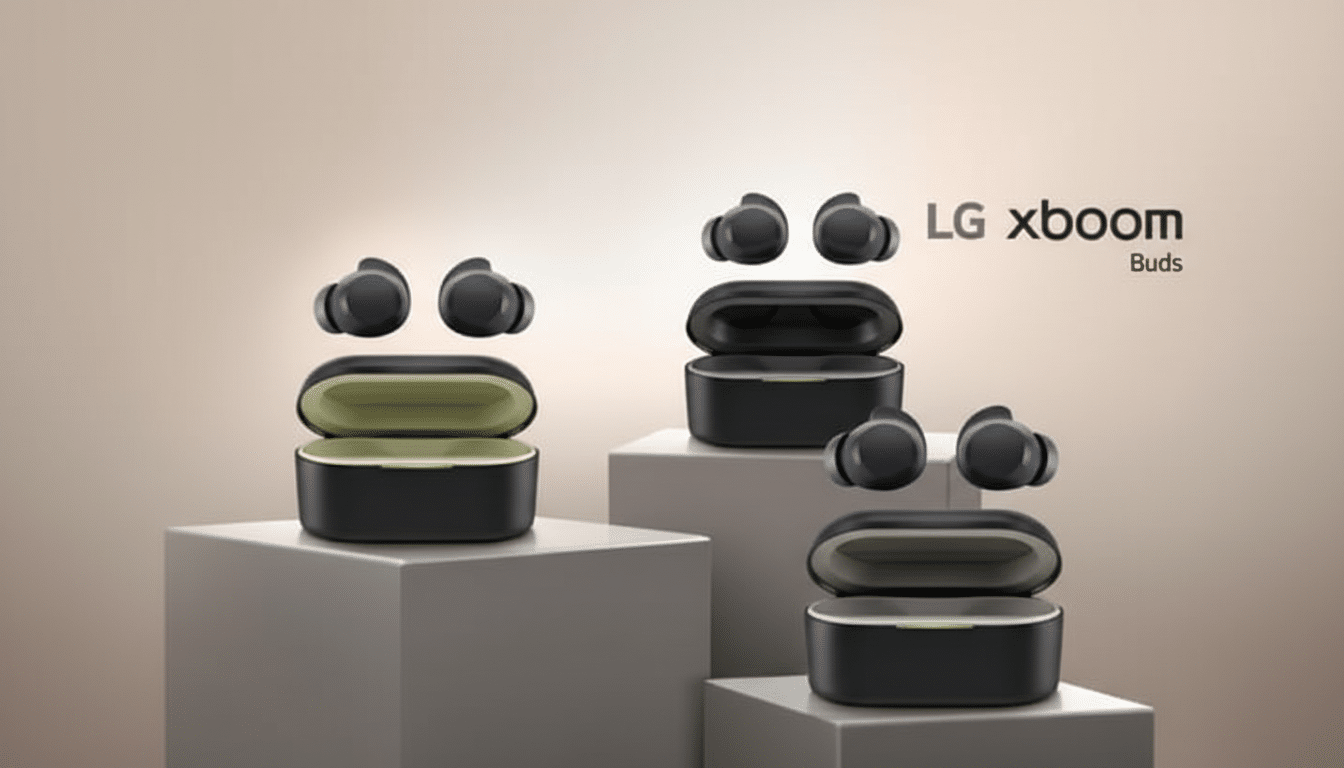
What stands out is the balance of headline tech and everyday utility. The self-cleaning case addresses a real hygiene gap. The transmitter bakes a common travel workaround into the product itself. And LE Audio future-proofs the buds for an ecosystem that’s quickly expanding—particularly attractive for users who expect to encounter Auracast in public spaces over the next hardware cycle.
Real-World Advantages For Travel, Gyms, And Daily Use
On a long-haul flight, the built-in transmitter means you can watch seatback screens without fiddling with third-party dongles or suffering latency from aging airline Bluetooth. At the gym, you can jack into a treadmill’s 3.5mm port and catch TV audio without competing for crowded wireless channels. And when Auracast becomes commonplace in arenas and lecture halls, these buds are positioned to tune in instantly.
It’s the kind of pragmatic engineering that’s been missing in many premium earbuds—features that solve stubborn pain points instead of chasing spec sheet one-upmanship.
Price, Availability, And Caveats For Early Adopters
The LG Xboom Buds Plus are available now in Black for $180, undercutting most flagship ANC buds while competing head-on in capability. A few footnotes: the UVnano function only operates when the case is connected to power; the transmitter relies on a proprietary USB-C-to-3.5mm cable; and LE Audio’s benefits vary by phone and platform until broader LC3 and Auracast support lands.
Even with those caveats, the calculus is compelling. From a brand better known for TVs and appliances than category-defining earbuds, LG has delivered a pair that feels both forward-looking and immediately useful—arguably its most advanced in-ears yet, and a legitimate curveball for the market’s usual front-runners.