


A fan-made variation of a recent LEGO classic is catching eyes. Modder “hardware43,” aka Natalie the Nerd, has overhauled the official 1:1 LEGO Game Boy kit so it can play real Game Boy cartridges, from Pokémon Red to the 1989 pack-in phenomenon Tetris. The build runs, has real cart intros, and is able to read physical carts — not something you can say about the stock set.
The hack combines precise electronics work with a study in fine brick engineering, and it’s part of a broader trend of makers taking nostalgic shells and turning them into actual working hardware. Although this mod isn’t for sale, it offers a glimpse at what can happen when you combine retro hardware know-how with LEGO’s faithful replica.
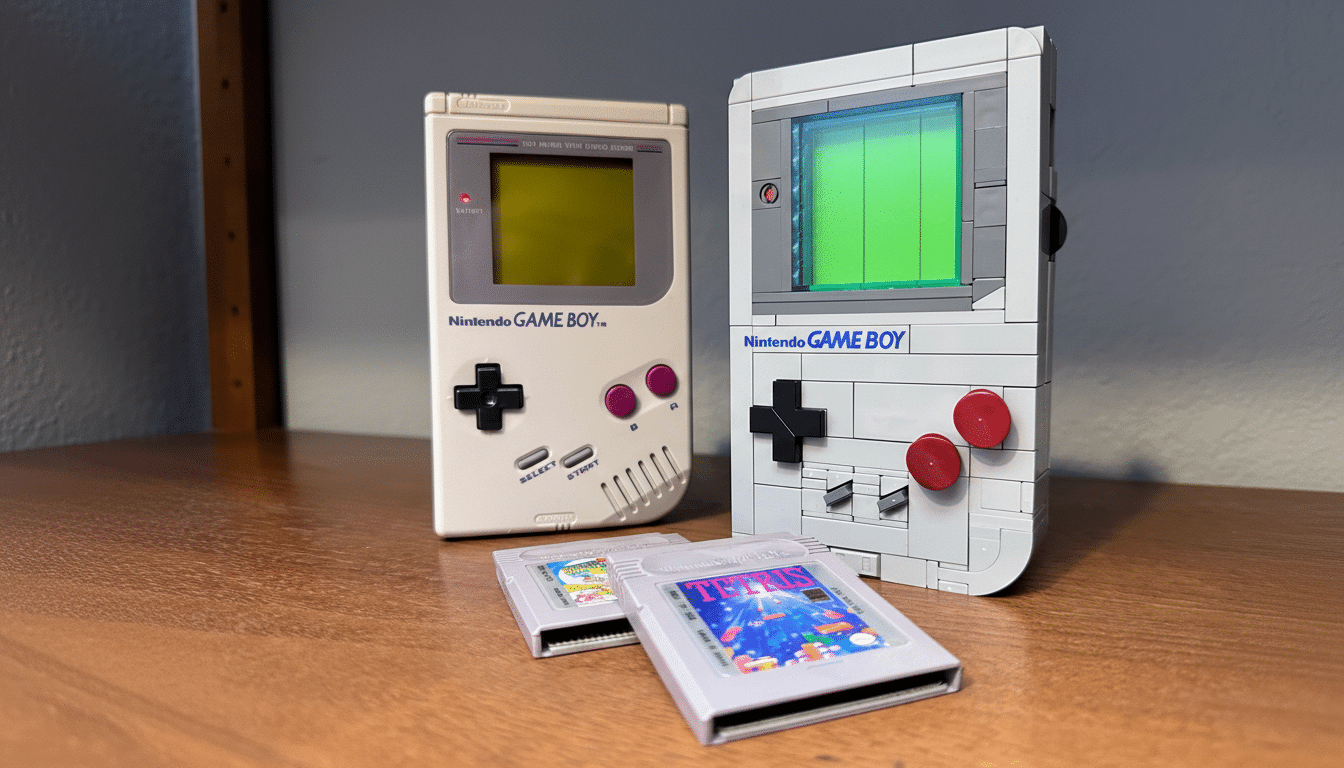
A clever hack inside a LEGO brick-built Game Boy shell
Natalie’s project involves fitting a custom board inside the nest of LEGO and mapping the Game Boy’s physical controls to pushable buttons in the layout. Easy, right? Hardly: button travel must line up, power delivery must be reliable, and wiring needs to snake cleanly through studs and plates without kinking delicate components.
Hooking up to original Game Boy cartridges is just another headache. The original carts are so sensitive to bus timing and power voltages that most homebrew designs include a level shifter between the 5V cart interface and 3.3V logic, robust noise filtering, plus careful clock shielding/control. In this instance, however, a modder would typically either discard the original motherboard and transplant a donor Game Boy motherboard, reproduce the hardware on an FPGA, or use a microcontroller/single-board computer to read the cart and hand off data to an emulator. Natalie says the board is still being finessed and there will be full details to follow, so it sounds like this one is well beyond a drop-in.
Early video footage depicts the system recognizing cartridges and rendering their well-known boot sequences on a live display. Most of the remaining work seems like it would deal with control fidelity and finishing up the board. That is the last mile that often separates a cool proof of concept from something reliably playable.
Why children’s games like Pokémon and Tetris matter
Picking Pokémon Red and Tetris is about more than a crowd-pleasing demo. Both titles serve as the respective bookends to Game Boy’s legacy. And with Tetris as a system seller and Pokémon as a late-cycle juggernaut, you can add that those numbers include both the Game Boy and its Color variant.
Even without including its pack-in status, The Tetris Company is responsible for over 35 million units sold on the Game Boy version alone. Nintendo’s franchise breakdowns note that Pokémon Red and Blue reached more than 31 million copies. Both boot from physical cartridges housed in a LEGO shell, which just goes to show how deep modding communities will dive to celebrate — and preserve — playable history.
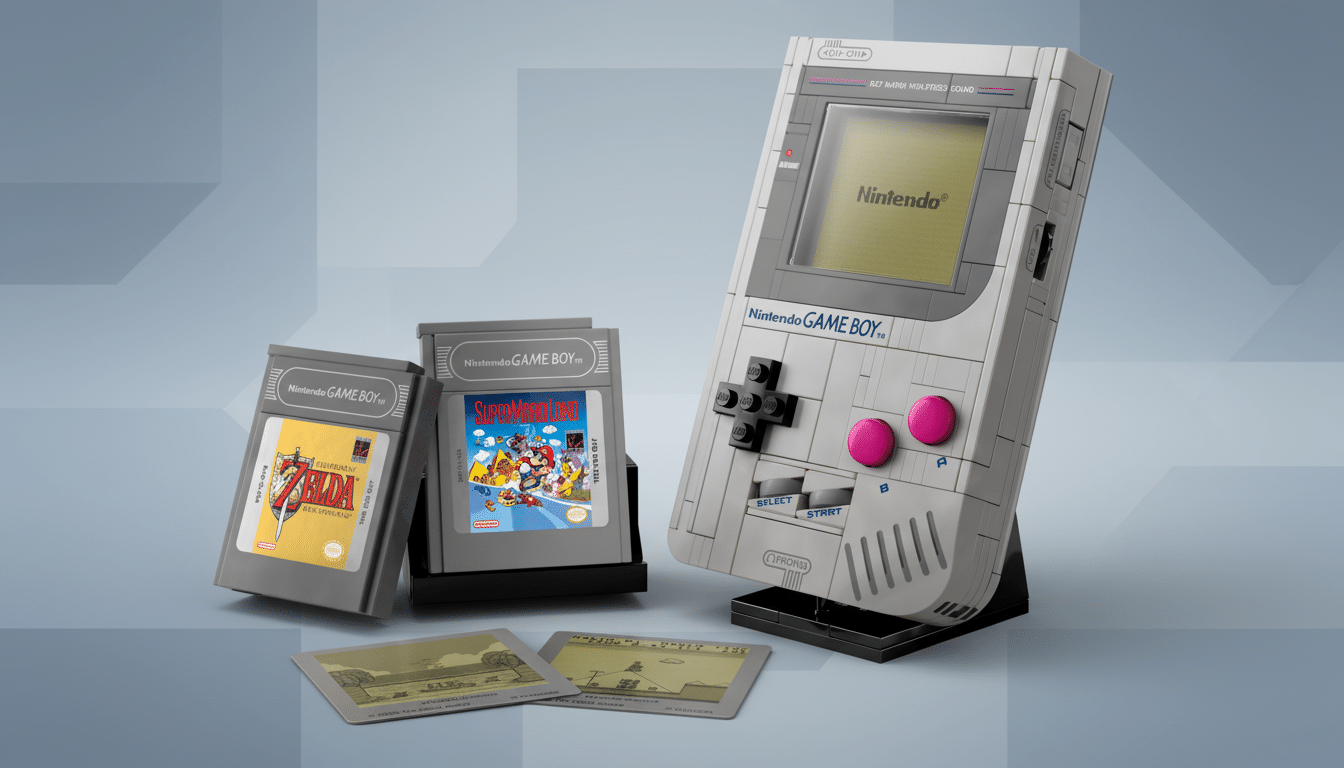
What’s inside the official LEGO Game Boy display set
The official LEGO set that inspired this build, meanwhile, has excruciating external accuracy available at a relatively low price of $59.99. It comes with brick-built cartridges based on The Legend of Zelda: Link’s Awakening and Super Mario Land that fit into the back for display. Instead of a functional LCD, the set employs a lenticular insert to represent gameplay frames and the iconic boot sequence — clever for shelf appeal but not interactive.
That design decision left the door open for makers to attempt something showier. Turning the model into a functional handheld introduces a whole suite of new challenges: you need to add a real screen, input electronics, and power management, and somehow all that has to fit while also making sure the cartridge slot is not in a ridiculous place so the appearance looks super‑super accurate. The final product, if executed well, resembles a stock LEGO build until it powers on and starts playing chiptunes.
What’s next for the build and how to follow progress
Natalie has said that the entire project files will be available once the hardware has been finalized — surely welcome news for any tinkerers who want to build one themselves. Potential documentation topics include:
- Board revisions and change logs
- Button mechanism details, potentially open-hinged and continuing to be 3D-printed
- Safe mounting brackets for electronics that don’t stress plastic components
Community feedback tends to smooth out edge cases like input debounce quirks and battery-life trade-offs.
Don’t count on a retail release of this. Projects like this are often open-source designs for educational and hobbyist purposes, not products available for purchase. Yet it arrives at an appealing intersection of fandoms. To LEGO builders, it shows what is achievable beyond static models. A rare combination of authenticity and whimsy for the retro gaming enthusiast — a Game Boy that looks like a plaything but acts like the real deal.
Whether the end result is based on original silicon or modern emulation, one thing is clear: the practice of sliding in a cartridge and listening to that iconic start-up chime is preserved. If the final build also manages to nail responsive controls and smooth video, it’ll rank among the most delightful Game Boy conversions yet — evidence that nostalgia combined with ingenuity is a winning combination.