


Dental implants and dental bridges. While both treatments aim to restore appearance and function, they differ significantly in structure, longevity, maintenance, and long-term oral health impact.
Understanding these differences is essential before committing to treatment. Costs, healing times, and suitability vary depending on individual circumstances, including bone density and the health of surrounding teeth. Anyone researching options such as a dental implant in a London clinic will quickly discover that the decision involves more than simply replacing a missing tooth. It is about preserving oral health for decades to come.
- Structural Differences: Root Replacement Versus Surface Support
- Longevity and Maintenance: Planning for the Long Term
- Bone Health and Facial Structure: The Hidden Impact
- Procedure and Recovery: Surgical Versus Conventional Approaches
- Suitability and Personal Circumstances: Matching Treatment to Patient
- Making an Informed Decision in London
A cosmetic dentist from MaryleboneSmileClinic explains that patients should consider both short-term convenience and long-term biological impact when deciding. “Implants and bridges can both deliver excellent cosmetic outcomes,” the dentist notes. “However, implants replace the root as well as the crown, which helps maintain bone levels. For patients exploring their options, we encourage them to learn and understand suitability criteria before booking a consultation.” This measured approach reflects the broader consensus among London practitioners: informed patients make better decisions.
Structural Differences: Root Replacement Versus Surface Support
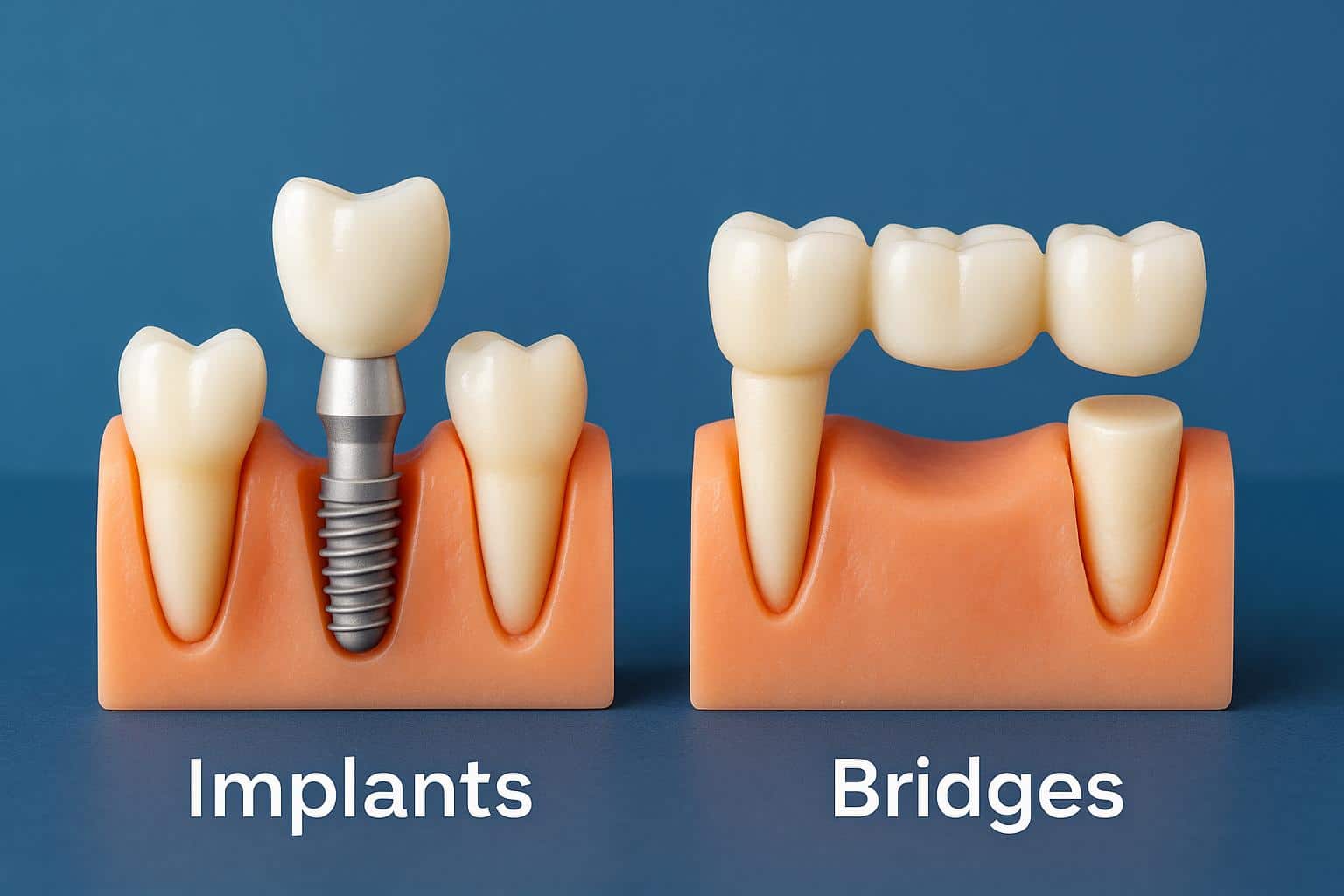
The design is the primary distinction between bridges and implants. A titanium post that is surgically inserted into the mandible to serve as a substitute tooth root is called a dental implant. It supports a crown that looks like a real tooth after it has healed and fused with the bone. In contrast, a bridge is supported by its neighbouring teeth. Usually, crowns placed over the nearby natural teeth hold a prosthetic tooth in place.
This distinction has significant clinical implications. Because an implant stands independently, it does not require alteration of surrounding teeth. A bridge, however, often involves reducing healthy enamel on adjacent teeth to create space for crowns. While this has been a standard and reliable technique for decades, it permanently changes the structure of those supporting teeth.
London dentists frequently explain that this structural difference affects long-term oral health planning. Younger patients or those with otherwise healthy teeth may prefer a solution that preserves natural tissue. Meanwhile, bridges can remain appropriate in situations where adjacent teeth already require crowns or where implant placement is not viable due to medical considerations. The choice is therefore guided by anatomy, overall dental condition, and long-term expectations rather than aesthetics alone.
Longevity and Maintenance: Planning for the Long Term
Another important distinction involves durability. Dental implants are designed to be a long-term, often lifelong solution when properly maintained. The titanium post integrates with the bone in a process called osseointegration, creating a stable foundation that can last decades. The crown attached to the implant may require replacement over time due to normal wear, but the underlying structure is typically resilient.
Bridges generally have a shorter average lifespan. With good oral hygiene and regular dental reviews, many last between 10 and 15 years. However, because they depend on the health of supporting teeth, any decay or gum disease affecting those teeth can compromise the bridge. If one supporting tooth fails, the entire restoration may need replacement.
Maintenance routines also differ slightly. Implants require careful cleaning around the gum margin to prevent peri-implantitis, an inflammatory condition affecting the surrounding tissues. Bridges demand meticulous flossing beneath the false tooth to prevent plaque accumulation. London clinicians often emphasise that both options require commitment to hygiene, but implants tend to offer greater structural independence over time.
Bone Health and Facial Structure: The Hidden Impact
One of the less visible yet clinically significant differences relates to bone preservation. When a natural tooth is lost, the jawbone in that area begins to resorb due to lack of stimulation. Over time, this can alter facial contours and reduce support for surrounding teeth. Because an implant replaces the root, it continues to stimulate the bone during chewing, helping to maintain bone density.
Bridges do not provide this stimulation. While they restore chewing function at the surface level, the underlying bone may gradually shrink. In cases involving a single missing tooth, this bone loss may be minimal and largely cosmetic. However, for multiple missing teeth, the cumulative effect can become more noticeable.
Dentists in London increasingly discuss bone preservation during consultations, particularly with patients considering long-term outcomes. For individuals concerned about facial structure or future restorative flexibility, implants may offer advantages. Nevertheless, bone grafting procedures are sometimes required before implant placement, which adds complexity and healing time. Each case therefore requires a tailored assessment, balancing biological benefits with surgical considerations.
Procedure and Recovery: Surgical Versus Conventional Approaches
The treatment journey differs considerably between the two options. Implant placement involves a minor surgical procedure performed under local anaesthetic, occasionally supplemented with sedation. After the titanium post is inserted, a healing period of several weeks or months allows the bone to integrate with the implant before the final crown is fitted.
A bridge procedure is generally quicker. After preparing the supporting teeth, impressions are taken and a temporary bridge is placed. The final restoration is then fitted once laboratory fabrication is complete. There is no surgical healing phase, which some patients find reassuring.
Recovery expectations vary accordingly. Implant patients may experience mild swelling or discomfort in the days following surgery, though this is usually manageable with standard pain relief. Bridge patients typically report minimal post-procedure discomfort beyond temporary sensitivity in prepared teeth. For those balancing busy professional lives in London, scheduling and downtime may influence decision-making as much as clinical factors.
Cost structures also reflect procedural differences. Implants often involve higher upfront fees due to surgical components and advanced materials. Bridges may present a lower initial cost, but potential replacement over time should be factored into long-term financial planning.
Suitability and Personal Circumstances: Matching Treatment to Patient
No single solution suits every patient. Suitability for implants depends on adequate bone density, healthy gums, and overall medical stability. Certain systemic conditions, smoking habits, or untreated periodontal disease may reduce implant success rates. In such cases, a bridge might provide a reliable alternative.
Age can also influence recommendations. Younger adults missing a single tooth may prefer implants to avoid preparing adjacent teeth. Older patients with heavily restored neighbouring teeth may find bridges more practical. Additionally, some individuals are understandably hesitant about surgery and opt for the less invasive bridge approach.
A thorough consultation in a London practice typically includes radiographic imaging, digital scans, and a discussion of medical history. Dentists assess occlusion, bite forces, and aesthetic priorities before presenting options. Increasingly, practices also provide digital simulations to help patients visualise outcomes. While interest in advanced solutions continues to grow, the decision ultimately rests on a balanced appraisal of health, expectations, and long-term planning rather than trends alone.
Making an Informed Decision in London
The debate between implants and bridges is not about which treatment is universally superior. It is about understanding five key differences: structural design, longevity, bone preservation, procedural complexity, and individual suitability. Each factor carries weight depending on the patient’s oral health status and future goals.
London’s dental landscape offers access to experienced clinicians, modern diagnostics, and evidence-based treatment planning. Patients are encouraged to seek detailed consultations rather than relying solely on online comparisons. By discussing risks, benefits, and maintenance requirements openly, individuals can select a solution aligned with their priorities.
Ultimately, both implants and bridges can restore confidence, speech clarity, and chewing efficiency. The most successful outcomes arise when clinical expertise is paired with realistic expectations and consistent aftercare. With careful evaluation and professional guidance, replacing a missing tooth can become a stable, long-term investment in oral health rather than a temporary fix.