


Caustic soda flakes are a critical raw material for industries ranging from chemical manufacturing and water treatment to pulp and paper, textiles, detergents, and other processing operations. For industrial procurement teams, purchasing this material in bulk requires careful attention to purity, consistent availability, documentation, transportation, and the overall landed cost of each shipment.
Selecting reliable caustic soda flakes distributors in US markets therefore involves more than comparing quotations from multiple suppliers. Buyers need dependable material specifications, quality verification, suitable packaging, flexible delivery arrangements, and transparent supply chain coordination. The right procurement approach can reduce supply uncertainty while helping manufacturers maintain predictable production schedules and better control purchasing expenses.
- What Industrial Buyers Should Evaluate Before Bulk Procurement
- Quality Assurance Should Come Before Price Comparison
- Verify Specifications Before Committing to Volume
- Review Quality Documentation for Every Batch
- Consider Sampling During Supplier Qualification
- Match Packaging to Operational Requirements
- Examine Compliance and Traceability
- Evaluate Supply Reliability Over Time
- Comparing Distribution Options in the US Market
- Understanding the True Cost of Bulk Caustic Soda
- Final Thoughts
What Industrial Buyers Should Evaluate Before Bulk Procurement
Bulk chemical sourcing requires a broader assessment than conventional product purchasing because quality variations or supply interruptions can directly affect manufacturing operations. Buyers should first define their required grade, purity, volume, packaging configuration, delivery destination, and purchasing frequency. Establishing these requirements early makes supplier comparisons more accurate and prevents procurement decisions based solely on headline pricing.
Supplier capability also matters when demand fluctuates or manufacturing schedules change unexpectedly. A dependable sourcing arrangement should provide access to relevant product information while supporting repeat orders at the required scale. Buyers increasingly benefit from procurement models that combine supplier qualification, commercial coordination, quality controls, and logistics visibility instead of managing these activities separately.
Important evaluation factors include:
- Product purity and consistency across batches
- Certificate of Analysis and Safety Data Sheet availability
- Packaging suitable for bulk transportation and storage
- Competitive landed cost rather than product price alone
- Reliable inventory and fulfillment capabilities
- Clear shipment and order visibility
Quality Assurance Should Come Before Price Comparison
For industrial applications, product quality can influence process stability and finished output. Caustic soda flakes typically contain a high concentration of sodium hydroxide, while specifications may differ according to the intended application and grade. Procurement teams should verify technical requirements before placing substantial orders and confirm that the selected material is appropriate for their production processes.
A well-structured sourcing process should also include batch-level quality verification. Testing for relevant parameters such as moisture, chloride, and heavy-metal impurities can provide greater confidence in incoming materials. Certificates accompanying shipments create an additional layer of traceability, helping procurement and quality teams maintain consistent standards across recurring purchases.
Verify Specifications Before Committing to Volume
Technical specifications should be reviewed before commercial negotiations reach the final stage. Buyers need to confirm the chemical identity, required purity, physical properties, and applicable grade against internal manufacturing requirements. This reduces the possibility of receiving material that cannot be integrated efficiently into established production processes.
Review Quality Documentation for Every Batch
Documentation should remain consistent throughout a long-term supply relationship rather than being treated as a one-time qualification requirement. A Certificate of Analysis provides batch-specific quality information, while an SDS supports safe handling and regulatory procedures. Organized documentation also simplifies internal audits and incoming-material verification.
Consider Sampling During Supplier Qualification
Samples allow technical teams to evaluate material before committing to commercial-scale quantities. A responsive sampling process is particularly useful when qualifying a new supplier or sourcing route. Faster sample availability can shorten procurement cycles by allowing quality evaluation to proceed while commercial terms and logistics arrangements are being discussed.
Match Packaging to Operational Requirements
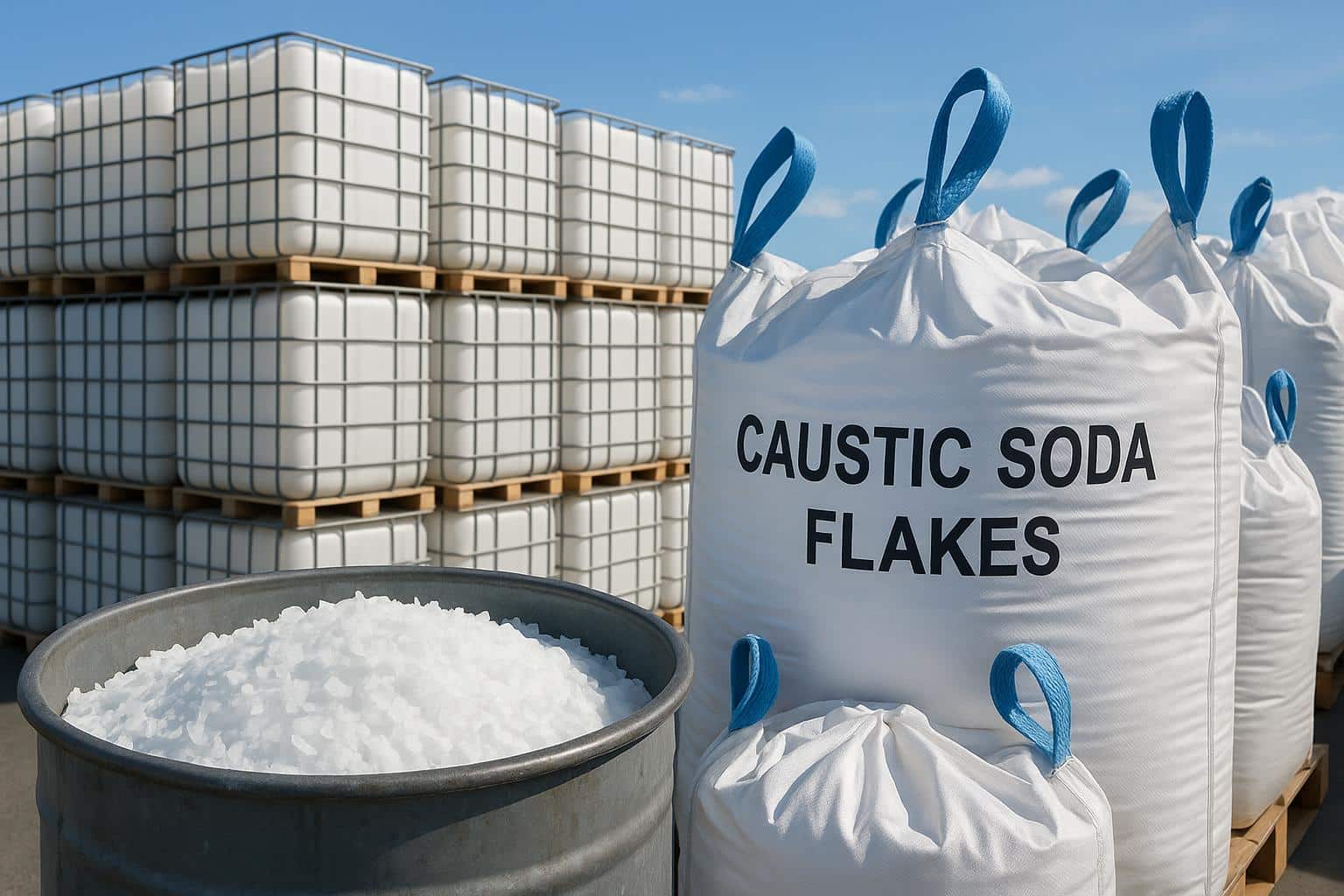
Bulk buyers should consider how packaging affects transportation, warehouse handling, and material protection. Caustic soda flakes must remain protected from moisture and incompatible substances during storage. Commercial options can include smaller PP/PE bags or larger FIBC configurations, depending on volume requirements and receiving infrastructure.
Examine Compliance and Traceability
Chemical procurement requires buyers to consider regulatory and safety obligations alongside product performance. For US-bound material, procurement teams should verify applicable federal requirements, hazard classifications, transportation rules, and supporting documentation. Clear traceability across orders can make compliance management considerably more efficient for companies purchasing across multiple locations.
Evaluate Supply Reliability Over Time
A supplier that fulfills one order successfully may not automatically be the best choice for recurring procurement. Industrial buyers should examine inventory access, production capacity, sourcing flexibility, geographic coverage, and logistics capabilities. A broader supply network can provide additional flexibility when regional availability changes or demand rises unexpectedly.
Comparing Distribution Options in the US Market
Industrial buyers have several sourcing routes available when purchasing sodium hydroxide products. Established chemical distributors provide chemical distribution services within the North American market. Procurement teams may evaluate such distributors according to product form, regional availability, required volumes, technical specifications, and delivery capabilities.
Buyers comparing supply options should examine:
- Access to qualified manufacturing and supply networks
- Ability to support domestic and international sourcing
- Visibility across order and shipment milestones
- Quality assurance and documentation processes
- Pricing based on destination, volume, and contract structure
- Flexibility in logistics and Incoterm arrangements
Understanding the True Cost of Bulk Caustic Soda
Quoted material prices provide only part of the financial picture. The actual landed cost can be influenced by committed volume, shipment origin, freight rates, energy-driven market movements, destination, import considerations, and the selected Incoterm. Procurement teams should therefore compare complete commercial proposals rather than automatically selecting the lowest initial quotation.
Supply chain technology can further support cost management by improving visibility into purchasing activity and shipment progress. Centralized procurement information can help teams identify pricing differences, consolidate fragmented purchases, and respond earlier to potential supply risks. Greater transparency also allows purchasing managers to make decisions using current order information instead of relying on disconnected communication channels.
Final Thoughts
What if bulk caustic soda sourcing could combine competitive value with verified quality, flexible logistics, and clearer supply chain visibility? The strongest procurement partnerships address the concerns industrial buyers face at every stage, including supplier qualification, batch consistency, documentation, pricing, inventory availability, shipment coordination, and delivery timelines.
For US buyers seeking this combination,Elchemy provides a technology-enabled approach backed by quality-assured sourcing and end-to-end supply chain capabilities. Its caustic soda offering includes batch testing, Certificates of Analysis, multiple packaging configurations, domestic stock through US warehouses, sample qualification, and flexible FOB, CIF, or DDP arrangements. Combined with digital order management and real-time supply visibility, these capabilities can help procurement teams secure stronger overall value while simplifying the journey from sourcing and quality verification to logistics and final delivery.