


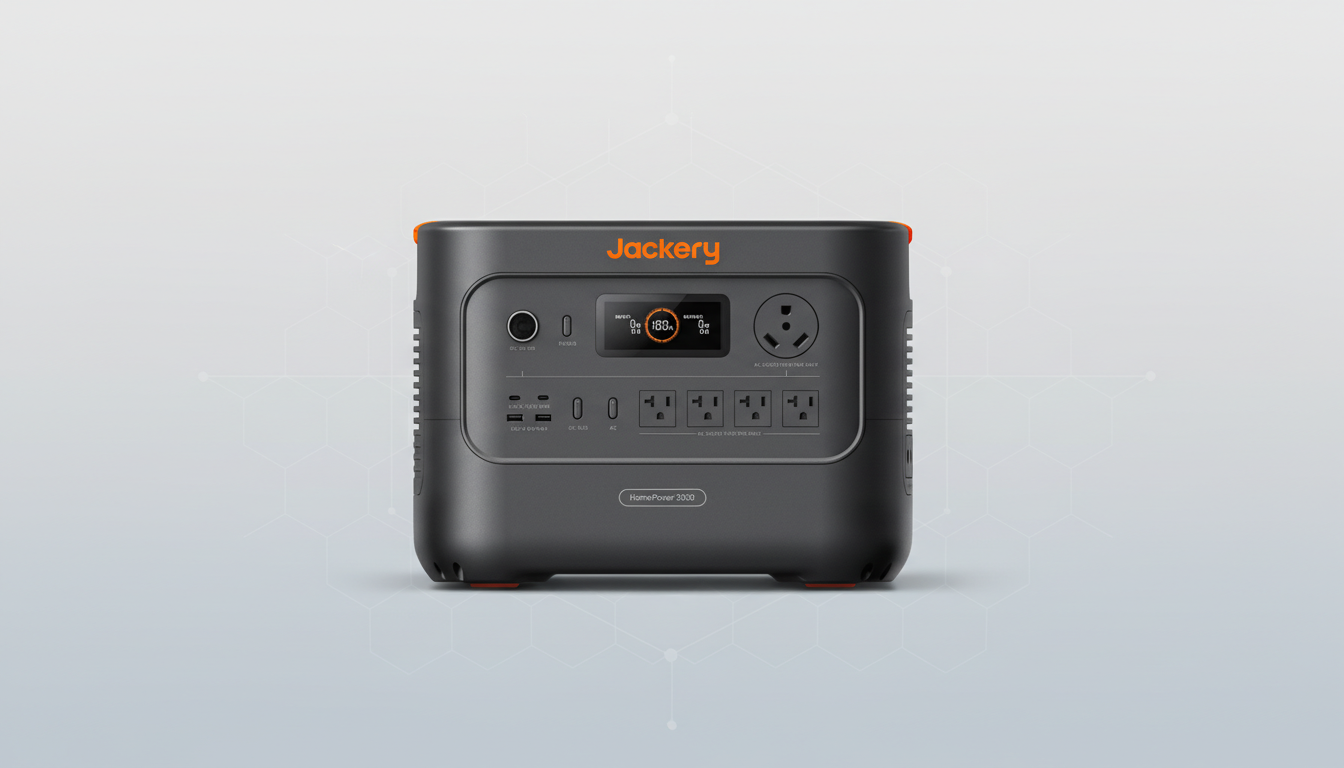
The Jackery HomePower 3000 portable power station is seeing a rare price drop to $1,098, a 56% discount from its $2,499 list price, making one of the strongest mid-size backup systems dramatically more affordable right now.
For shoppers comparing watt-hours and watts per dollar, this is a standout value on a unit built to keep essentials running through outages and to power projects where extension cords can’t reach.
- Why This Deal Matters for Backup Power Buyers
- Power and Capacity at a Glance for Home Backups
- Charging Options and Solar Readiness Explained
- Ports, Build, and Practicality for Everyday Use
- What It Can Realistically Power in Daily Life
- Buying Considerations Before You Hit Purchase
- Bottom Line: Performance and Value Overview
Why This Deal Matters for Backup Power Buyers
At $1,098 for 3,072Wh of storage and a 3,600W inverter (7,200W surge), the effective cost is roughly $0.36 per watt-hour, well below the category’s typical $0.60–$1.00/Wh range for name-brand systems of similar capacity.
That’s notable as grid interruptions have become more frequent and severe; the U.S. Energy Information Administration reports multi-hour outages are increasingly common, and NOAA has tracked a rising number of billion-dollar weather disasters over the last decade.
For many households, a portable power station offers cleaner, quieter peace of mind than a gas generator, with no exhaust and minimal maintenance, a point repeatedly emphasized by the Consumer Product Safety Commission and emergency planners.
Power and Capacity at a Glance for Home Backups
The HomePower 3000 pairs a 3,600W continuous inverter with 7,200W of surge headroom, giving enough muscle to start and run most refrigerators, sump pumps, power tools, and space heaters within reason.
Its 3,072Wh battery can keep typical essentials alive for hours. As a rough guide: a fridge averaging 120W could see 20–24 hours of runtime, a Wi-Fi router at 10W can run for several days, and a 50W fan can breeze through more than two days, assuming ~85–90% inverter efficiency and normal cycling.
The numbers line up with common emergency-use scenarios highlighted by FEMA, which recommends at least 72 hours of self-sufficiency; paired with measured power use, this unit can bridge short to moderate outages for core devices.
Charging Options and Solar Readiness Explained
Fast top-ups are a strong suit here: Jackery rates the unit to recharge in about 1.7 hours using AC plus DC input, which helps during rolling outages or tight windows on a generator.
With compatible Jackery solar panels, the station can recharge to about 80% in up to 9 hours of good sun, according to the company. That aligns with National Renewable Energy Laboratory guidance on daily solar harvest for portable arrays, though actual times vary with weather and panel wattage.
Additional flexibility includes 12V car charging and generator input, so you can mix sources depending on the situation and available time.
Ports, Build, and Practicality for Everyday Use
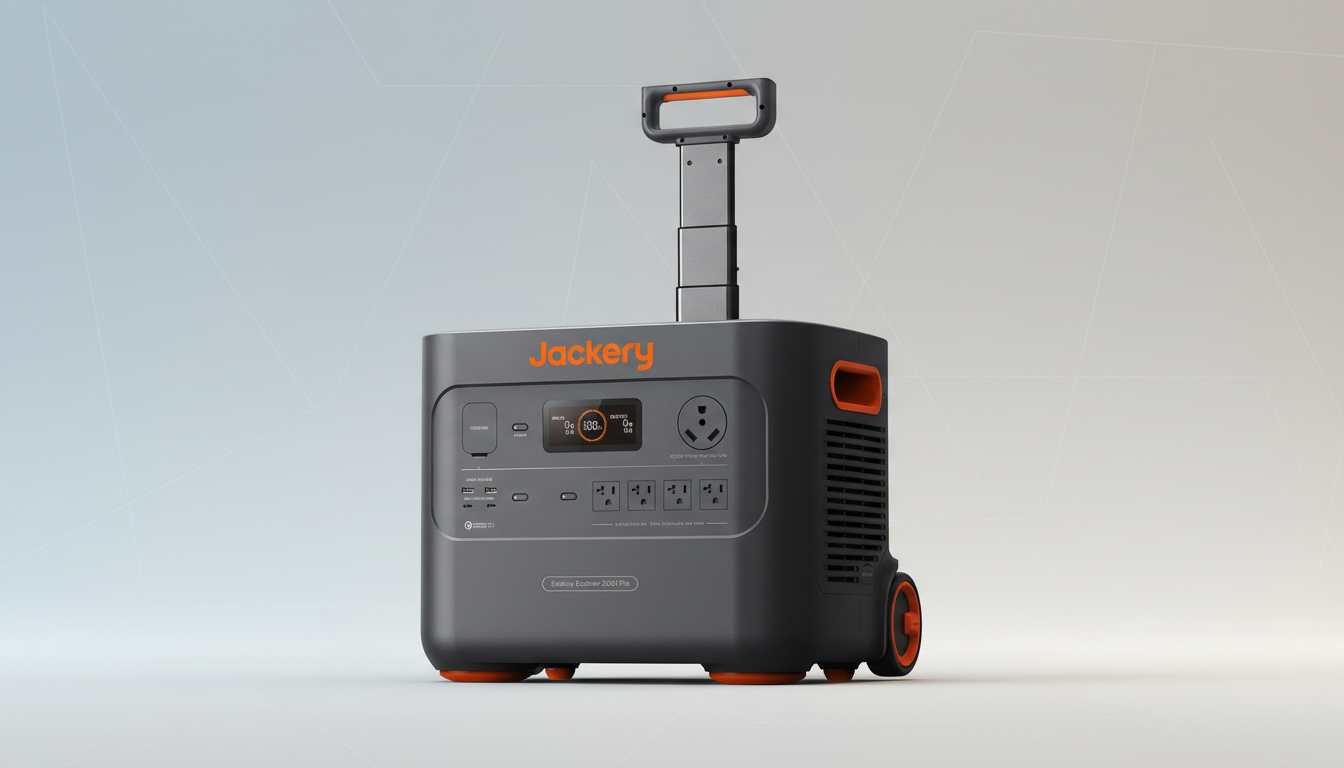
Connectivity covers everyday needs: multiple AC outlets, USB-C with 100W Power Delivery, USB-A for legacy gear, and a 12V DC car socket for appliances like coolers and inflators.
At about 59.5 pounds, it’s a two-handed carry for most people; integrated side handles help with loading into a car or moving between rooms. Unlike fuel generators, it can be safely used indoors because it produces no emissions.
Noise levels are typically limited to fan cooling under load, a benefit for apartment dwellers and late-night charging that won’t disturb neighbors.
What It Can Realistically Power in Daily Life
Emergency basics: lights, a modem/router, phone and laptop charging, a fridge, and a CPAP machine are all squarely in its wheelhouse. Expect day-plus runtimes when you prioritize and rotate loads.
Project and weekend use: run a miter saw (1,500–1,800W), an air compressor with manageable duty cycles, or a portable induction cooktop. The high surge rating helps start motors without tripping.
RV and van life: the AC and USB-C PD mix can handle a 12V fridge, electronics, and intermittent cooking, while solar trickle keeps the battery topped up between campsites.
Buying Considerations Before You Hit Purchase
Check your total load requirements before buying; whole-home coverage requires a larger system and a transfer switch installed by a licensed electrician in line with National Electrical Code guidance.
Plan for storage and charging habits: lithium packs hold charge well, but topping up every few months and storing in a temperate, dry spot preserves longevity, as advised by battery safety standards organizations.
Finally, compare $/Wh and warranty coverage against rivals like EcoFlow and Bluetti. Even with periodic sales across the category, this steep markdown places the HomePower 3000 among the best values for its class right now.
Bottom Line: Performance and Value Overview
A 56% price cut on a 3kWh, 3.6kW portable station is rare. If you’ve been waiting for a capable, indoor-safe backup to cover essentials during outages and power outdoor work without the fumes, this deal is compelling and difficult to beat on pure performance per dollar.