


Jackery’s flagship home backup battery just plunged to its lowest price, with the Explorer 5000 Plus dropping to $2,799, a substantial $1,500 cut from its $4,299 list. The limited-time offer is part of the brand’s winter promotion and marks a rare opportunity to snag a true whole-home-capable power station at a price that undercuts many rivals on a per‑watt‑hour basis.
At 5,040Wh, the Explorer 5000 Plus sits in the upper tier of portable power, aimed squarely at homeowners, RVers, and preparedness-minded buyers who need serious energy reserves rather than a glorified camping battery. In practice, that capacity can keep essentials running for days, and the unit’s high output means it can handle demanding appliances without flinching.
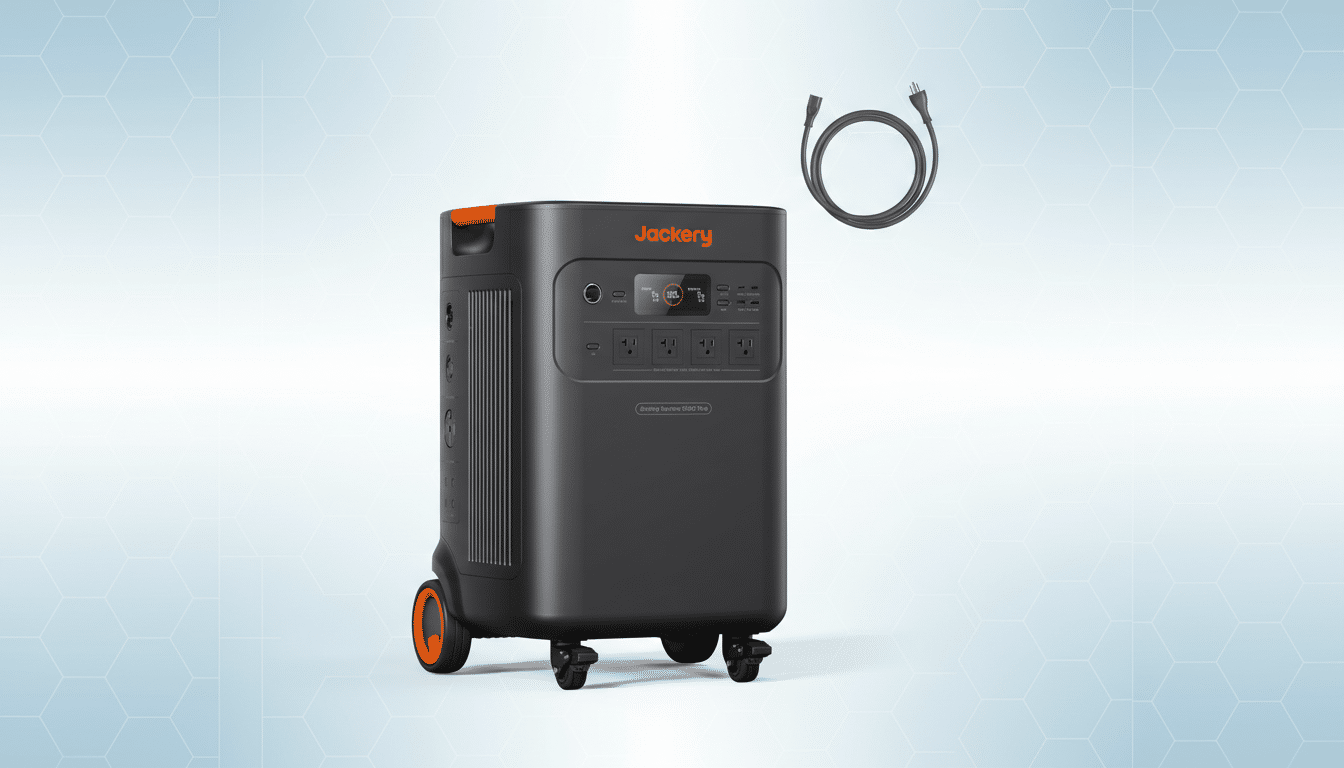
Why This Deep Discount on the Explorer 5000 Plus Matters
The headline value here is power per dollar. At $2,799 for 5,040Wh, you’re looking at roughly $0.56 per watt-hour, an aggressive figure for a top-tier brand. Competing large-format systems from well-known makers often hover closer to $0.70–$1.00 per watt-hour at regular pricing, depending on configuration and expansion options.
Capacity is only half the story. The Explorer 5000 Plus supports a maximum 7,200W output when using its NEMA L14-30R or NEMA 14-50 connections, enough surge headroom to start hefty loads such as power tools, well pumps, or an RV air conditioner. Standard AC outlets are rated for up to 2,400W, which still covers space heaters, microwaves, and most kitchen appliances one at a time.
For real-world endurance, consider common household baselines. According to the U.S. Department of Energy and ENERGY STAR guidance, a modern full-size refrigerator typically draws 1–2kWh per day, meaning a 5,040Wh station can keep it cold for roughly 2–4 days, factoring in inverter losses. A CPAP machine at ~40W could run for well over 100 hours, while a broadband router at ~10W could stay online for weeks. Even a work laptop with a 60Wh battery could see 60–70 full recharges from a single cycle.
Ports and Power You Can Actually Use Every Day
The port layout is tailored for mixed-home scenarios: four AC outlets for everyday appliances; two USB‑C and two USB‑A ports for fast charging phones, tablets, drones, and cameras; a 12V car socket for legacy gear; plus the two high-output NEMA ports for 240V tools, RVs, or transfer switch hookups. It’s the kind of spread that lets you run the fridge and charge essentials without a cable octopus.
The unit also supports up to 4,000W of solar input, enabling rapid daytime replenishment with sufficient panels. For sustained outages or off‑grid living, that makes the system far more than a one-and-done battery—it becomes the heart of a portable microgrid. A 20ms uninterruptible power supply function bridges brief grid dips, keeping PCs and networking gear from dropping during flickers, and expansion options allow you to grow capacity if your needs outpace the base 5,040Wh.
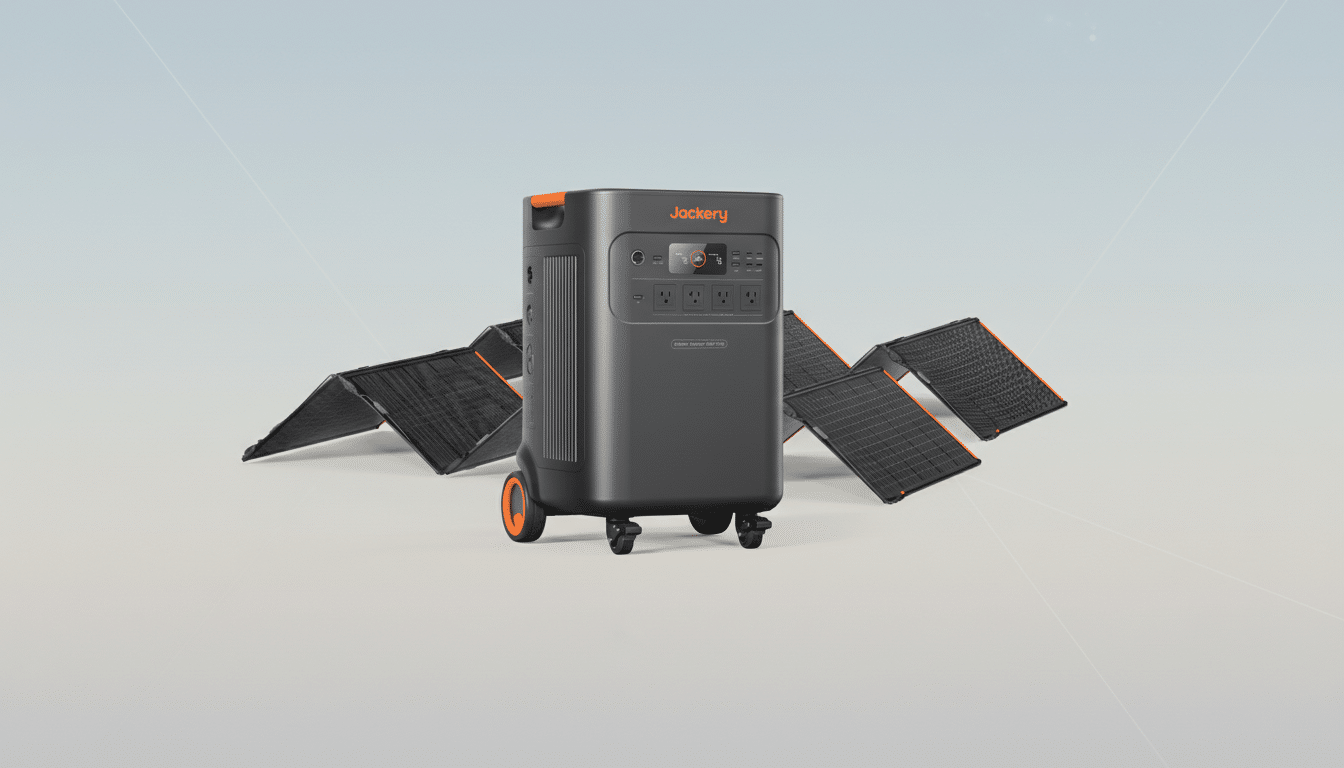
Built for Home Backup and Real-World Mobility Needs
Crucially, the Explorer 5000 Plus can be integrated with a home via a transfer switch, enabling safe distribution to critical circuits like refrigeration, lighting, or a sump pump. That’s a meaningful step up from simply running extension cords around the house. It won’t replace a whole-house standby generator for central HVAC, but for targeted resilience it hits a sweet spot.
Despite its size, the shorter, squat design with built-in wheels and a pull handle makes it more stable to move than taller tower-style units. That lower center of gravity matters when you’re navigating steps or a garage cluttered with gear. Owners who prioritize portability for RV trips or mobile worksites will appreciate this practical touch.
How the Explorer 5000 Plus Stacks Up Against Rivals
In this price bracket, the obvious comparables are large-capacity systems from EcoFlow and Anker. Those platforms offer compelling ecosystems and advanced app integrations, but this discount changes the calculus. With 5,040Wh onboard, robust 240V-capable outputs, and high solar throughput, Jackery’s current pricing pressures competitors on cost while matching or exceeding them in core backup metrics most buyers care about.
Another differentiator is simplicity: many buyers want a powerful, “plug it in and it works” backup that doesn’t require mixing and matching multiple expansions from day one. The Explorer 5000 Plus arrives as a turnkey high-capacity unit, with room to scale later if your needs grow.
Who Should Consider the Explorer 5000 Plus Now
If you live in an outage-prone area, run essential medical devices, or need reliable off-grid power for RV travel or remote job sites, this is an easy shortlist pick—especially at a record-low price. It’s overkill for light camping, and its heft means you’ll likely park it in a garage or RV bay rather than tote it up a mountain, but as a home resilience tool it’s hard to argue with the value.
Bottom line: a rare sub‑$0.60/Wh deal from a major brand, high surge capacity for real appliances, ample ports, fast solar intake, and home-integration features make the Explorer 5000 Plus one of the most compelling large-format power stations to buy while this promotion lasts.