


A fresh wave of iPhone 18 Pro leaks points to aggressive hardware moves from Apple, tightening the screws on Samsung’s increasingly incremental flagship roadmap. If the details hold, the next Pro iPhones could leap forward on silicon, camera engineering, and connectivity, sharpening the contrast with a Galaxy S series that has leaned on small steps and software-centric differentiation.
Why This Leak Matters for Apple, Samsung, and Buyers
Analyst reports and supply chain chatter suggest the iPhone 18 Pro line will debut a 2nm A20 Pro chip, under-display Face ID, variable-aperture main cameras, and expanded satellite capabilities that reach beyond emergency messaging. Meanwhile, indications that Samsung’s next Galaxy S flagships will be modest refreshes risk amplifying a narrative that Apple is setting the pace on core hardware while Samsung optimizes around the edges.
- Why This Leak Matters for Apple, Samsung, and Buyers
- A20 Pro on 2nm Raises the Performance Bar
- Under-Display Face ID and a Camera Rethink
- Satellite 5G Hints at a New Connectivity Tier
- Samsung’s Flagship Playbook Looks Stretched
- The Foldable Wild Card and Apple’s Expected Entry
- Bottom Line: What to Expect If These Leaks Hold
A20 Pro on 2nm Raises the Performance Bar
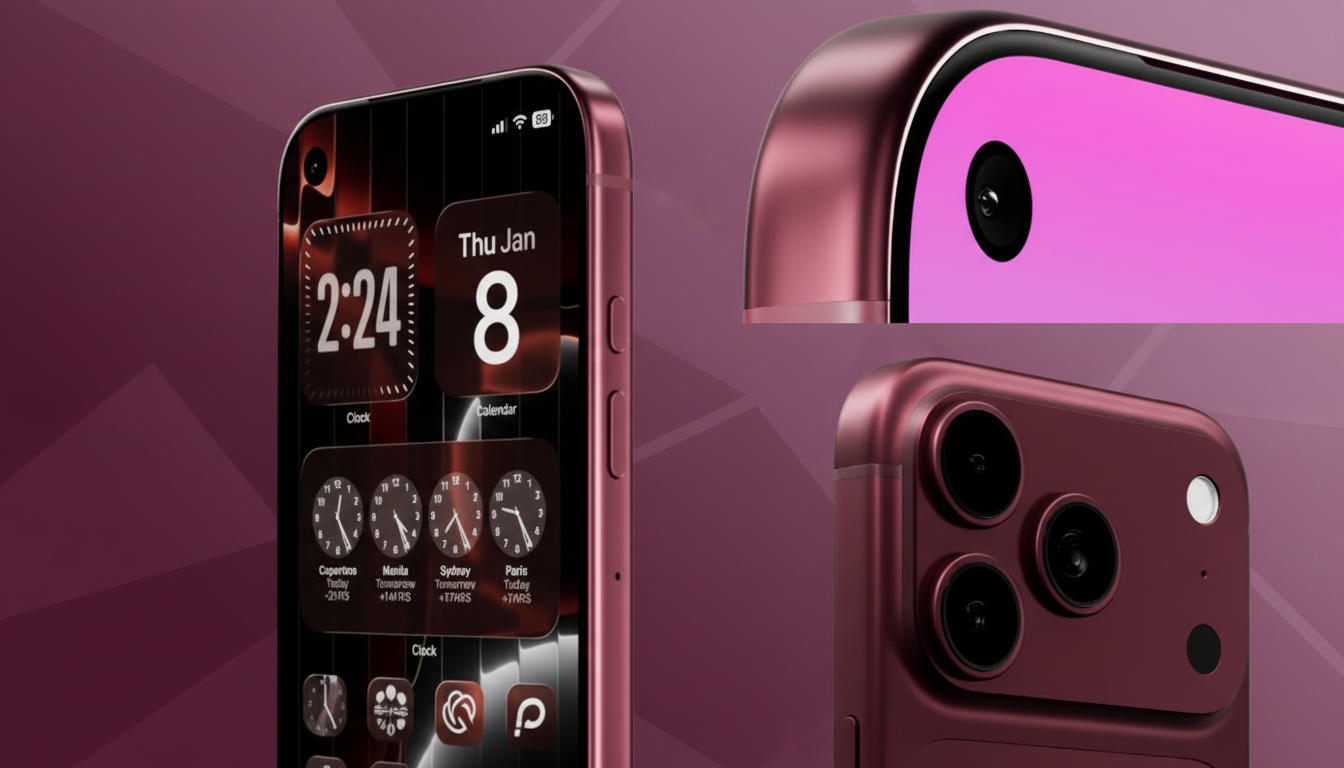
Multiple briefings point to Apple adopting TSMC’s 2nm class process for its A20 Pro, paired with wafer-level multi-chip module (WMCM) packaging. That combination is designed to unlock higher bandwidth between dies, tighter integration, and better thermal behavior—key ingredients for sustained performance and on-device AI. TSMC has previously signaled that its 2nm node targets up to double‑digit performance gains or up to 30% lower power at comparable speed, and Apple has a track record of converting process advantages into real-world battery and CPU/GPU wins.
The leak also points to a memory bump to 12GB of LPDDR5 across the Pro models. Apple has historically squeezed more from less through vertical integration, so a larger RAM pool—paired with a new neural engine—could deliver tangible gains in multimodal AI features, pro video capture, and sustained gaming frame rates.
Under-Display Face ID and a Camera Rethink
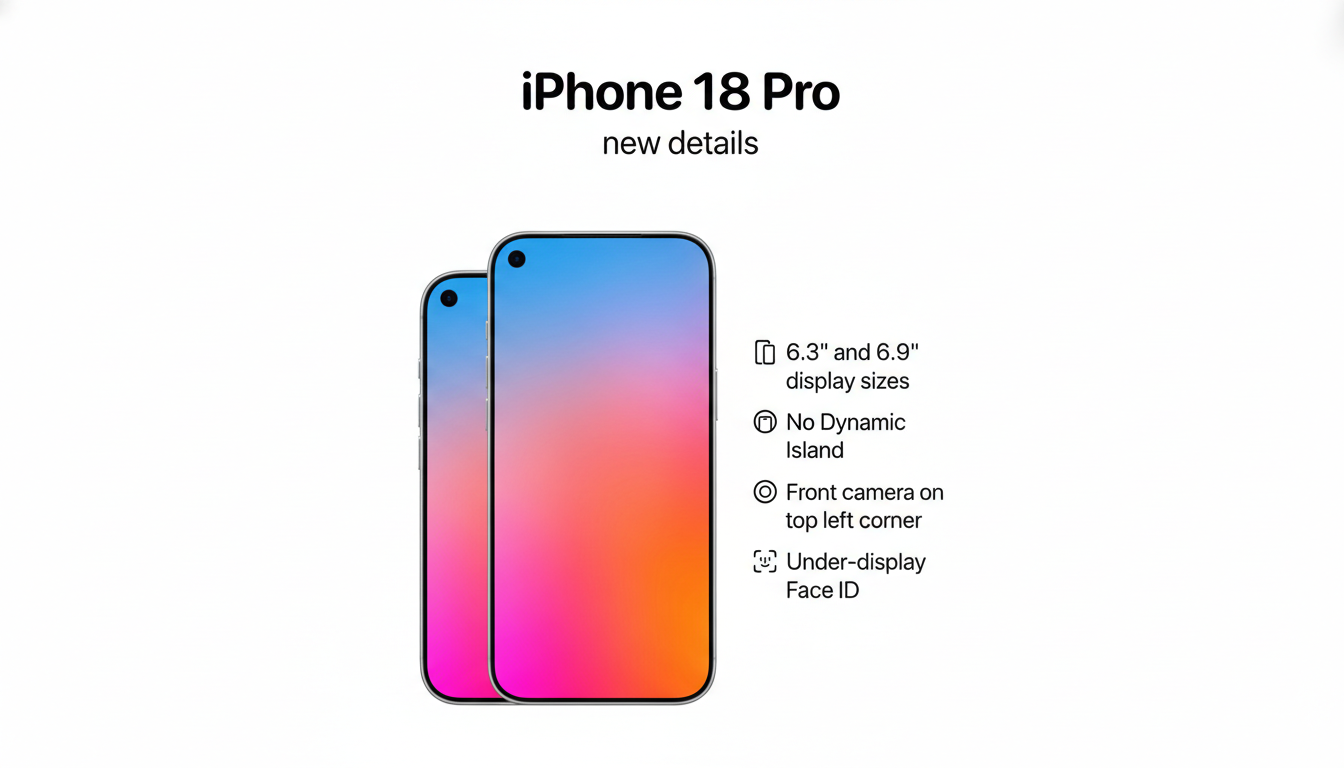
Apple is reportedly shifting its structured-light Face ID array under the display and to the left side, shrinking the visible cutout and moving the selfie camera accordingly. It’s a subtle but meaningful industrial design change because it reclaims status bar space without resorting to low-quality under-panel camera tech. Expect the Dynamic Island UI to evolve rather than disappear.
The headliner for imaging is a return to variable aperture on the primary camera, enabling the lens to mechanically switch its f-stop depending on the light. Samsung popularized the idea with the Galaxy S9, then shelved it. On paper, it’s a powerful tool: a wider aperture for night shots and a narrower setting for sharper daytime scenes with deeper focus. If Apple marries that with its computational pipeline and upgraded sensors, it could widen its advantage in point-and-shoot reliability, an area where consumer surveys consistently rate iPhones highly.
Other tidbits—like an 18MP front camera and a pressure-based Camera Control button for more precise framing—suggest Apple is tuning for creators who care about framing, motion, and low-light consistency as much as resolution.
Satellite 5G Hints at a New Connectivity Tier
Perhaps the most provocative claim is support for 5G over satellite. While details remain thin, the idea maps to 3GPP’s non-terrestrial network standards, which enable phones to connect to satellites for data when terrestrial towers fail. Apple already proved there’s user appetite with Emergency SOS via satellite; expanding that to periodic data could create a new service tier—lightweight messaging, map updates, or status sync—without a cell signal. Qualcomm floated similar ambitions, carriers have piloted NTN, and component makers like MediaTek have demonstrated device-to-satellite links, but no mainstream flagship has delivered broad 5G NTN yet.
Samsung’s Flagship Playbook Looks Stretched
Samsung’s recent flagship cadence has emphasized iterative camera tuning, brighter displays, AI features, and long software support. Those are real strengths—Galaxy AI landed well, and extended OS updates reduce ownership friction—but they don’t substitute for step-change hardware moments. If the next Galaxy S generation arrives with modest silicon gains, familiar camera stacks, and without headline-grabbing connectivity advances, the contrast with a 2nm, variable-aperture, satellite-ready iPhone could be stark.
Context matters. Counterpoint Research has consistently placed Apple above 70% share of the global premium segment, and IDC has shown Apple and Samsung trading the top spot for overall shipments. In the parts of the market that set brand perception—the $800-and-up devices—hardware differentiation tends to have outsized impact. That’s where Samsung’s conservative approach risks ceding narrative ground, especially if Apple also enters the foldable arena with an iPhone Fold that prioritizes polish over screen size theatrics.
The Foldable Wild Card and Apple’s Expected Entry
The leaks point to Apple finally joining foldables, reportedly opting for Touch ID instead of Face ID on the fold to simplify under-panel demands. Samsung has led foldables for years, but competition from China has eroded share, and the category’s growth is increasingly tied to reliability, crease management, and camera parity with slabs. An Apple entry, even at conservative volumes, would reset expectations around durability and software continuity across folded states—areas where Apple’s vertical integration could pay off.
Bottom Line: What to Expect If These Leaks Hold
Leaks are not launch notes, but the pattern is clear: Apple is preparing headline hardware upgrades that speak directly to performance, imaging, and always-on connectivity. If Samsung counters with only light-touch changes to its Galaxy S line, it risks looking reactive in the segment that shapes premium mindshare. A bolder sensor strategy, renewed attention to lens mechanics, and a public roadmap for NTN connectivity would go a long way toward keeping the Galaxy S narrative fresh.