


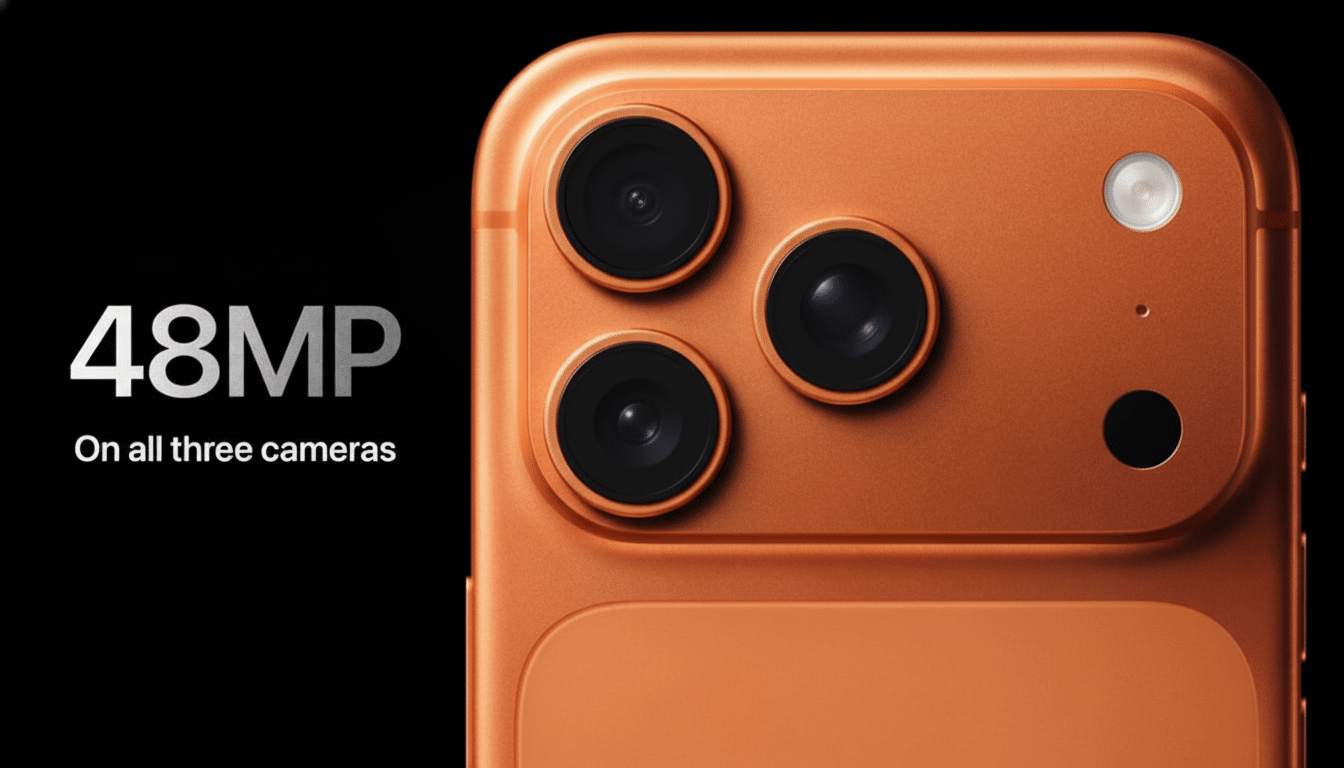
The “scratchgate” of the iPhone 17 Pro isn’t just an embarrassment — it’s a powerful lens through which to see how geometry can be used for or against durability. Excessive scuffing in many of the in-store retail demo models has now been attributed not to thin metal but to a sharp-edged camera plateau causing premature abrading of the anodized layer. That’s a lesson Android manufacturers would do well to learn before rushing to copy the look.
Teardowns and microscope shots published by prominent repair professionals reveal that the vast majority of surface marks on the flat frame are transfer deposits that wipe away. The serious damage is at the precipitous rim around the camera island, where the protective oxide layer can flake off — a failure mode materials scientists refer to as spalling. It’s a form problem more than a material problem.

The true villain is a fragile perimeter around the camera
Anodizing is a process that aluminum phones use to create this layer, which is hard and thin enough to withstand wear. That layer does great on wide, flat surfaces. In tight turns, however, the coating wears more rapidly by taking a thicker cut under stress, and it may crack under repeated contact. Footage in the lab from iFixit and durability tests by YouTuber Zack Nelson (JerryRigEverything) agree on that: flat faces reveal mostly wipe-away deposits, while the sharp rim of the camera shows genuine coating loss.
Once spalling begins at a corner, it progresses readily. Even a stray bump from keys, zippers, or gritty dust can scrape away more oxide and expose bare metal. On demo units that are picked up and handled hundreds of times a day, this snowballs into visible rings of wear around the camera plateau.
It’s the geometry, not the metal structure that’s to blame
Arguments over aluminum versus titanium don’t matter here. Both can form very hard oxide layers, and both materials look pristine with a proper surface treatment. What counts here is the behavior of the coating at transitions. That’s because sharp corners collect stress — a fundamental axiom of mechanical design — and coatings tend to grow unevenly on such features, leaving more points for cracks to start and flakes to peel away under abrasion.
Industry standards, such as MIL-A-8625, illustrate the same principle, and a study from ASM International advises that protective finishes will last longer when edges have been radiused or chamfered. In fact, by distributing contact forces and enabling a more uniform growth of the oxide layer, a small 0.3–0.5 mm radius at the camera shelf can significantly reduce spalling risk in practice.
A warning for Android OEMs copying the camera design
It’s common for the iPhone’s silhouette to be followed by Android brands in the subsequent design cycle. It would be wrong to make millions of such a wide, metal camera plateau that has the blade edge of a knife. The savvier approach is evident throughout the ecosystem today: divided camera rings (see recent Galaxy Ultras), rounded “volcano” transitions around lenses (common on Oppo and vivo flagships), or a steady bar with a generous curve (Google’s Pixel line) — all things that calm edge stress.
These choices aren’t just aesthetic. They’re durability calls that will cut down on warranty claims, protect resale value, and save customers the annoyance of early cosmetic damage. As expensive phones rise to cost four figures or more, avoiding “design-induced wear” counts as much as spec-sheet sword fighting.
The reality-based tweaks and process alternatives
There are simple measures you can take to keep the look without the liability:
- Introduce a measurable radius or a soft chamfer to the camera plateau. Even minor alterations in the geometry result in a huge change in coating robustness.
- Use hard anodize (Type III) and/or duplex systems (anodize for adhesion with a PVD overcoat, used for scratch masking) on high-contact edges.
- Add ceramic or glass edges around the camera island, protecting metal edges from direct damage while keeping the thermal benefits of an aluminum frame.
- Improve surface prep processes: consistent bead blasting and controlled sealing can help eliminate micro-cracks that act as spall initiators.
For weight, price, and thermal performance, aluminum is still the logical choice for plenty of Android flagship phones. The failure mode here isn’t so much aluminum as putting a sharp-edged fashion detail to work against known coating physics.
What buyers can do now to prevent camera rim wear
If you own a phone with a sharp camera rim, rub away obvious “scratches” with a microfiber cloth first; many of them are transferred metal from another object.
To avoid actual chipping at that border, you’ll need a case with a lip that curls over the camera shelf. Steer clear of abrasive cleaners — even common particles like quartz in household dust are hard enough to scuff coatings. Also remember: store demos look much worse than actual home devices, since they are subjected to thousands of touches and all manner of pocket debris each day.
The takeaway is a simple one: understanding that durability begins with shape. The tale of the iPhone 17 Pro’s scratches is just further proof that a few millimeters of curvature can be more important than the metal you choose. By shipping prettier phones that stay pretty, and by having the courage to be different, Android makers who put engineering ahead of mimicry will also attract customers.